SEO Audit &
Optimization Roadmap
1. Executive Summary
This case study presents an SEO audit of an HVAC website, evaluating technical SEO, on-page performance, site structure, UX, internal linking, and conversion pathways to identify key opportunities for improving organic visibility and lead generation.
1.1 Website Overview
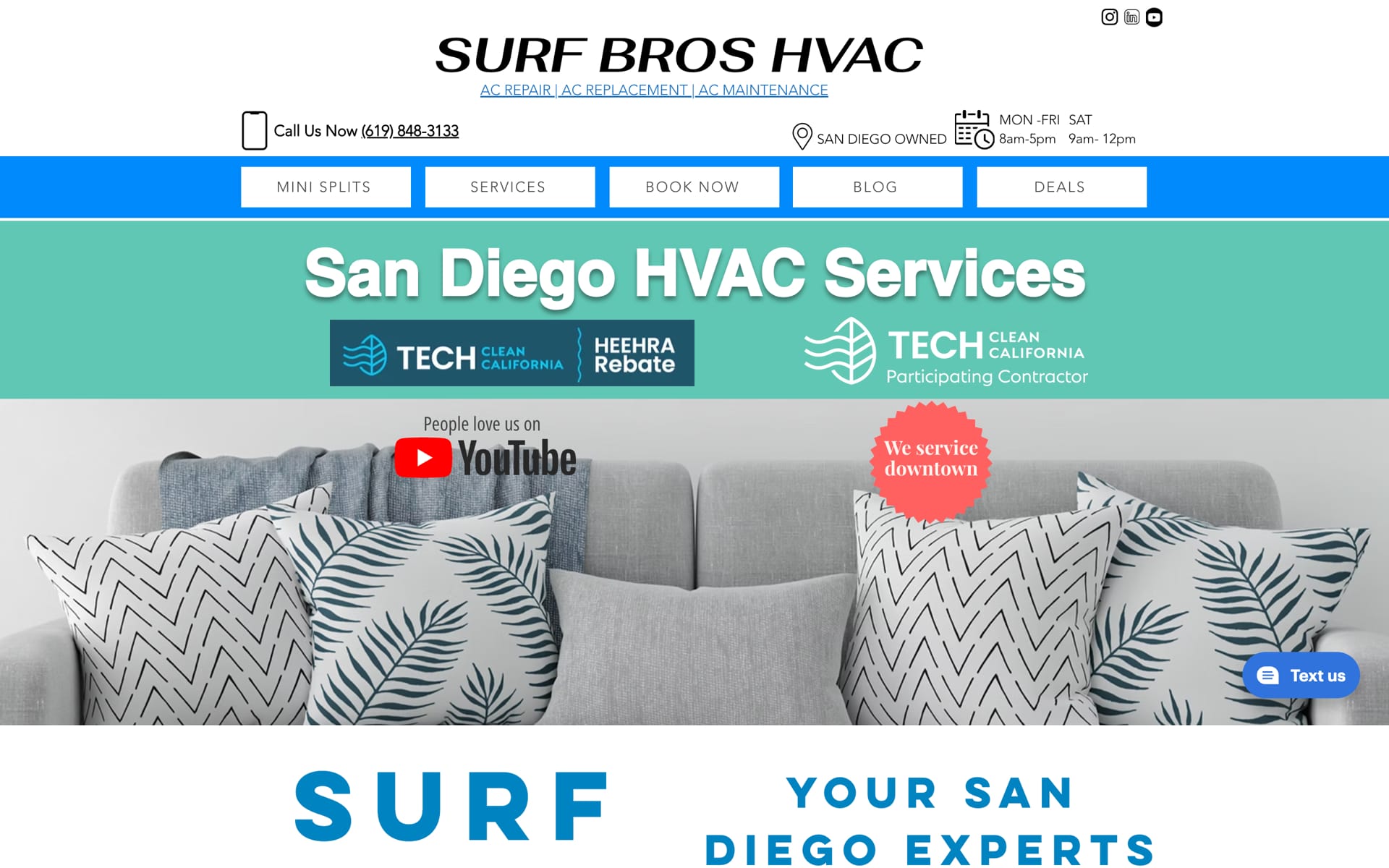
Surf Bros HVAC is a locally owned HVAC service provider serving residential and commercial customers in the San Diego area. The company offers core services including air conditioning repair, HVAC maintenance, mini split installation, and indoor air quality solutions.
The website is structured primarily to support lead generation, with conversion pathways focused on service inquiries, appointment requests, phone calls, and booking form submissions.
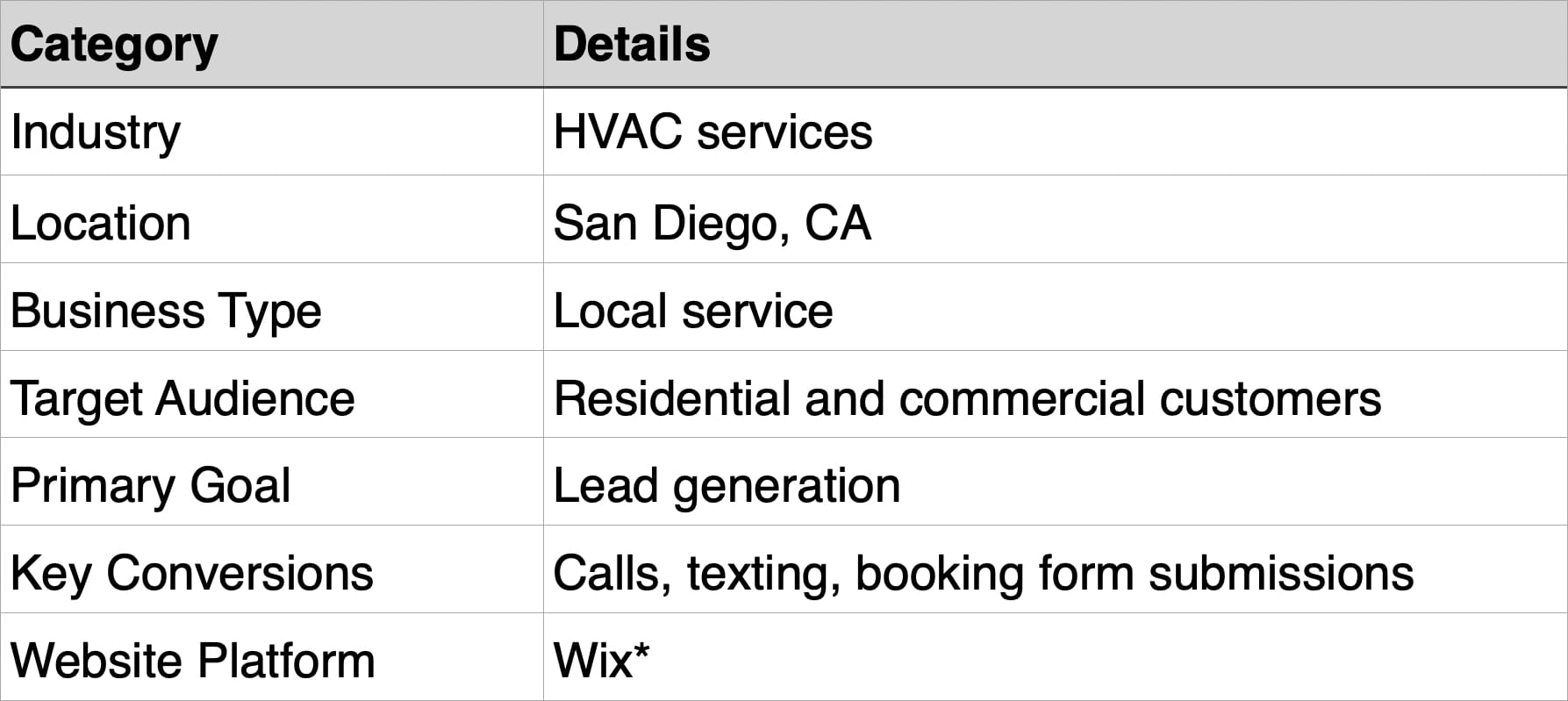
* Inferred: Sitemap tags indicating
generatedBy="WIX" suggest the site is built on or has been generated using the Wix platform.1.2 Site Structure Overview
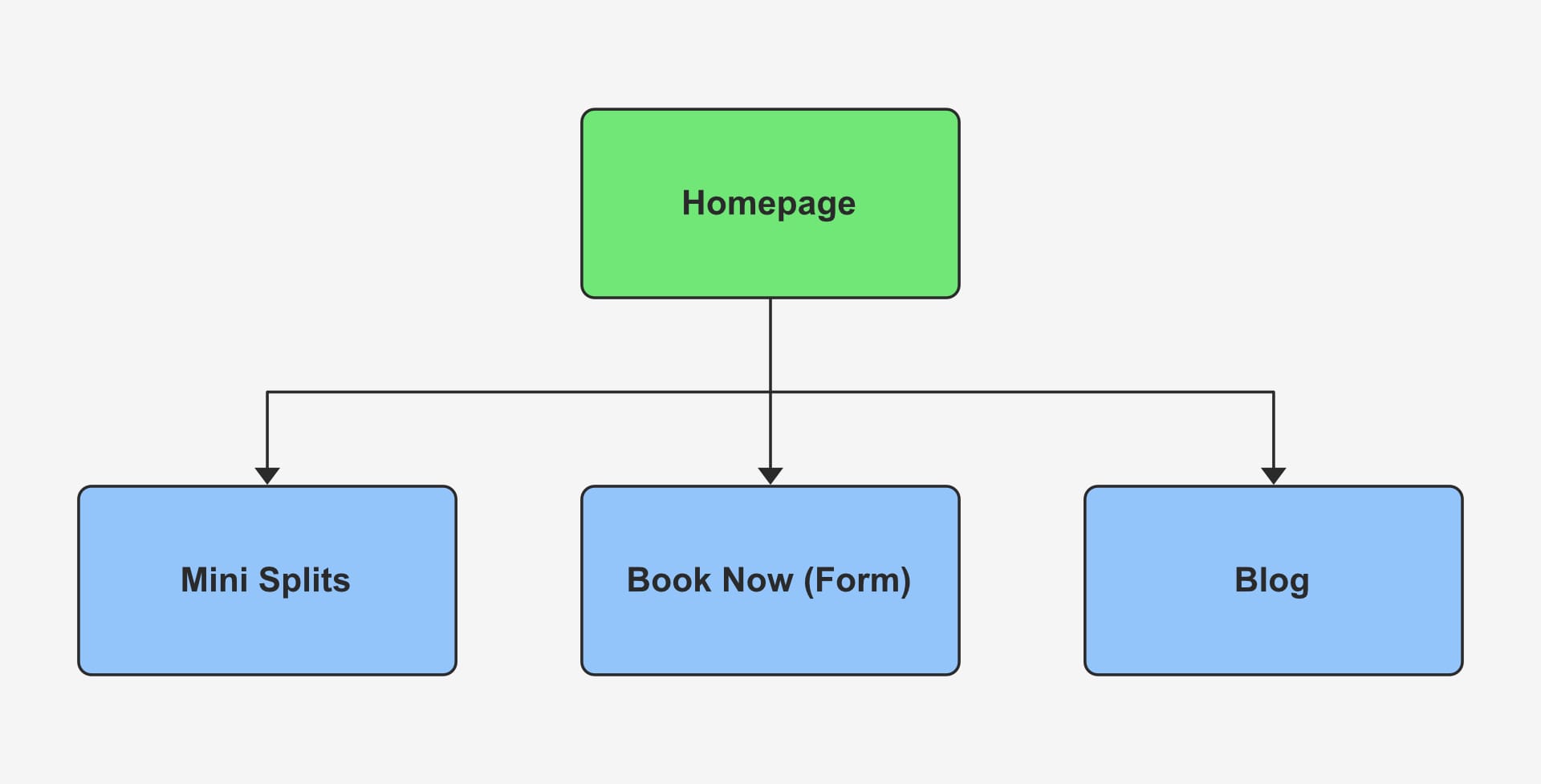
The website follows a relatively simple, service-led architecture with navigation centered around core service content, company information, and conversion entry points. This structure allows users to access primary pages with minimal navigation depth.
However, the site relies heavily on top-level navigation and call-to-action elements to support user journeys, with limited contextual linking between related service and informational content. As a result, internal movement through the site appears to be primarily navigation-driven rather than content-driven.
1.3 Key Findings
The analysis identified several high-level structural and on-page patterns that may influence SEO performance and user experience.
Structural Reliance on Navigation
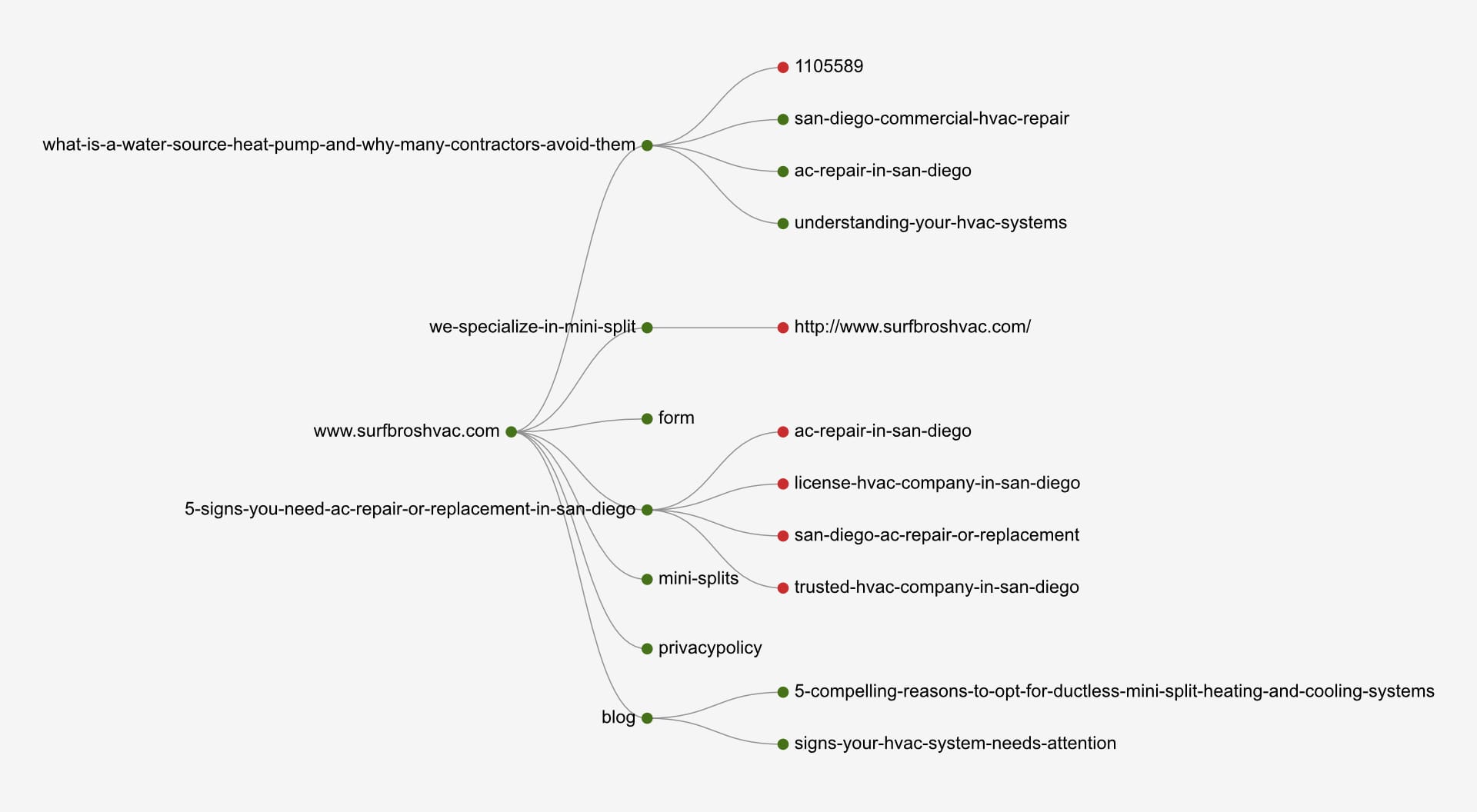
Screaming Frog crawl data shows the site relies primarily on top-level navigation and CTA-driven pathways, with limited contextual linking between related service and informational content.
On-Page SEO Inconsistencies
Metadata, heading structure, and image optimization vary in implementation across pages, suggesting on-page SEO practices have not been applied consistently sitewide.
Internal Linking Limitations
Screaming Frog inlink data indicates minimal contextual internal linking, which may limit content discoverability and weaken the site's information architecture.
UX & Conversion Path Friction
Navigation inconsistencies and mobile interface behavior, including duplicate link destinations and scroll-triggered menu disappearance, may introduce friction in user journeys toward the site's service page and conversion pathways.
1.4 Scope and Methodology
An independent SEO audit was conducted as part of this portfolio project to evaluate the Surf Bros HVAC website across key performance and structural dimensions. The analysis included site architecture, on-page SEO, technical configuration, user experience, internal linking, and conversion pathways. Findings were evaluated against Google Search Essentials guidelines, Core Web Vitals thresholds, and standard on-page SEO conventions. They are based on publicly available site data from the June 2026 collection period rather than a live account status.
The following sections expand on these findings in detail.
2. Current SEO Strengths
This section highlights the website's existing SEO strengths that support local visibility, user trust, and future optimization efforts.
2.1 Google Business Profile
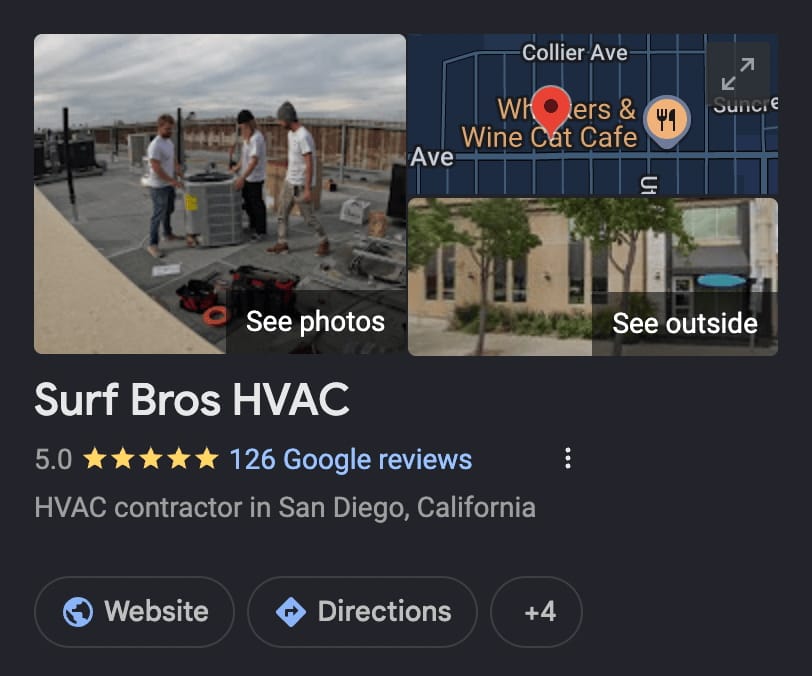
The company maintains a Google Business Profile that includes customer reviews, business information, photos, and service details. At the time of this review, the profile showed a 5.0 rating across approximately 126 reviews. A strong local presence in Google Business Profile can improve visibility in local search results and Google Maps, and may help establish trust and credibility with potential customers. The profile also supports local SEO efforts by providing users with important information such as contact details, business hours, and customer feedback.
2.2 Additional Strengths
In addition to its Google Business Profile, the website demonstrates several on-site strengths that may support visibility, usability, and content relevance.
Clear Local Business Position
The website communicates its service area in San Diego, which may help reinforce local search relevance and geographic targeting.
Contact Accessibility
Contact information, including a visible phone number and social links, is accessible from the homepage, which may support user trust and conversion potential.
Dedicated Mini Splits Page
The site includes a dedicated page for mini-split services, which may support topical relevance and service-specific keyword targeting.
Linked External Video Presence
The website links to the business's YouTube channel, which has approximately 4.51K subscribers and 159 videos. This external presence may support brand trust and content marketing efforts, though the video content itself is not hosted or embedded on the website.
3. On-Page SEO Analysis
This section evaluates on-page SEO elements across the website, including metadata, heading structure, content quality, and image optimization. The analysis focuses on structural and semantic signals that influence search visibility, content clarity, and on-page relevance.
3.1 Metadata Optimization
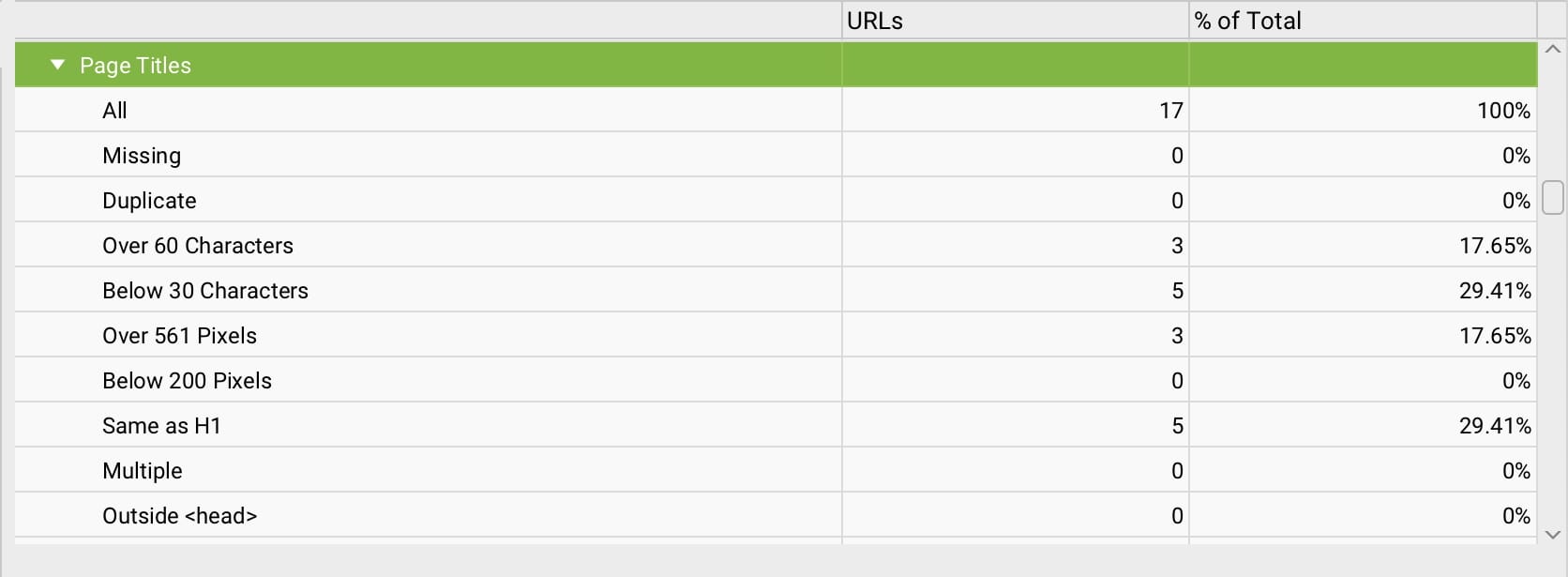
Several issues were identified in page titles and meta descriptions that may impact search visibility and click-through rates.
A review of page titles shows inconsistency in how page-level relevance is communicated. Several titles are overly generic or lack descriptive elements that reflect search intent, particularly on the Mini Splits and Book Now pages.
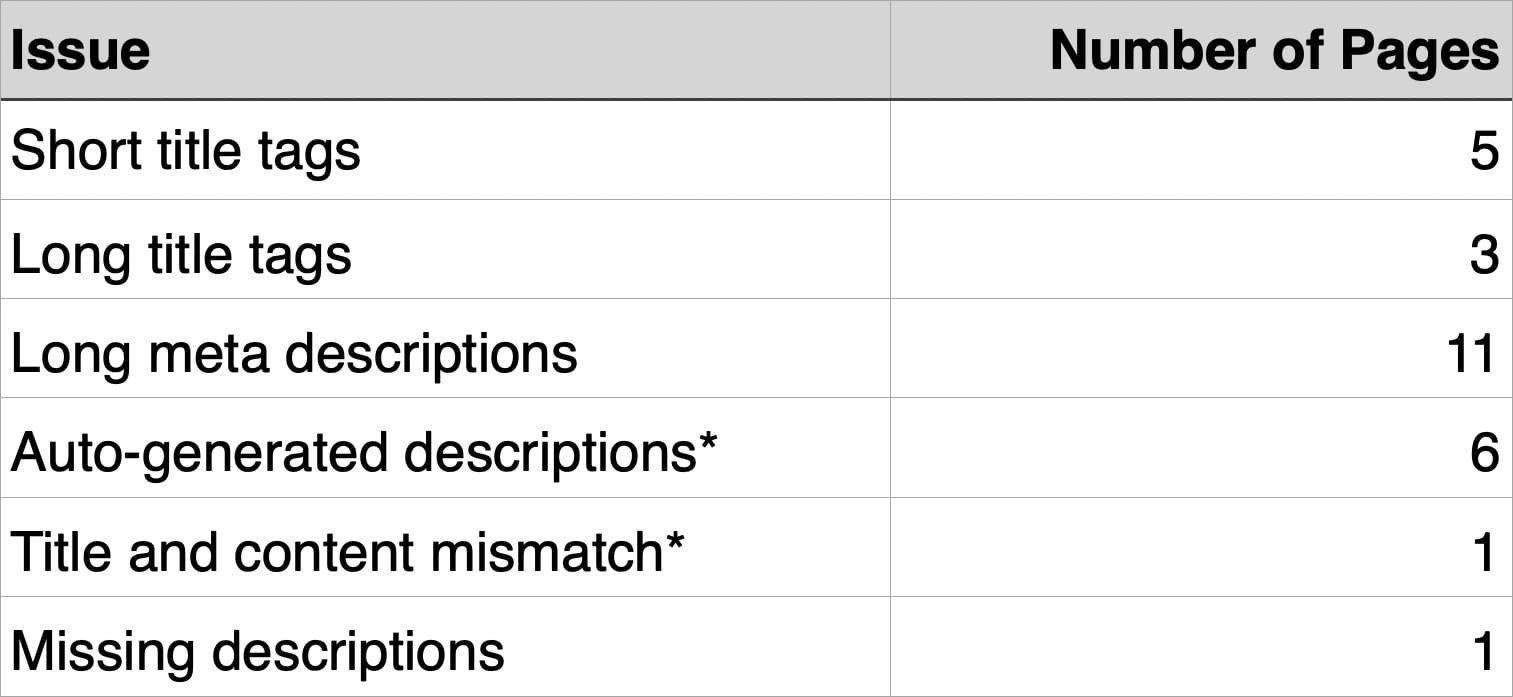
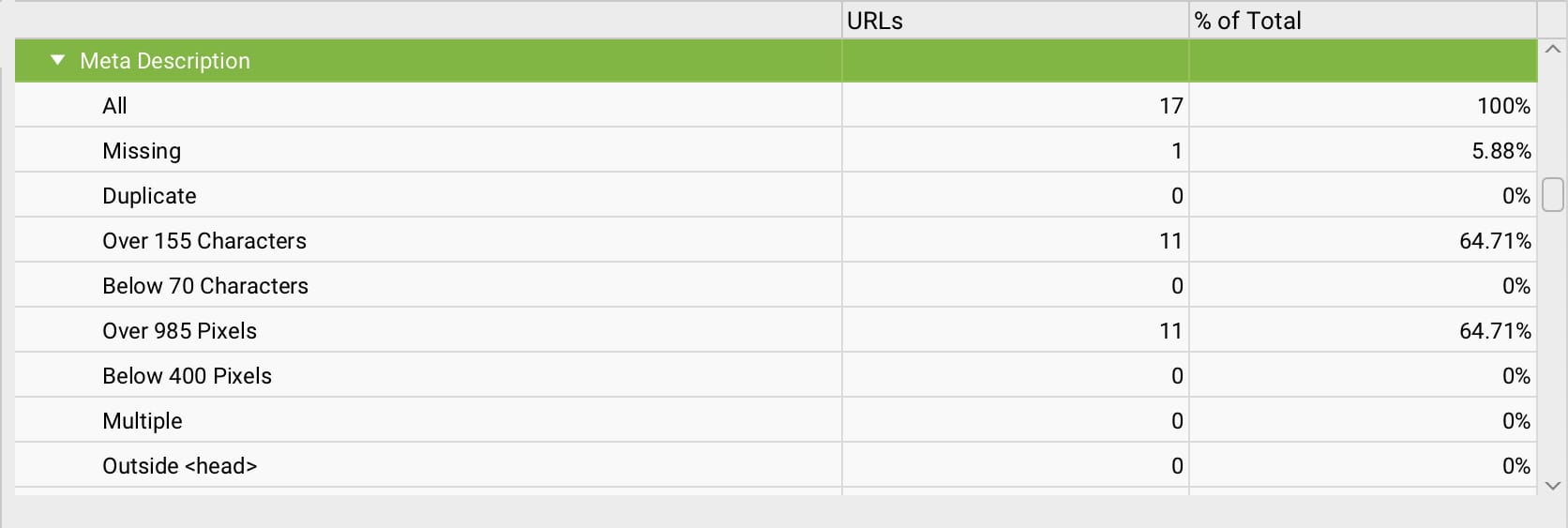
The Book Now page also accounts for the site's missing meta description and its sole instance of title/content mismatch, which may indicate this page has received less metadata attention than the site's service and informational content.
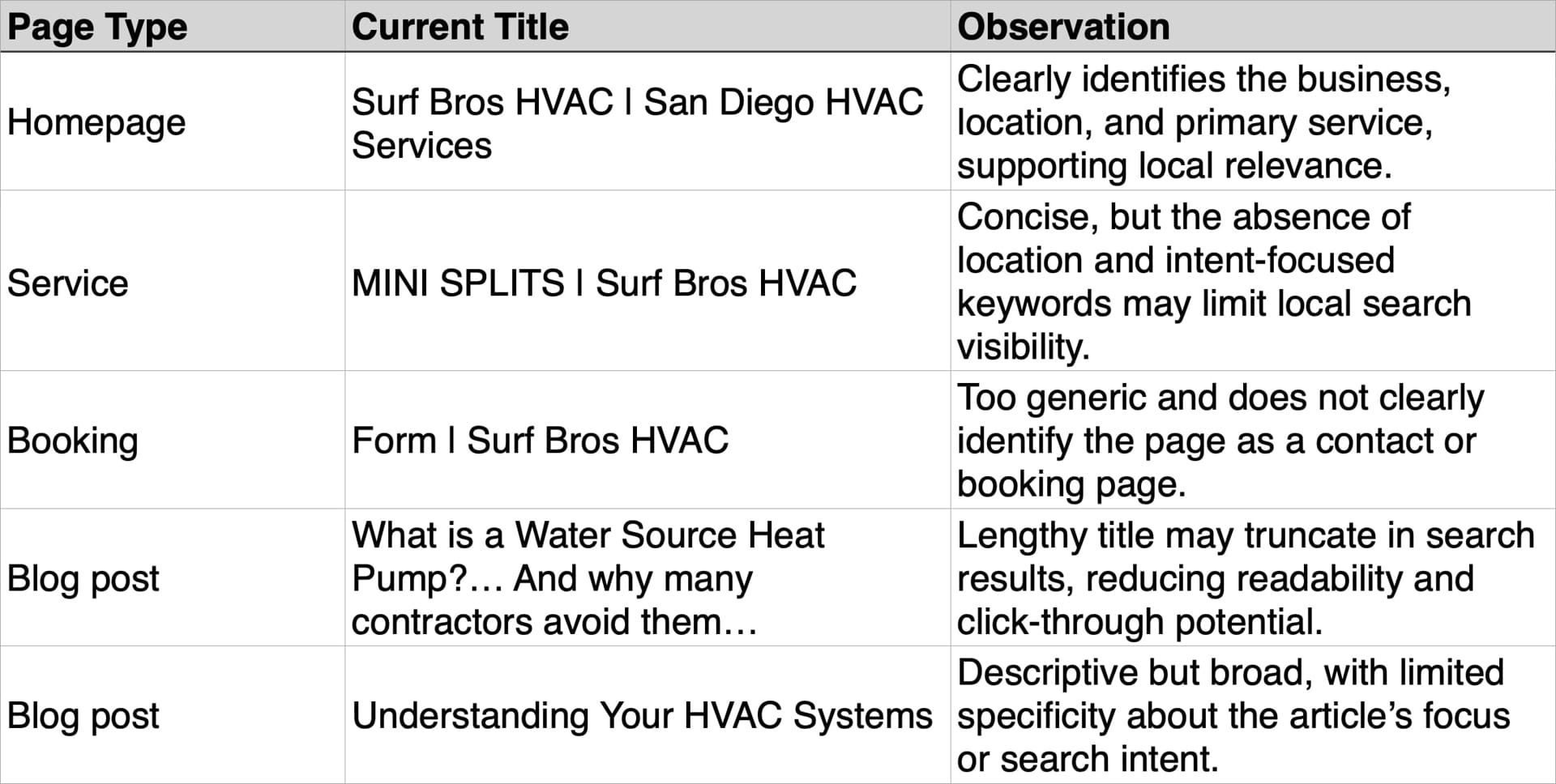
In addition, some pages do not consistently include service or location modifiers, which may reduce relevance for localized search queries. Overall, metadata patterns indicate inconsistent optimization across service, informational, and conversion-focused pages.
3.2 Heading Structure
Heading structure is inconsistent across the website, which may reduce semantic clarity and content organization. Screaming Frog found non-sequential heading levels on 9 of 17 pages (52.94%), while the Mini Splits page contains multiple H1 tags. Some headings are also used for interface elements rather than content hierarchy, further weakening the document structure.
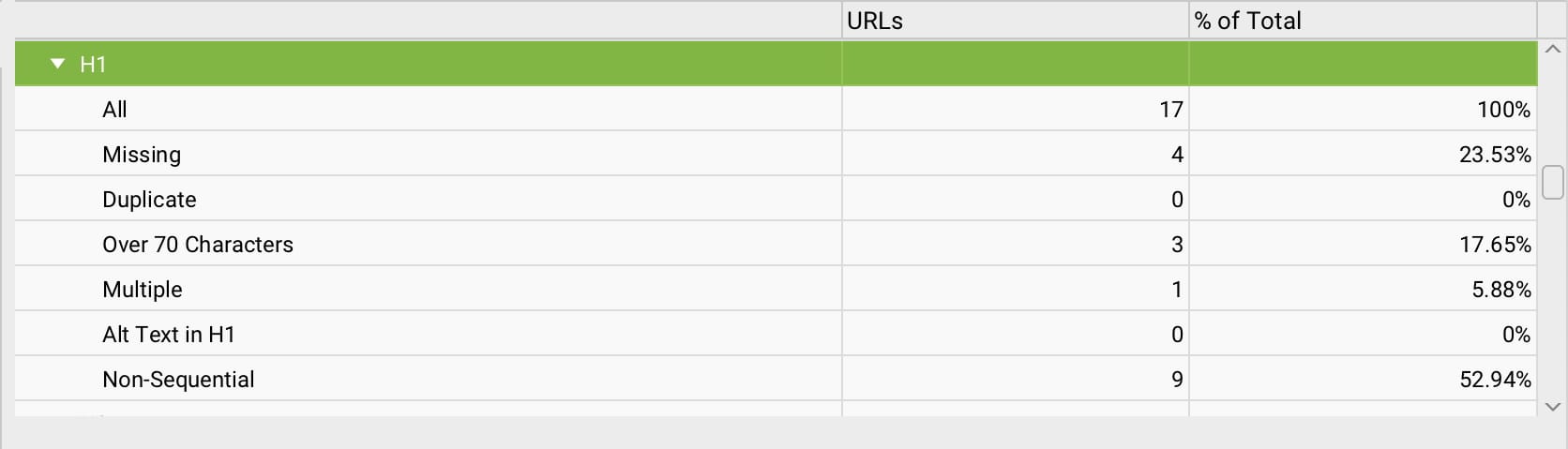
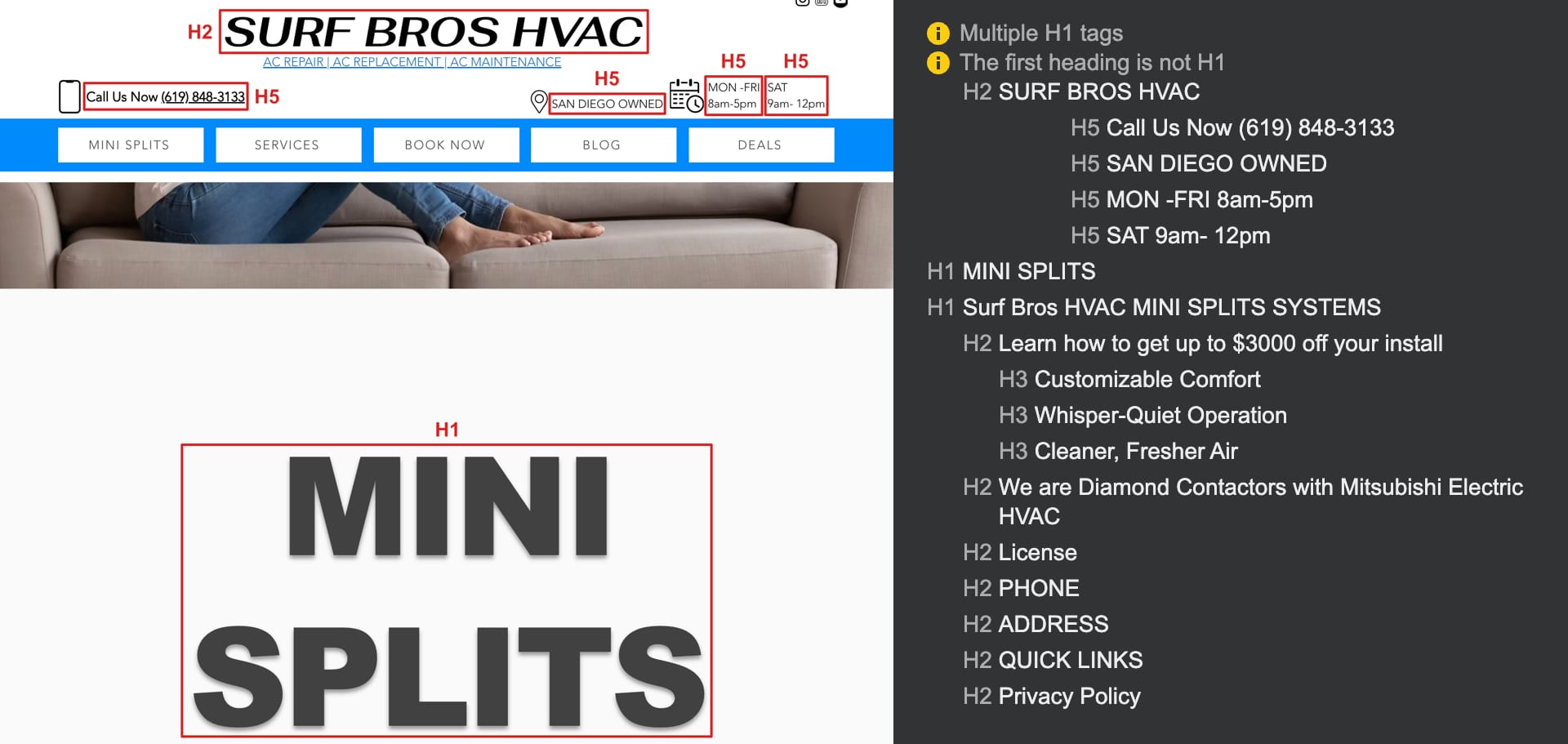
These issues may weaken the consistency of heading hierarchy across the site. In particular, multiple H1 tags on a single page can reduce clarity regarding the primary topic being targeted, while inconsistent application of heading elements across sections may introduce variability in how page structure is interpreted by search engines.
3.3 Content Quality
The website's content generally addresses core HVAC services, however, there are opportunities to improve depth, specificity, and alignment with search intent.

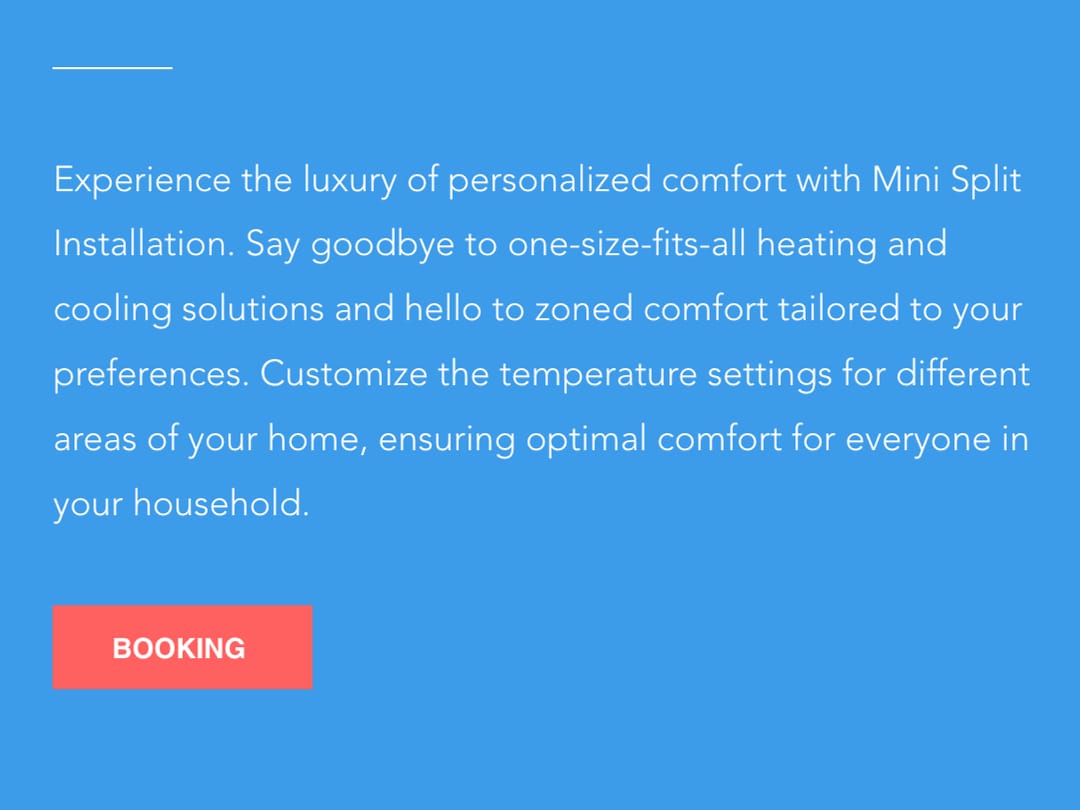
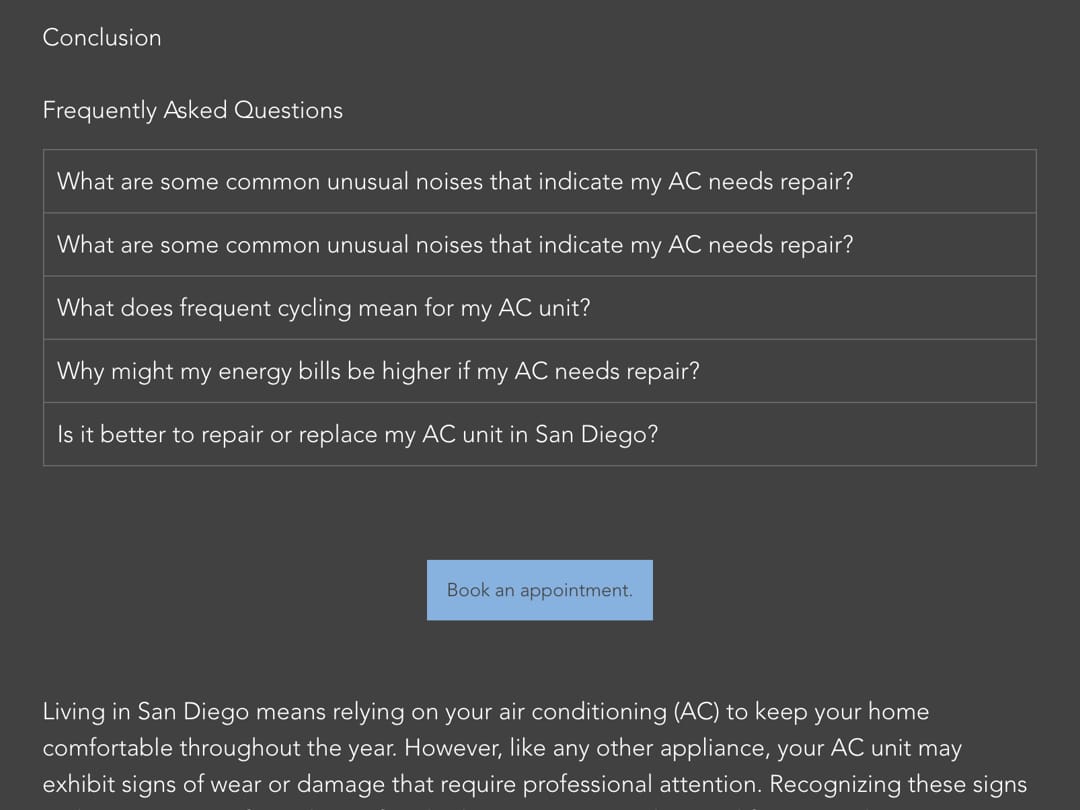
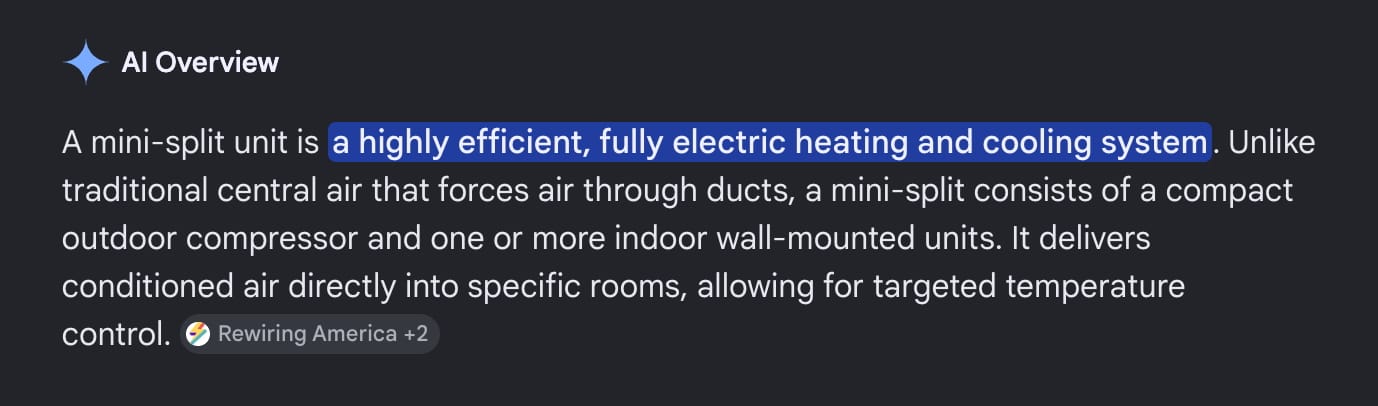
The site's only dedicated service page, Mini Splits, relies primarily on short, direct-response marketing copy rather than detailed service information. As a result, it does not fully address foundational user questions or explain how the system works. AI Overview results for similar queries typically prioritize more explanatory, educational content before service-focused pages, which may suggest an opportunity to expand the page with content that better aligns with informational search intent.
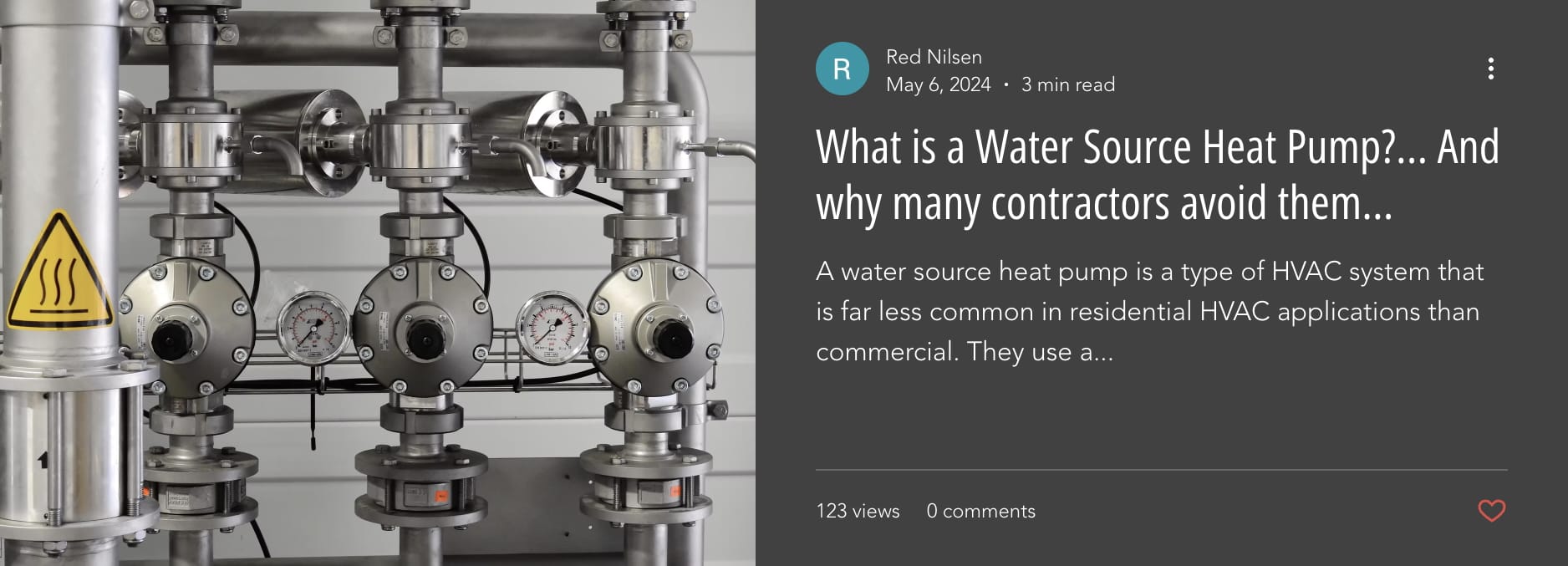
The blog shows a similar pattern of limited recent content investment, with the most recent post published in May 2024. Combined with the Mini Splits page's shallow content depth, this suggests the site's content marketing may not be consistently maintained.
Overall, improving clarity, expanding topical coverage, and addressing common user questions more directly would strengthen relevance signals and improve alignment with both informational and commercial search intent.
3.4 Image Optimization & Accessibility
Image optimization and accessibility were evaluated through Screaming Frog crawl data and manual inspection of page elements.
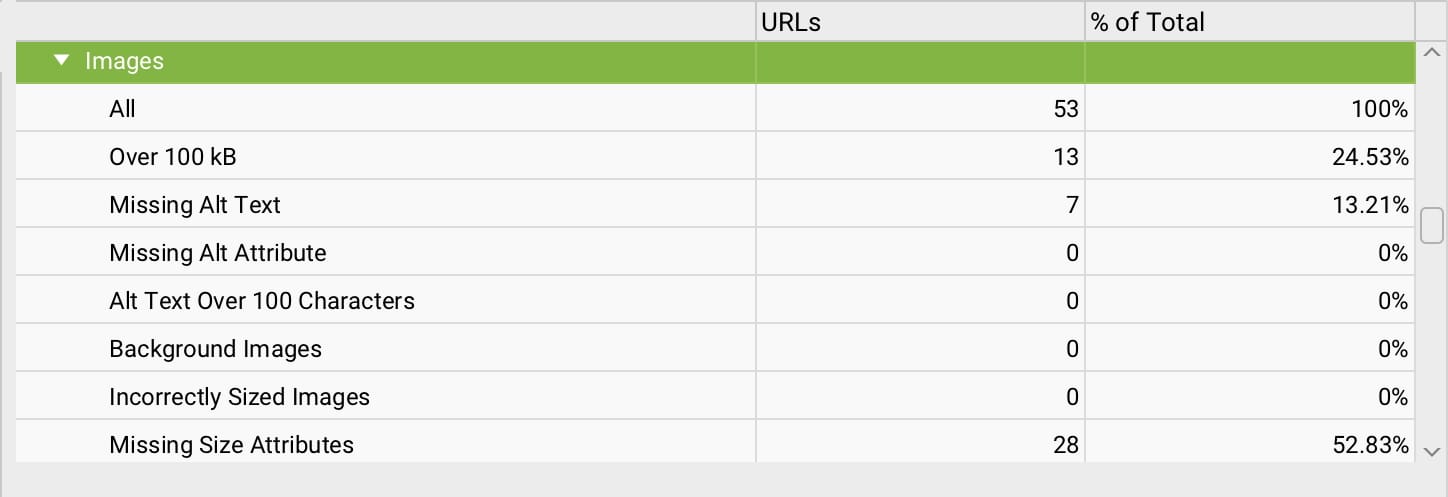
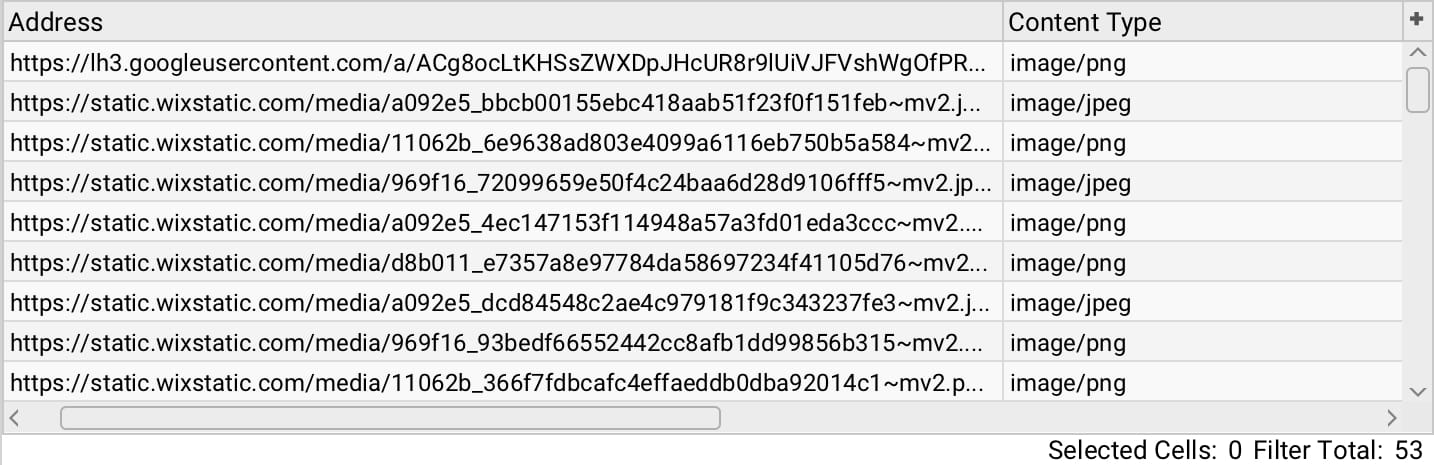
Several images use non-descriptive or generic file names, which may limit their ability to contribute to image search relevance. In addition, missing alt text was identified on multiple images across the site.
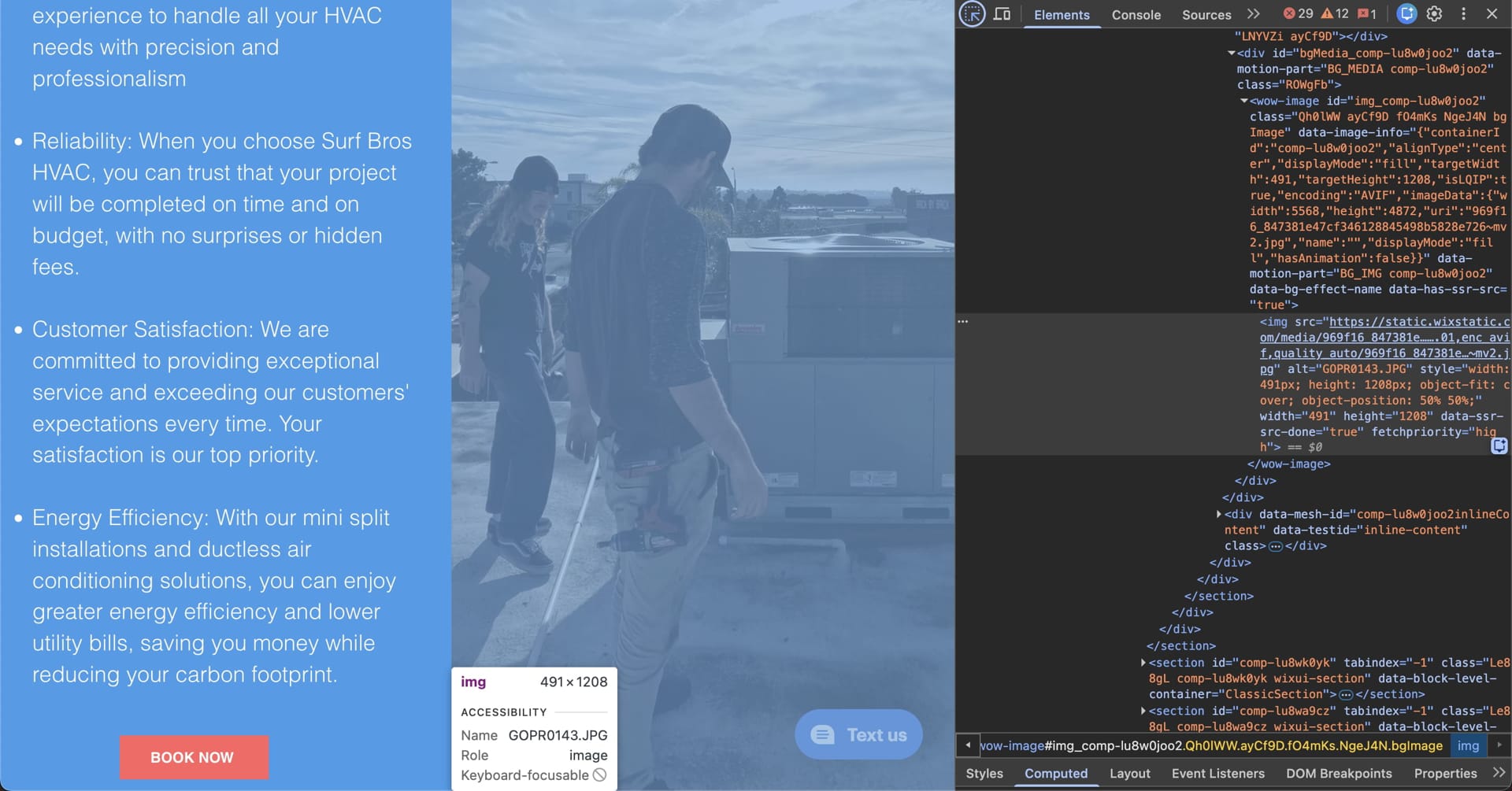
While overall image usage is functional, improvements in file naming conventions and alt text implementation would strengthen accessibility signals and may improve image-related SEO performance.
3.5 Internal Linking Signals
Internal linking within page content is limited across the website, with most links occurring through navigation elements and conversion-focused call-to-action buttons rather than contextual links within body content. Where links are present, they primarily direct users to conversion pages instead of related informational or supporting service content, which may limit the distribution of topical relevance and may weaken on-page content relationships.
A detailed analysis of internal linking structure and opportunities is provided in Section 5.
4. Technical SEO Analysis
This section evaluates the website's technical SEO foundation, including crawlability, indexation, site architecture, structured data, performance, and search engine directives. The analysis identifies technical factors that may influence search engine accessibility and website discoverability.
4.1 Indexation & Search Visibility
The website demonstrates generally strong crawl accessibility, with no significant crawl restrictions, blocked search engine bots, or publicly accessible staging environments identified during the review. A manual site: search returned approximately 9 of the 13 indexable pages discovered during the crawl, which may indicate that not all crawlable URLs were appearing in Google's search results at the time of analysis. However, site: searches provide only an approximate view of indexation. Google Search Console would be required to confirm actual indexation coverage and determine whether any exclusions are intentional.
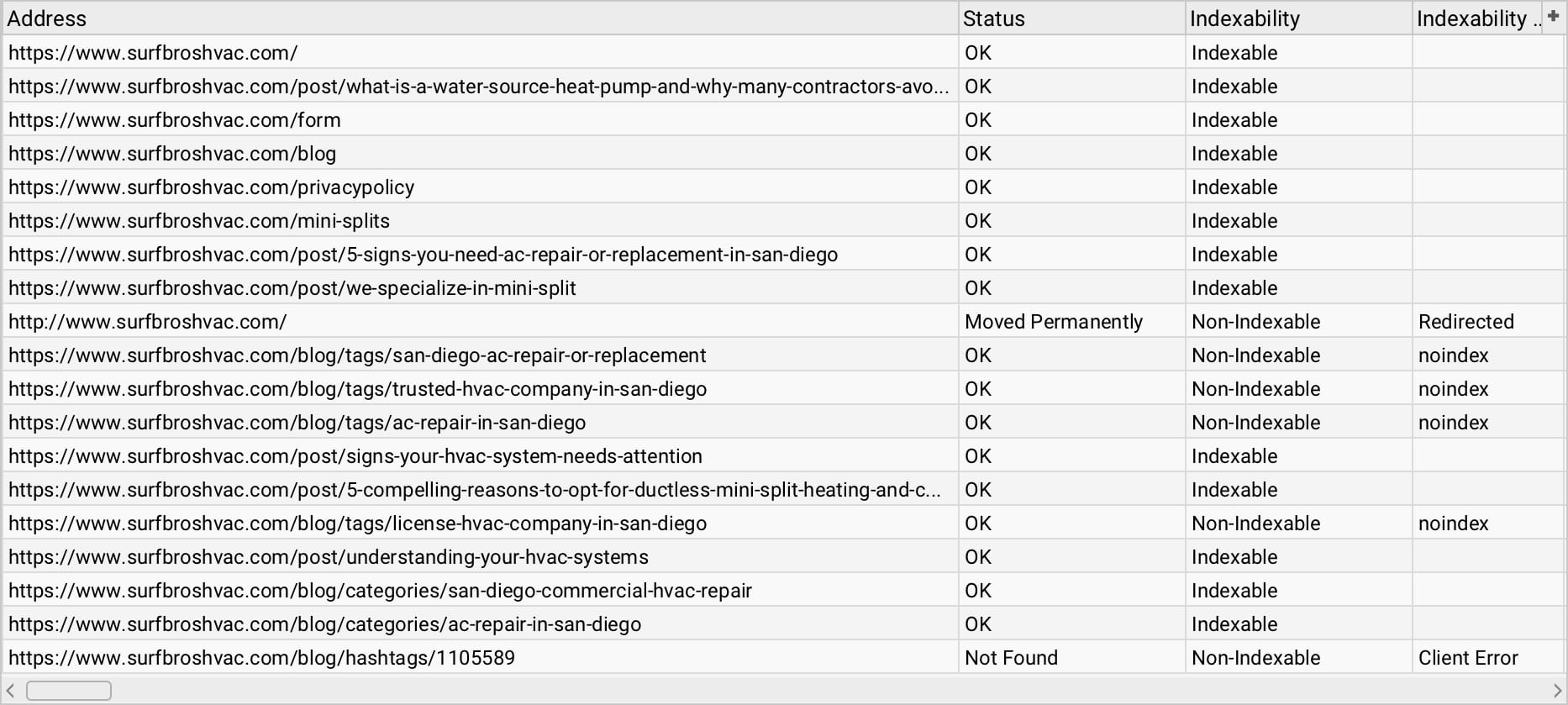
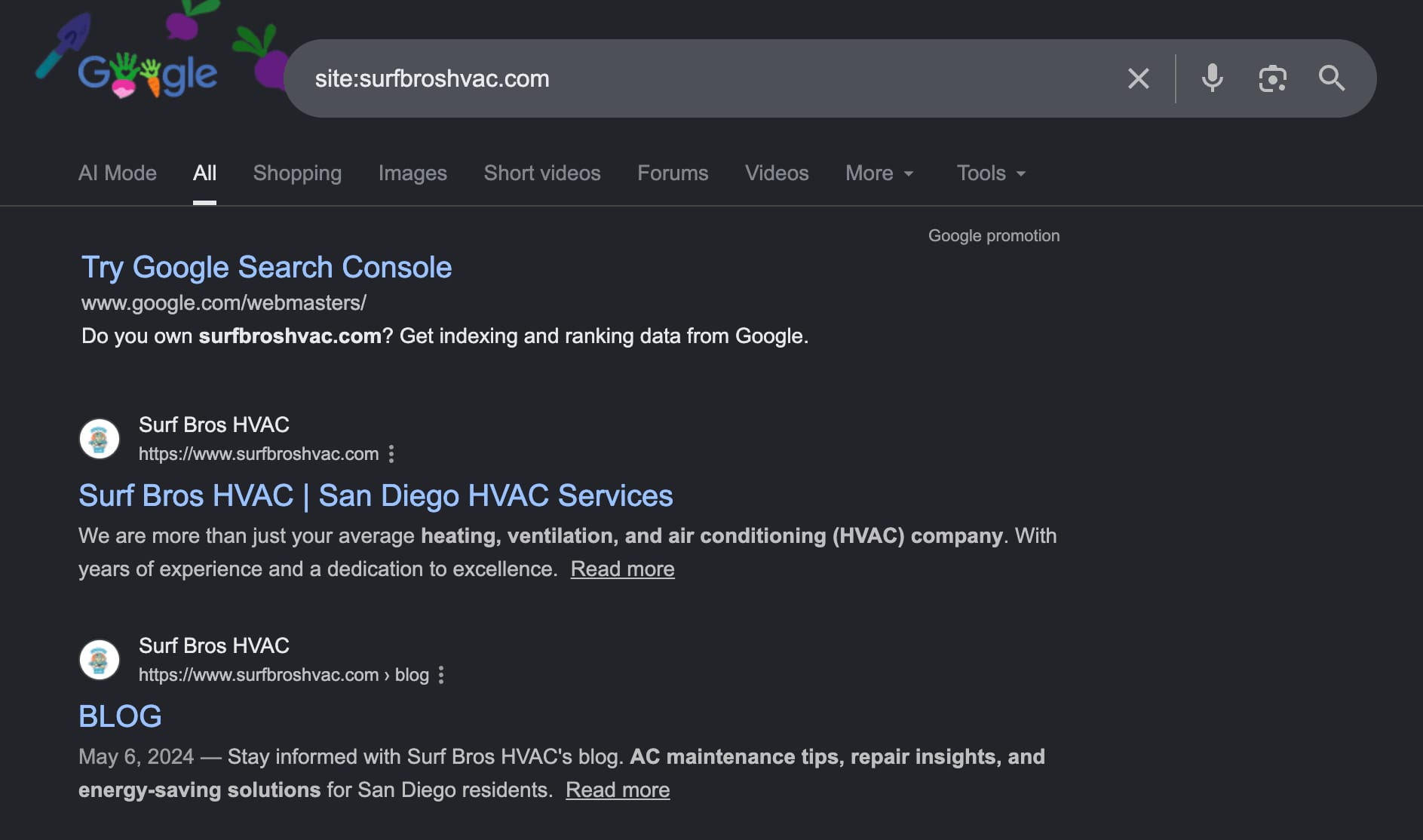
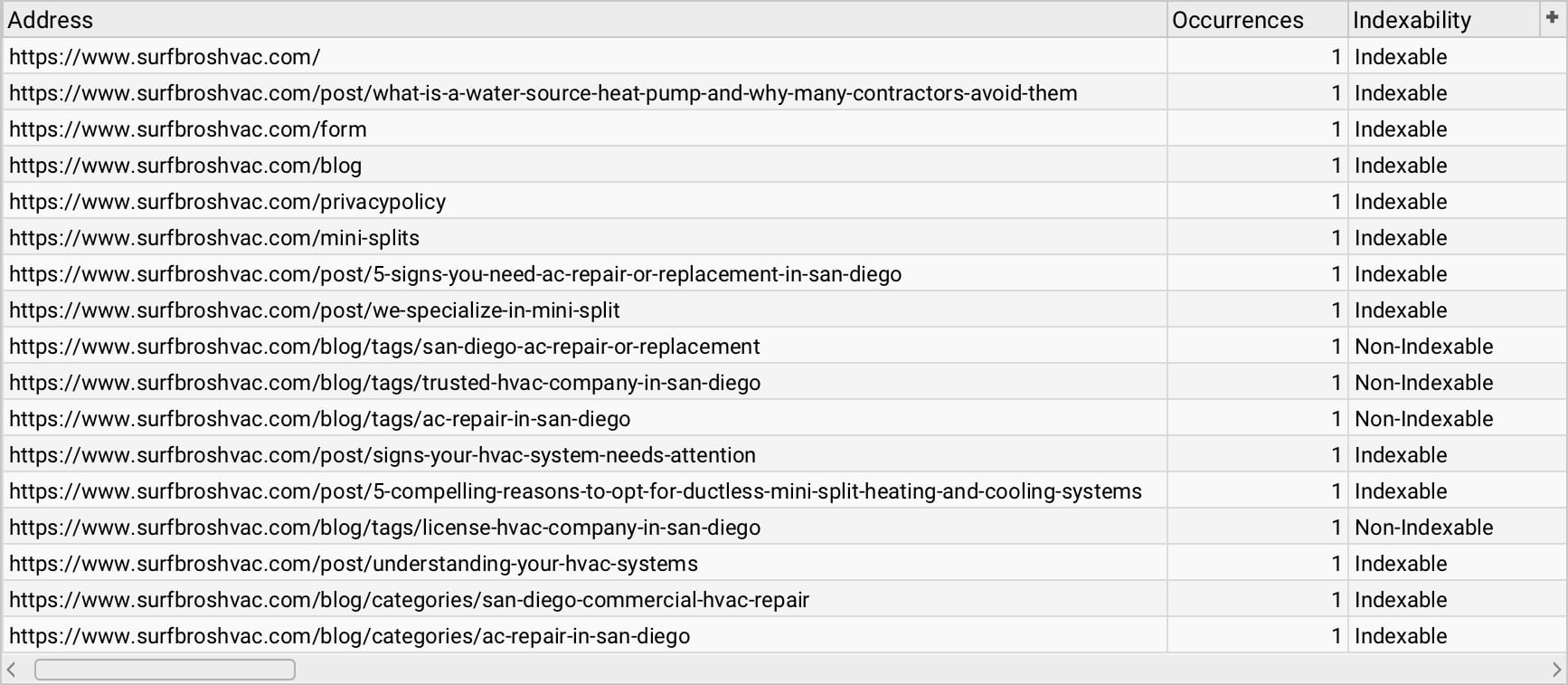
site: operator to evaluate search index visibility.Blog tag pages are appropriately configured with noindex, preventing low-value archive pages from appearing in search results. No issues related to indexed URL parameters or duplicate parameter URLs were identified.
4.2 Canonicalization
Canonical tags are implemented consistently across all crawled pages, including non-indexable URLs, providing clear signals for preferred page versions. No conflicting or incorrect canonical tags were identified during the crawl, which may indicate an effective baseline implementation for managing duplicate content signals.
4.3 Sitemap Structure
The XML sitemaps include primary website pages while excluding parameter URLs, staging environments, and other low-value pages. This provides search engines with a focused set of crawlable URLs and may support efficient content discovery.
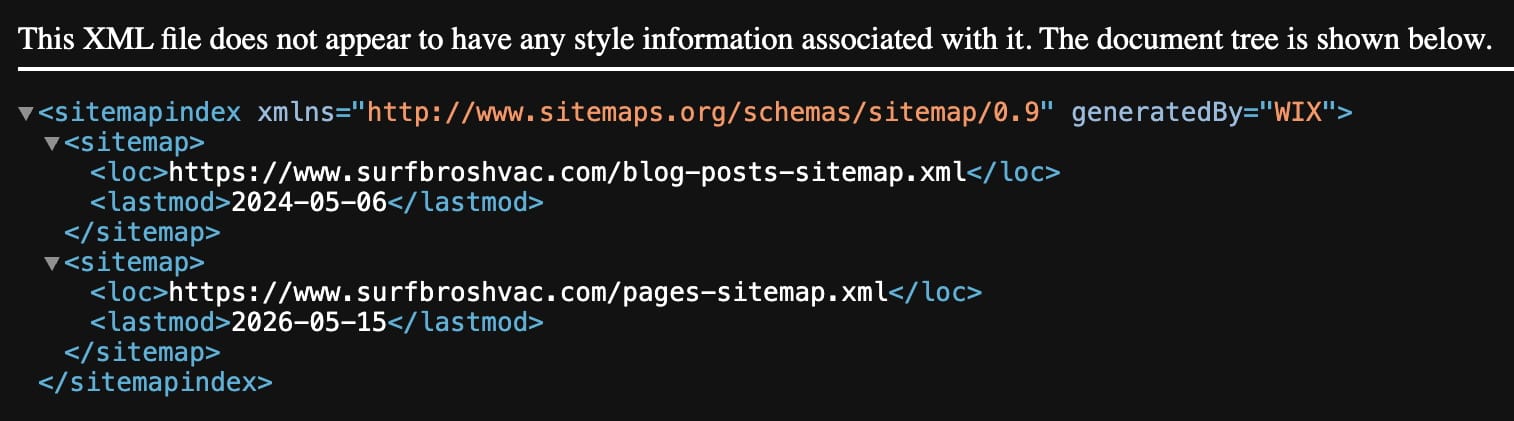
The sitemap is segmented into separate files for primary pages and blog posts, providing search engines with a structurally organized set of crawlable URLs. This segmentation reflects a reasonable baseline for sitemap organization.
4.4 Response Codes & Navigation Behavior
The crawl identified a predominantly healthy HTTP status profile, with most internal HTML pages returning a 200 status code. One 301 redirect and one 404 page were identified, suggesting only minor response code issues within the crawl.
The isolated 404 page may indicate a removed or outdated URL that remains internally or externally referenced. While limited in scope, broken pages should be monitored to prevent navigation issues and preserve crawl efficiency.
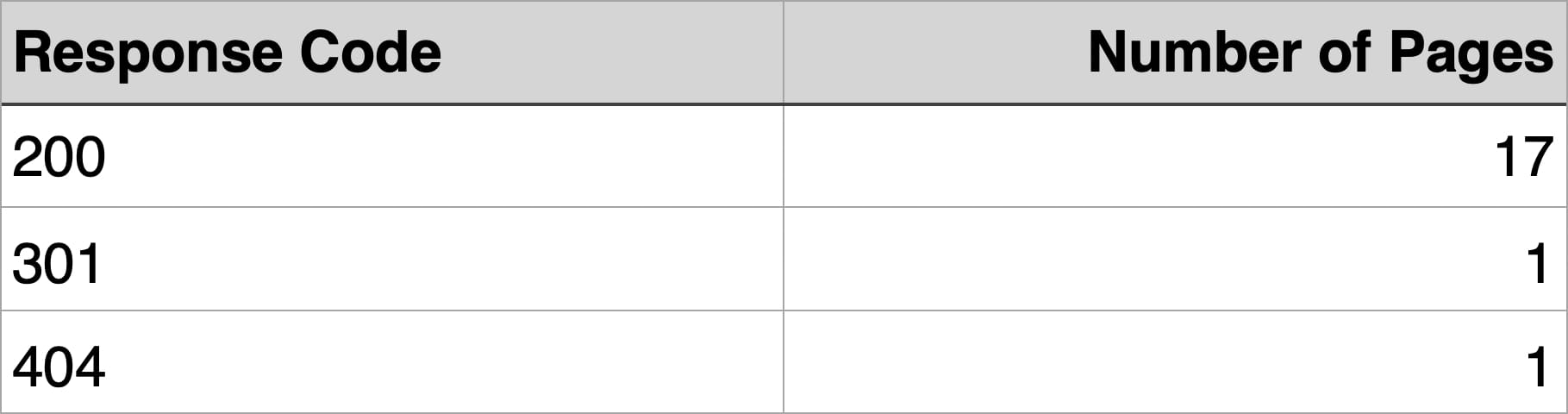
Note: This dataset includes only internal HTML URLs. Non-HTML resources (e.g., images, scripts, and external URLs) have been excluded from this analysis.
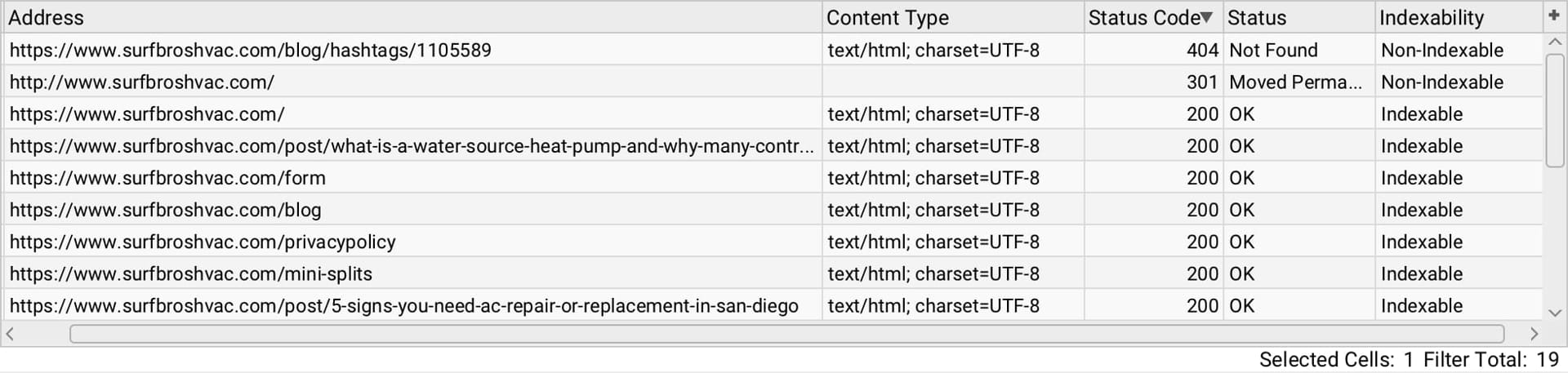
Navigation behavior also presents a technical inconsistency relevant to crawlability. Some interactive elements function as visual buttons rather than semantic HTML links, which may limit their discoverability by search engine crawlers in addition to reducing clarity for users.
4.5 Structured Data
Structured data is implemented on the homepage through Local Business and Organization schema. Google's Rich Results Test detected both schema types as valid, indicating that foundational structured data is correctly implemented.
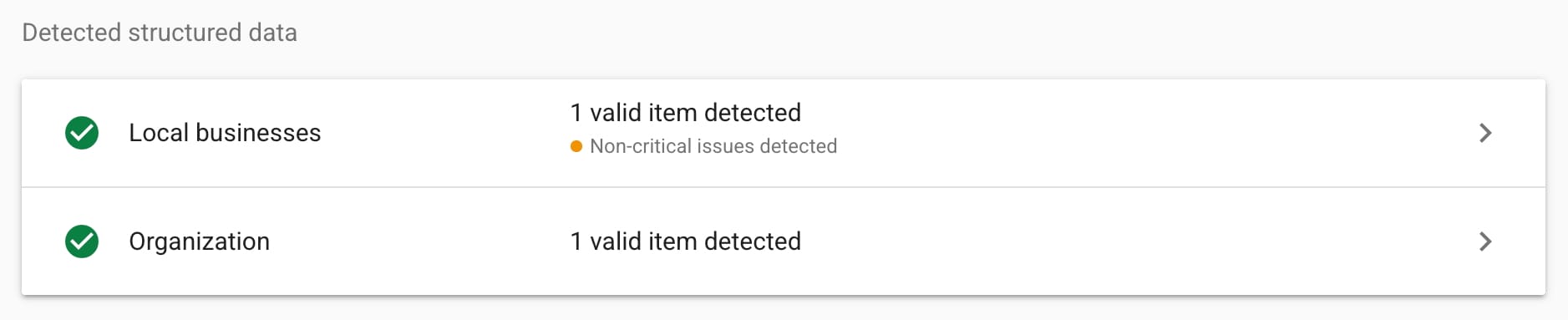
The only issue identified was a missing optional priceRange property within the Local Business schema. Although this does not affect rich result eligibility, opportunities exist to expand structured data beyond the homepage to additional service and blog content, which may improve semantic coverage across the site.
4.6 Performance & Core Web Vitals
Mobile PageSpeed Insights testing identified performance scores of 59 and 60 for the homepage and Mini Splits page, respectively, placing both pages within Google's "Needs Improvement" range as shown in the tested results. Largest Contentful Paint (LCP) exceeded Google's published recommended threshold on both pages, particularly on the Mini Splits page, which recorded an LCP of 7.4 seconds. Cumulative Layout Shift (CLS) was only slightly elevated, while no Interaction to Next Paint (INP) data was available.
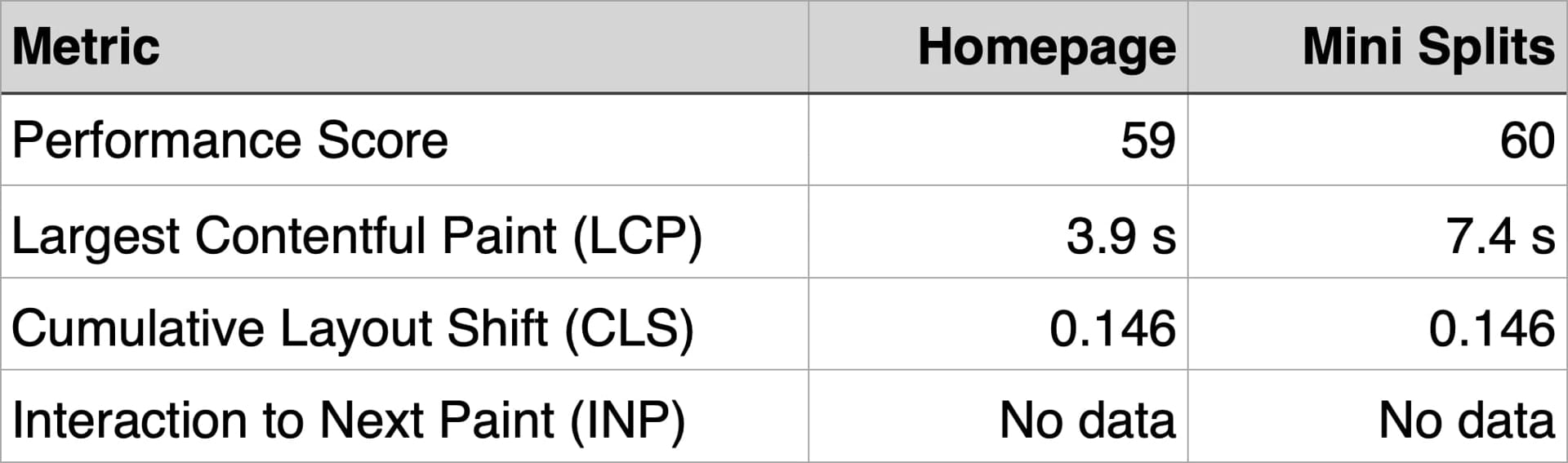
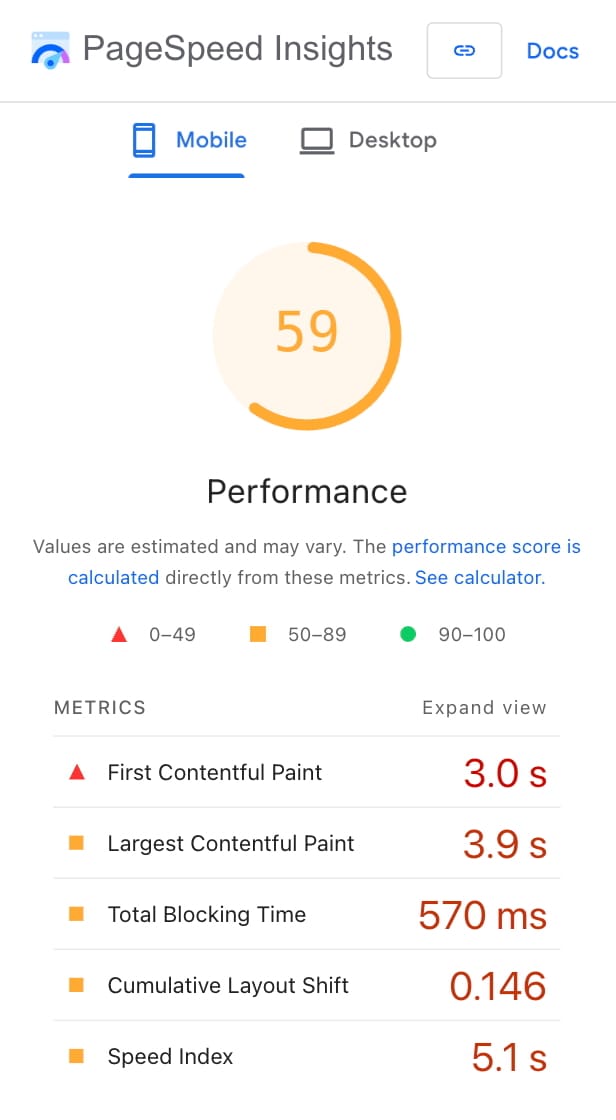
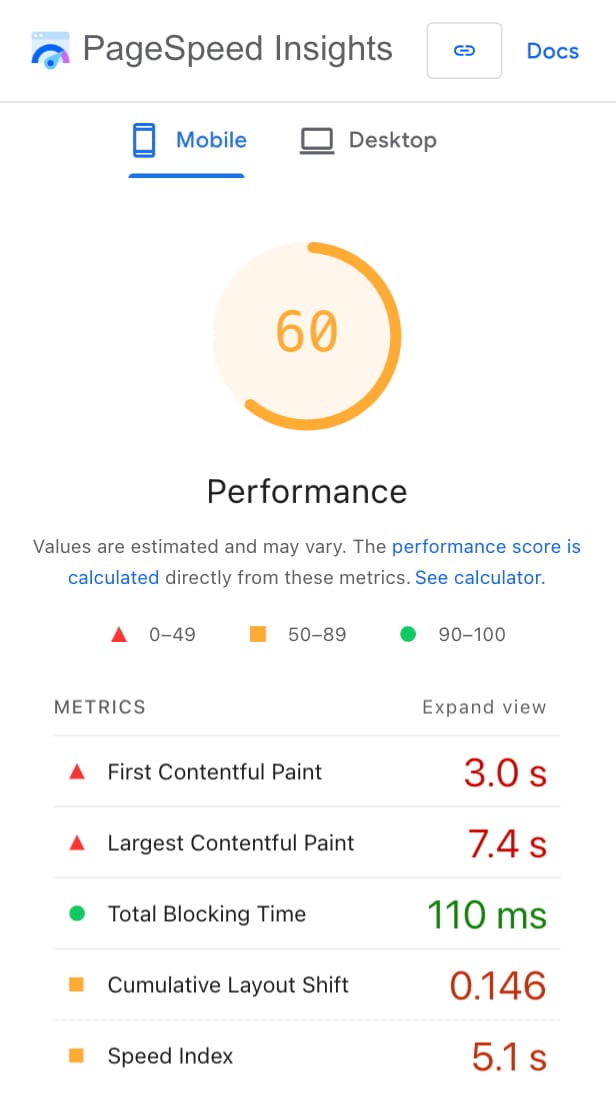
Mobile performance presents an optimization opportunity, as elevated LCP values indicate that key content takes longer than recommended to become visible, while layout stability remains relatively consistent. Performance improvements should prioritize measurable user experience gains over performance scores alone.
4.7 Robots.txt Configuration
The robots.txt file allows full crawling access to the website for all user agents, with no restrictions applied to core site content. The only general directive excludes URLs containing ?lightbox=, which likely helps prevent the crawling of non-essential parameter-based pages.
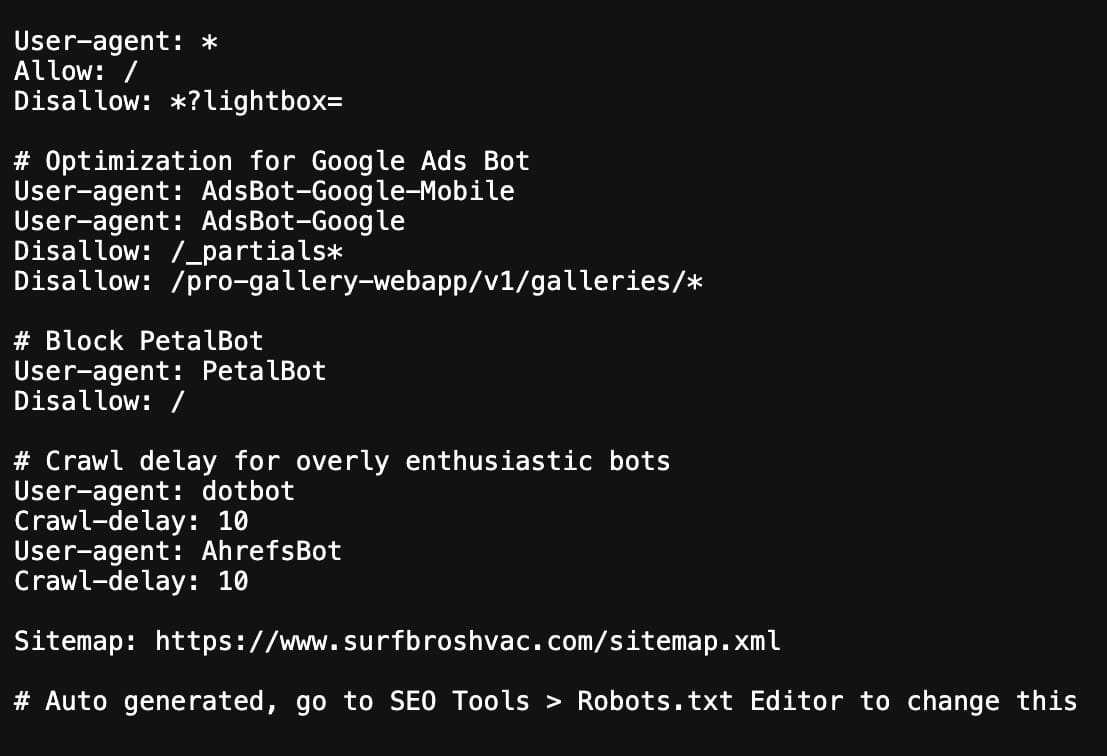
The file also includes bot-specific directives, including a full disallow for PetalBot and crawl delays for AhrefsBot and DotBot to reduce automated crawl activity. Google Ads bots (AdsBot-Google and AdsBot-Google-Mobile) are restricted only from specific non-essential paths, rather than blocked broadly, and the sitemap declaration supports search engine discovery. Overall, the configuration reflects a permissive crawl policy with targeted bot management.
5. Internal Linking & Site Structure
This section evaluates the website's internal linking structure, including navigation patterns, contextual linking, and relationships between content and service pages. The focus is on how effectively content is connected across the site and how internal pathways support content discovery and conversion journeys.
The website follows a simple service-led structure centered on HVAC services, company information, and lead generation. Primary navigation is generally clear but includes structural inconsistencies. The "Services" item links to a homepage section rather than a dedicated page, and "Deals" redirects to the "Mini Splits" service page, creating label-to-destination mismatches that may weaken site structure clarity.
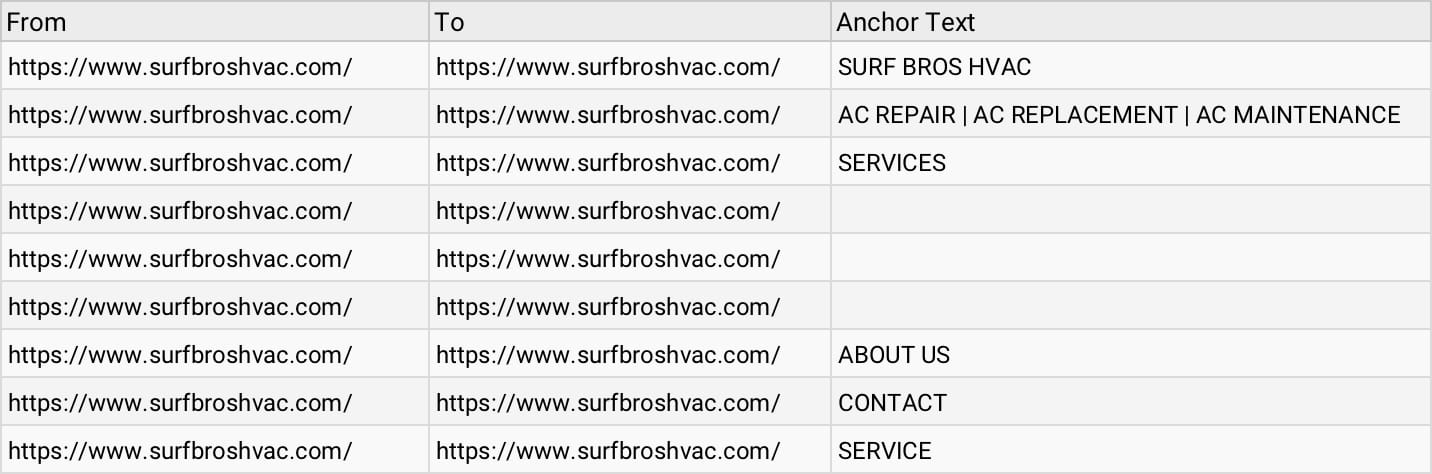
Internal linking is primarily driven by navigation elements and call-to-action buttons rather than contextual links within page content. Screaming Frog inlink data indicates a strong reliance on navigational anchors, which may contribute to homepage dominance and limit the distribution of authority to deeper service and informational pages.
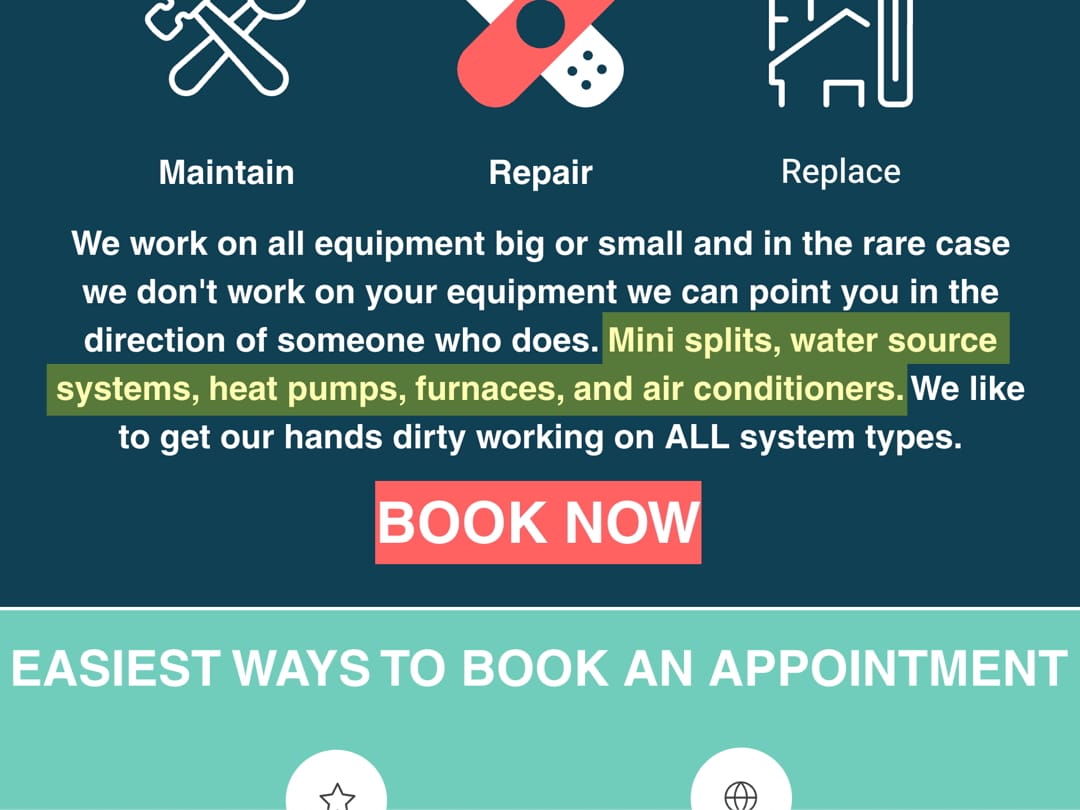
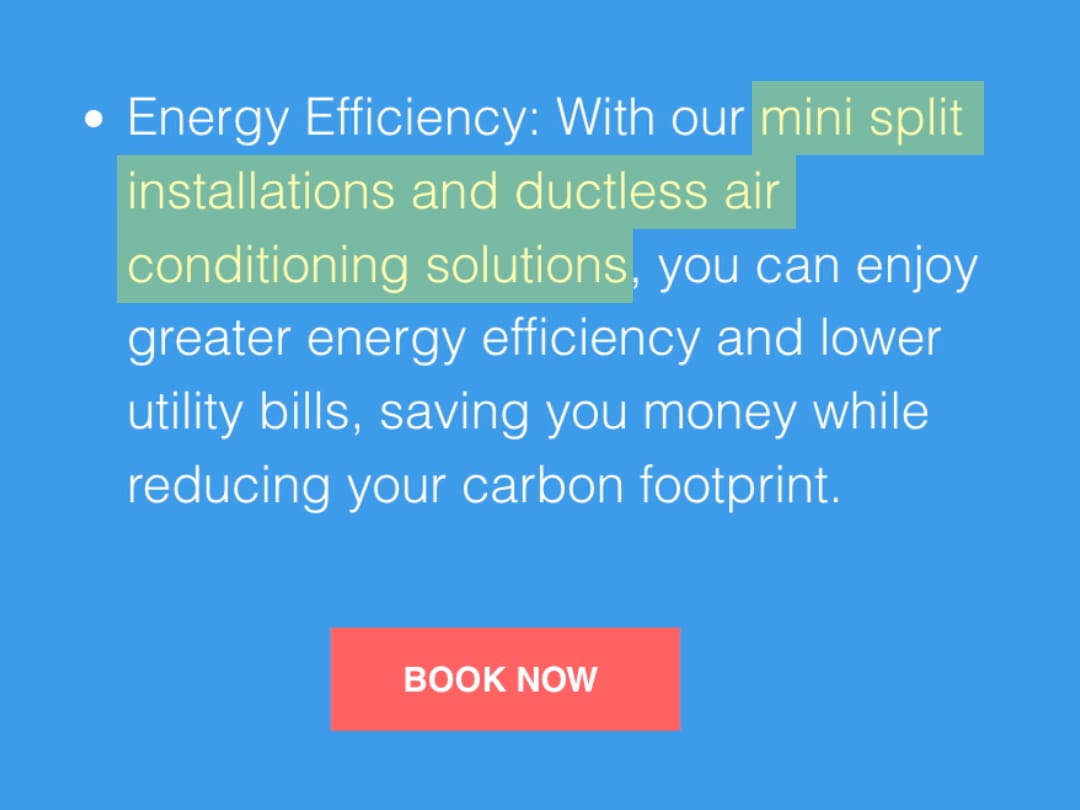
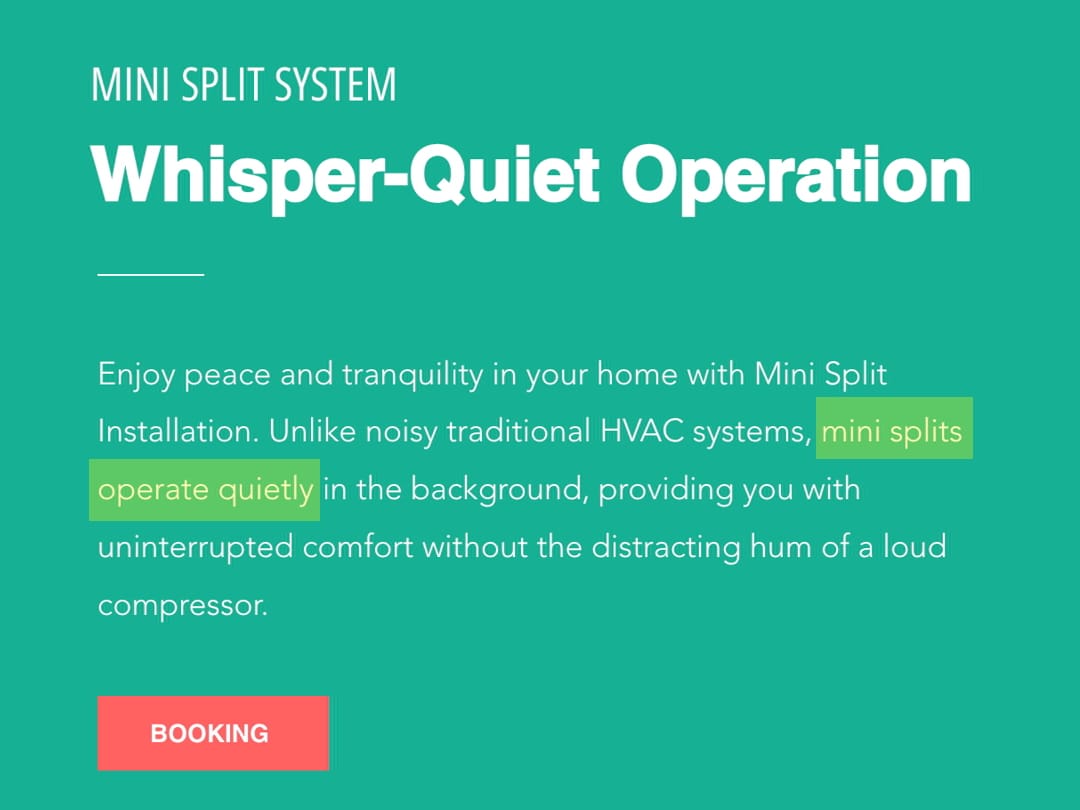
No contextual links exist between the blog and the Mini Splits page, the site's only dedicated service page, in either direction. Blog posts rely solely on call-to-action buttons directing users to the external or internal booking form, while the Mini Splits page's CTAs direct users to the external booking form and to the TECH Clean California rebate program site. This absence of contextual linking restricts opportunities to establish topical relationships and guide users between informational and service content.
Additionally, several individual blog posts are linked directly from the homepage rather than being consistently accessible through the blog index page itself, which links to only two of the site's blog posts (Figure 1.2.2). This may reduce the blog section's structural consistency and make it harder for users to browse blog content as a cohesive collection.
Blog archive pages also create circular navigation patterns, linking back to other archive pages rather than to individual posts or service content, which may retain users within index-level browsing rather than guiding them toward informational or conversion-focused pages.
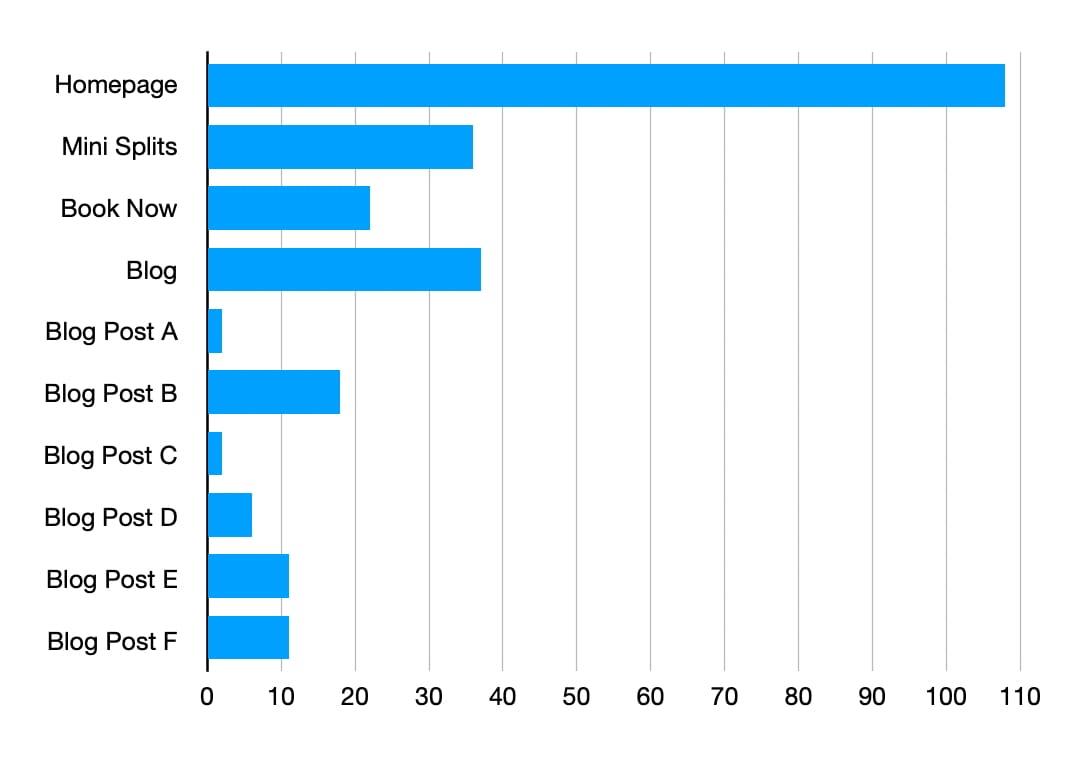
Overall, internal linking on the site relies primarily on navigation and call-to-action pathways rather than contextual, content-driven links. The blog and the site's only service page do not link to each other, several blog posts are accessible from the homepage but not from the blog index itself, and archive pages link back to other archive pages rather than to individual posts or service content.
6. User Experience Observations
This section evaluates the website's user experience and conversion behavior, including accessibility, navigation structure, trust signals, and conversion pathways. The analysis focuses on usability factors that influence engagement, clarity of site interaction, and progression toward key conversion actions.
6.1 Trust & Credibility Signals
The website includes several trust and credibility elements that may support user confidence and reinforce its local service positioning. These include customer reviews, licensing information, team profiles, and manufacturer or partner logos.
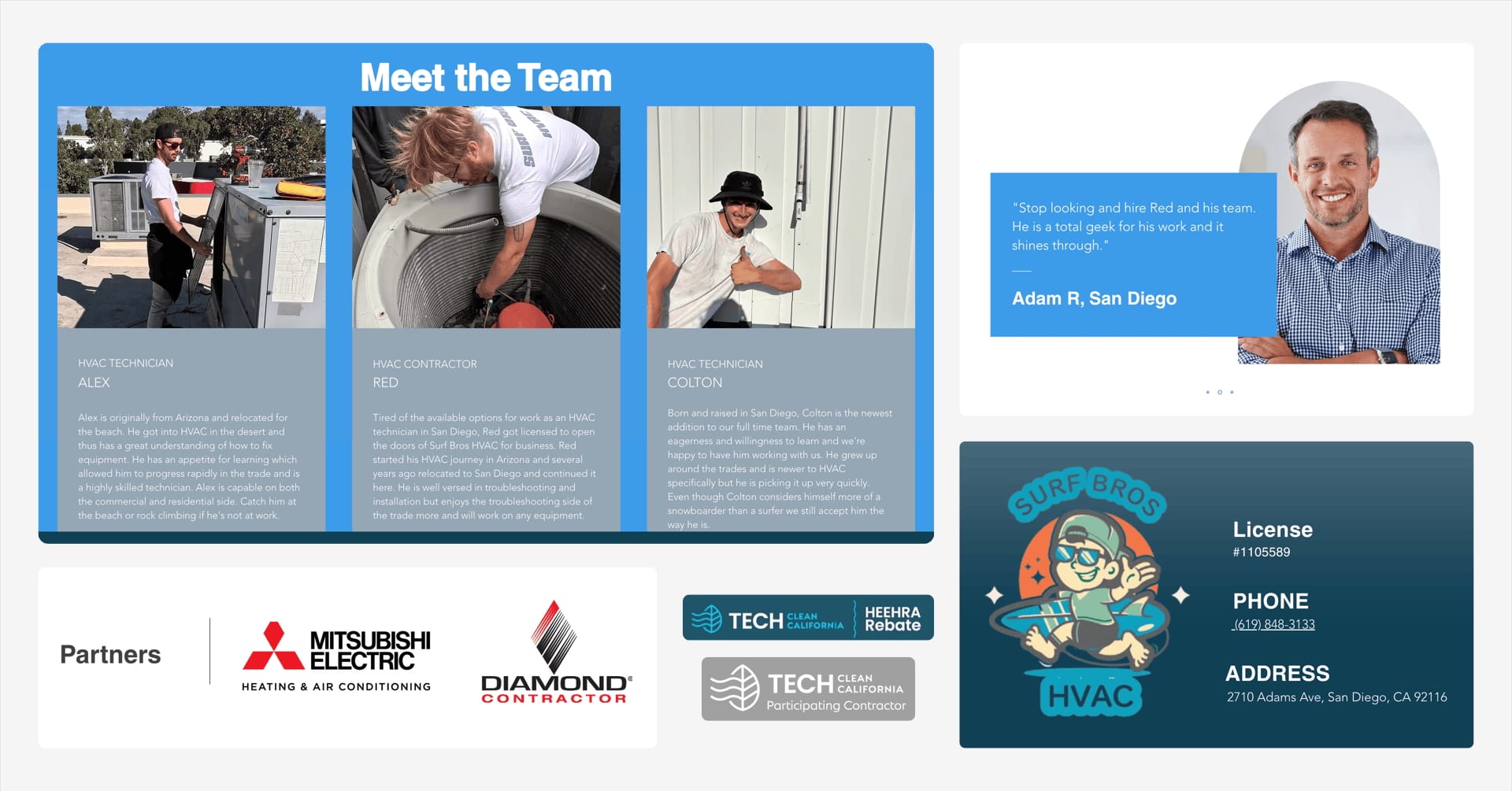
These elements may help establish legitimacy and communicate industry experience. Their consistent presence across relevant pages may support user reassurance during early-stage consideration and contribute positively to perceived professionalism.
6.2 Accessibility
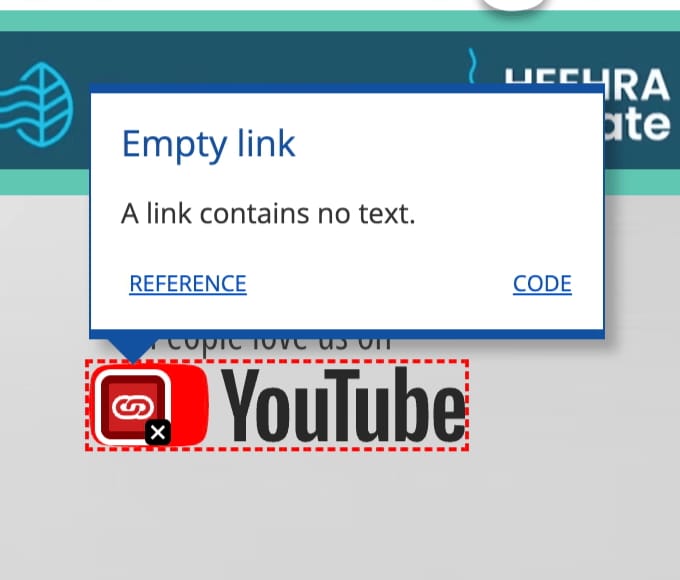
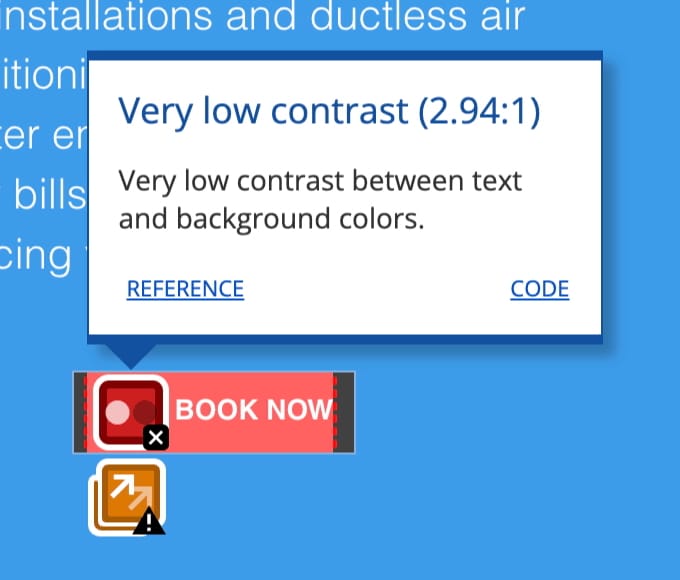
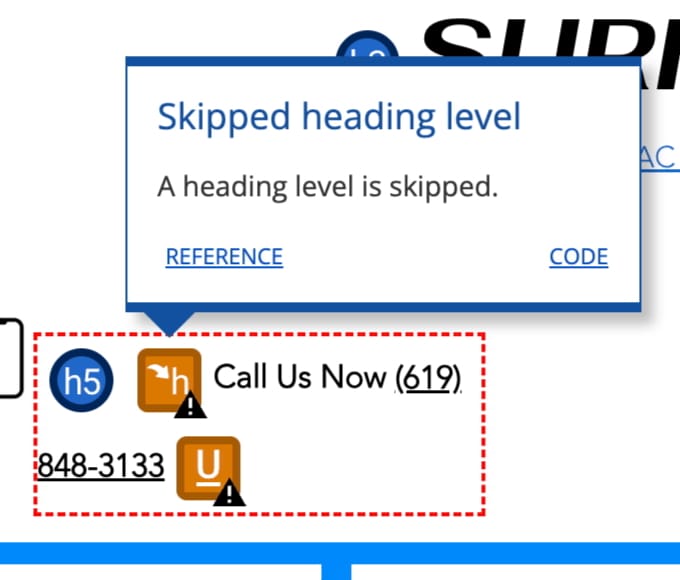
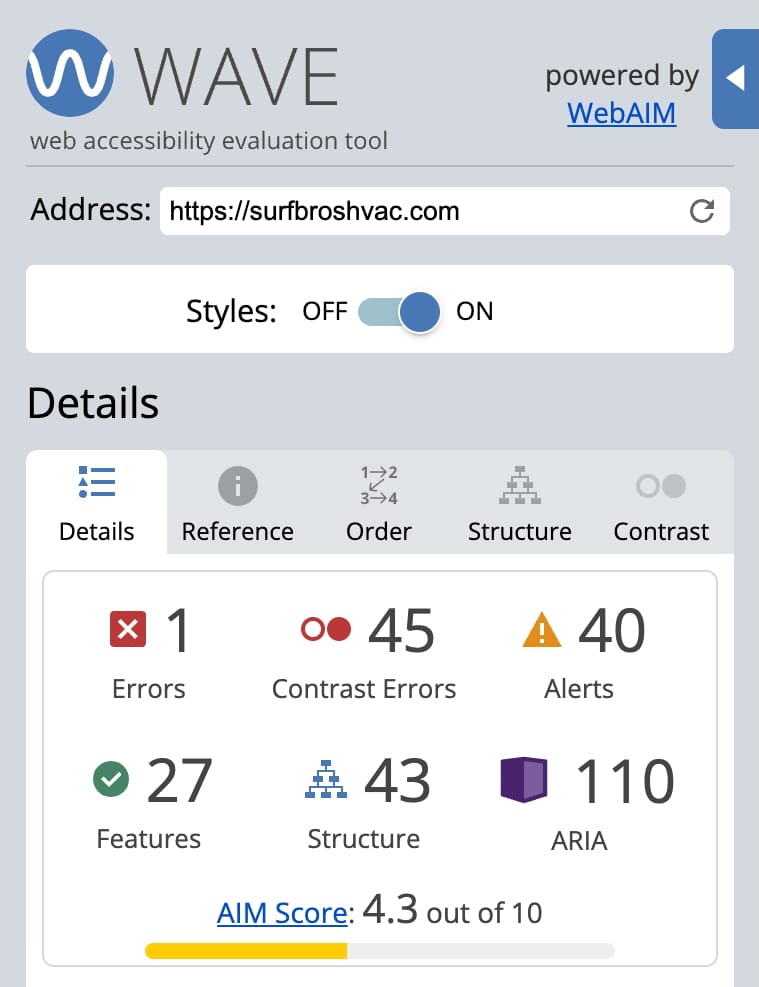
An accessibility audit of the homepage using WAVE, informed by WCAG and Section 508 standards, identified multiple issues affecting readability and structural clarity. A total of 45 contrast errors and 40 alerts were recorded, resulting in an AIM Score of 4.3 out of 10, suggesting widespread inconsistencies in visual hierarchy and semantic structure.
Key issues include insufficient color contrast across interface elements, an empty link associated with the YouTube icon lacking accessible text, and additional alerts related to skipped heading levels, small text, and non-semantic or unclear link usage.
While the site remains functional, these issues may reduce usability for users relying on assistive technologies or viewing in low-contrast conditions. Improvements to contrast ratios, semantic link labeling, and heading structure may enhance accessibility and alignment with best practices.
6.3 Navigation & Interaction
Navigation and interaction patterns show inconsistencies that may impact user expectations and clarity. The primary navigation includes a "Services" item that links to a homepage section rather than a dedicated services page, which may reduce discoverability of service-specific content. In addition, both the "Mini Splits" and "Deals" navigation items direct users to the same page, which may create ambiguity in content structure and navigation intent.
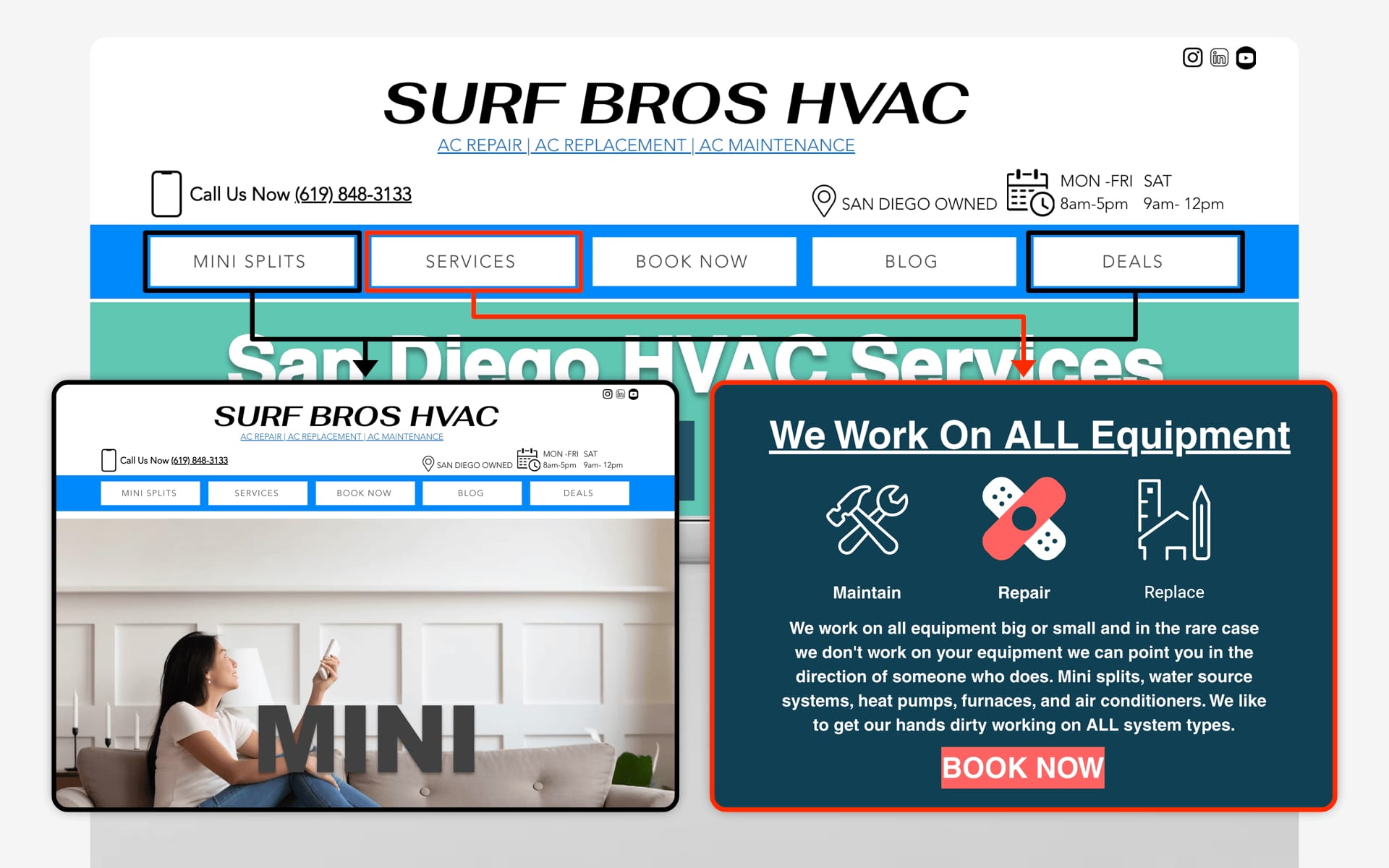
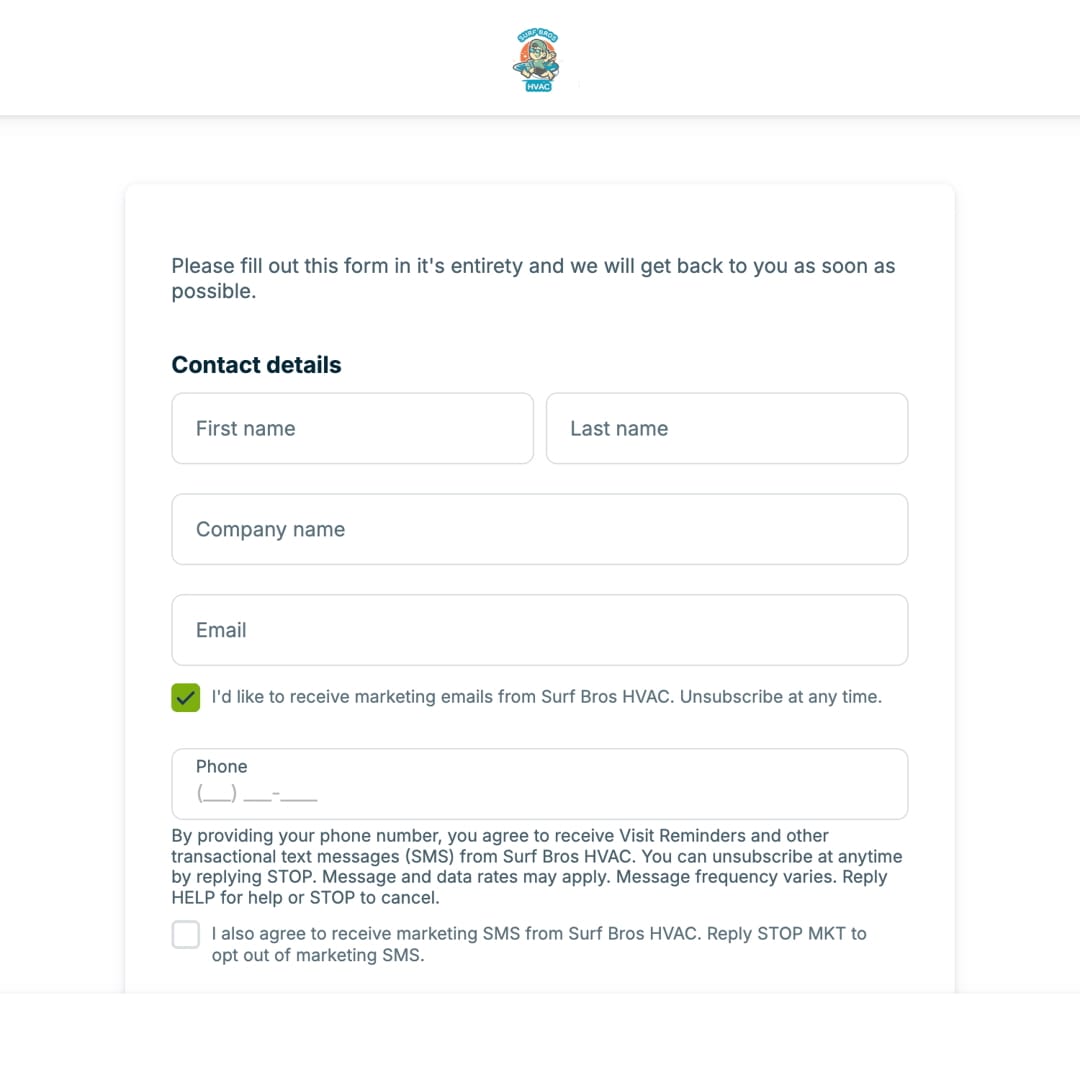
Call-to-action behavior is also inconsistent. Several "Book Now" elements open in a new tab and direct users to the external booking form, while other CTAs across the site vary in destination and function. This is reflected on the Mini Splits page, where multiple CTA buttons direct users to the external booking page while other CTAs are non-functional.
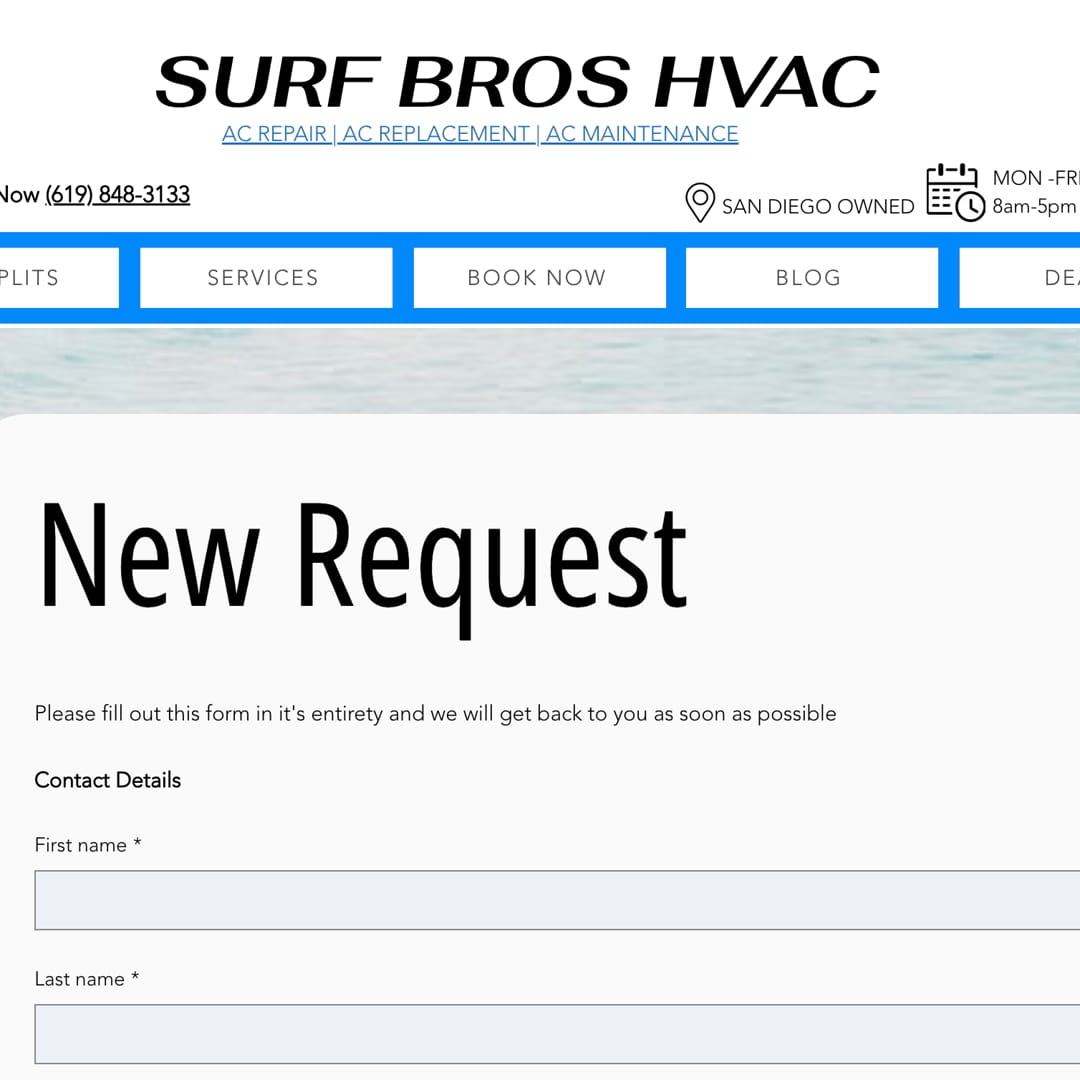
Overall, these inconsistencies may reduce predictability in user interaction and introduce friction during navigation and conversion journeys. Standardizing navigation behavior and CTA destinations may improve usability and strengthen interaction clarity.
6.4 Conversion Pathways
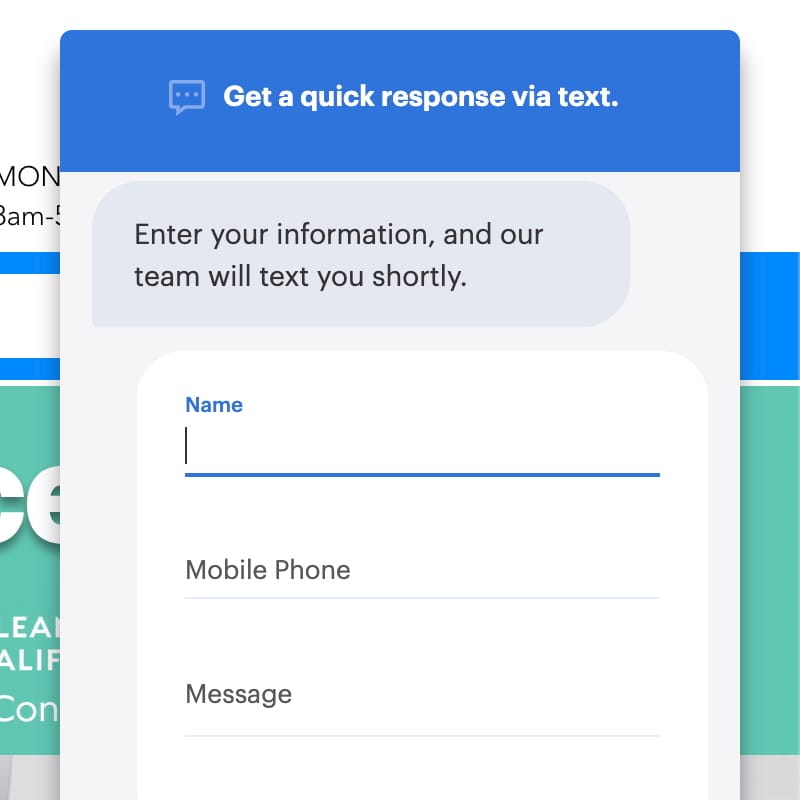
The website provides multiple conversion pathways that may align with different stages of user intent. Phone and text messaging options offer low-friction contact methods that may suit users in the consideration phase, while booking forms may align with users ready to submit a service request in the decision phase.
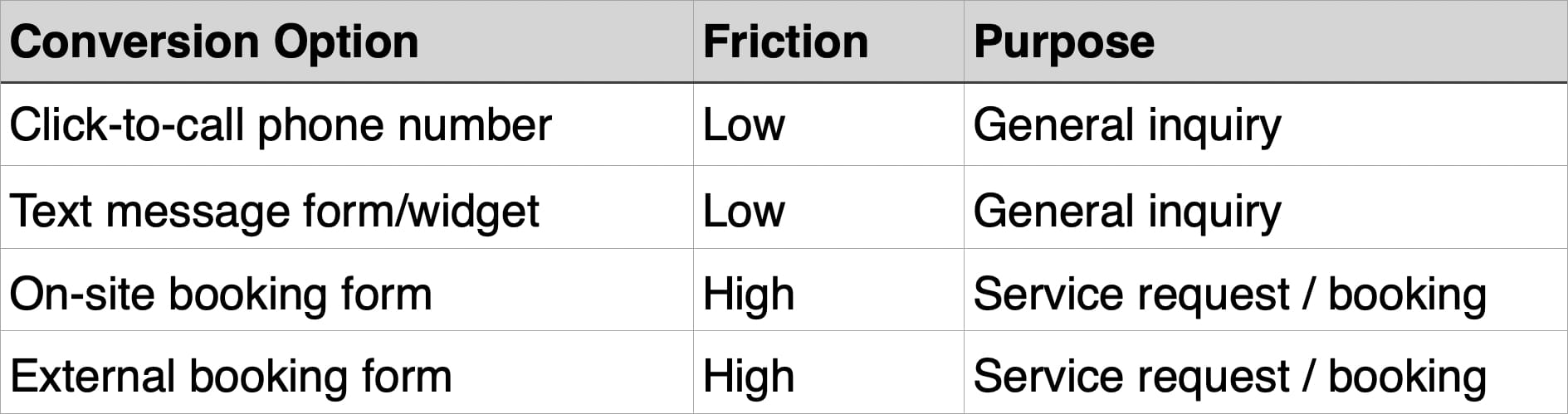
Two booking forms are present: an on-site form and an external form accessed through CTAs. Both require similar user input and serve overlapping purposes, which may create duplication without a clearly differentiated user pathway. In addition, inconsistent CTA linking may further disrupt the continuity of the conversion flow.

While phone and text options provide accessible entry points, they are not positioned as prominently as the booking CTAs on the site. This may limit clarity for users who prefer lightweight online contact methods but are not ready for a full booking submission.
6.5 Structural UX Signals
On mobile devices, several interface behaviors may impact navigation clarity and continuity. A chat popup appears immediately upon entry and partially obstructs access to the main navigation, which may disrupt the initial browsing experience. Additionally, both the hamburger menu and primary navigation bar disappear upon scrolling, which may reduce persistent access to core navigation elements during page interaction.
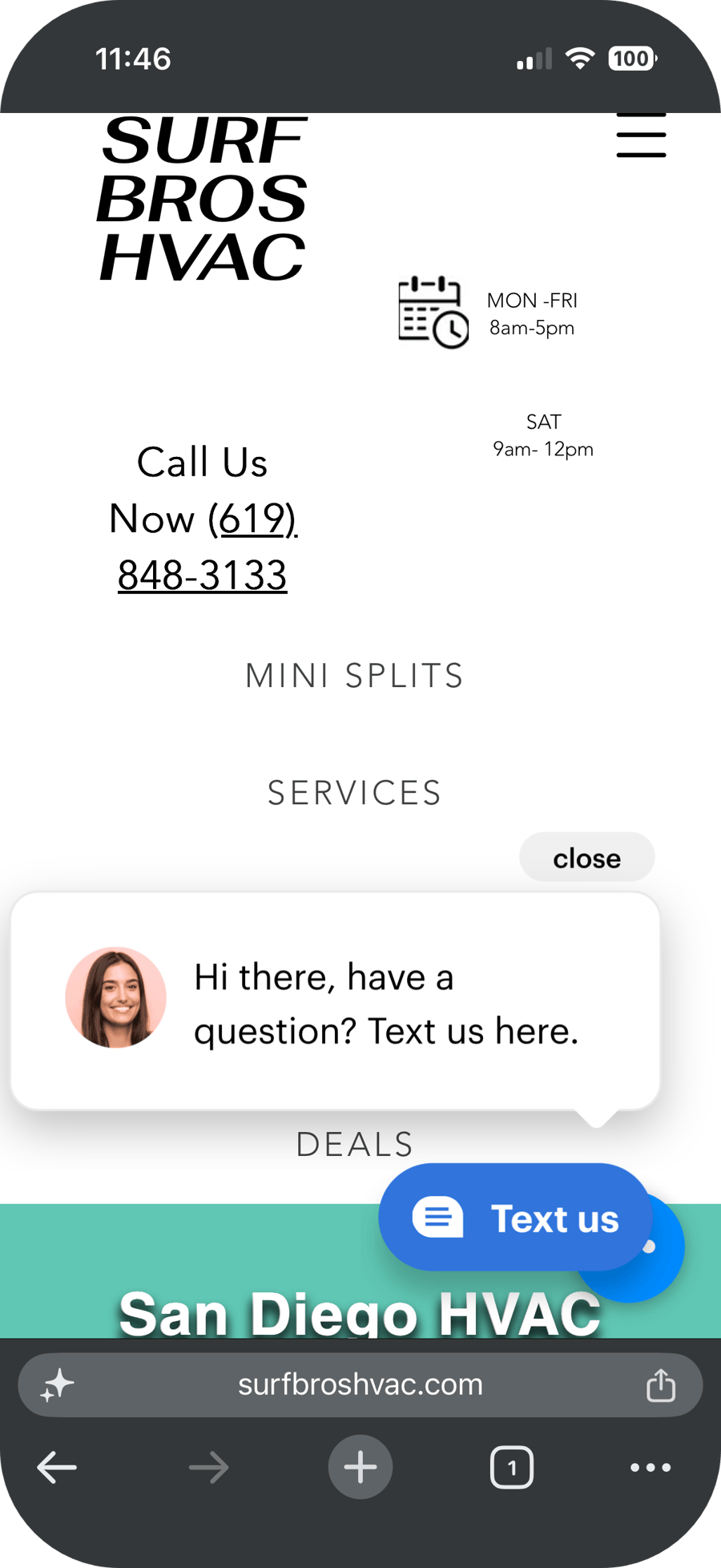
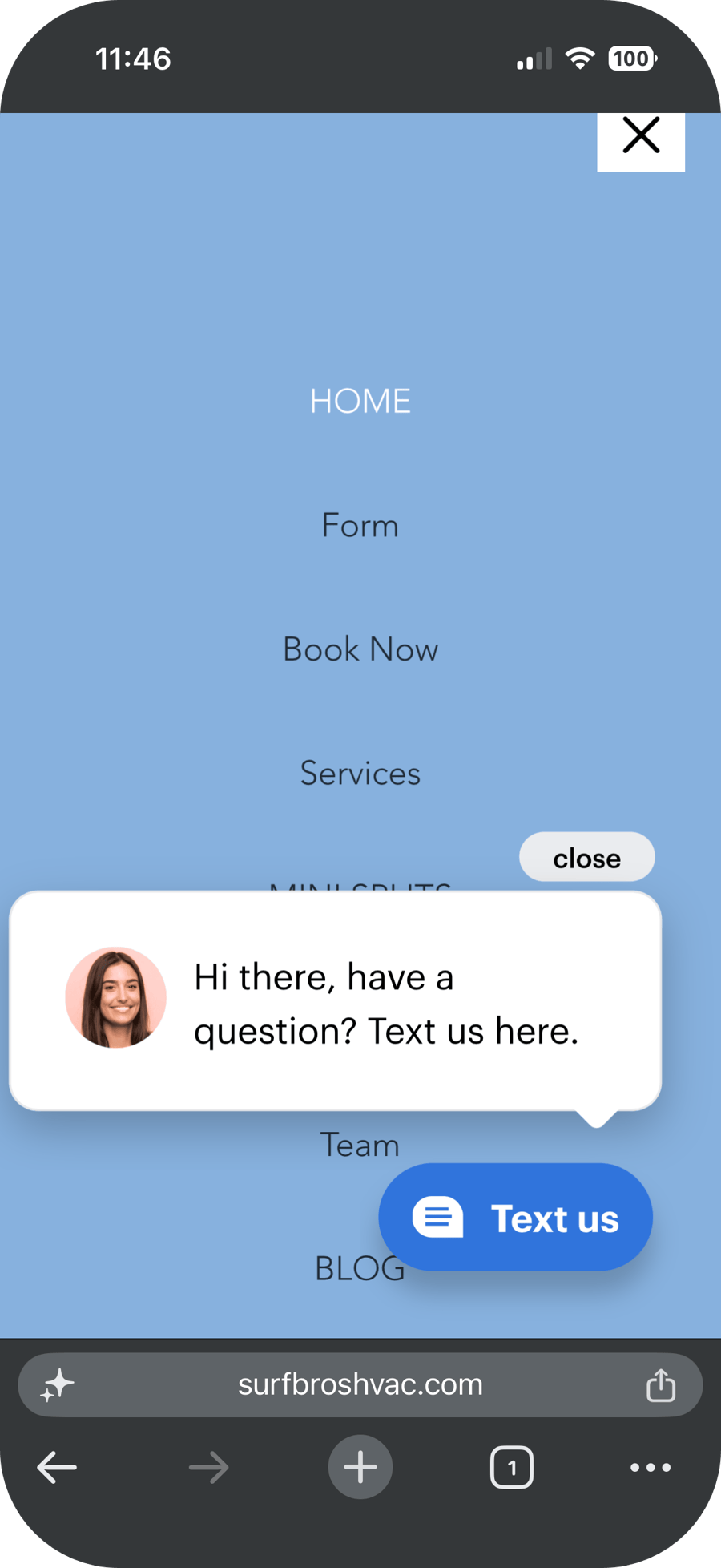
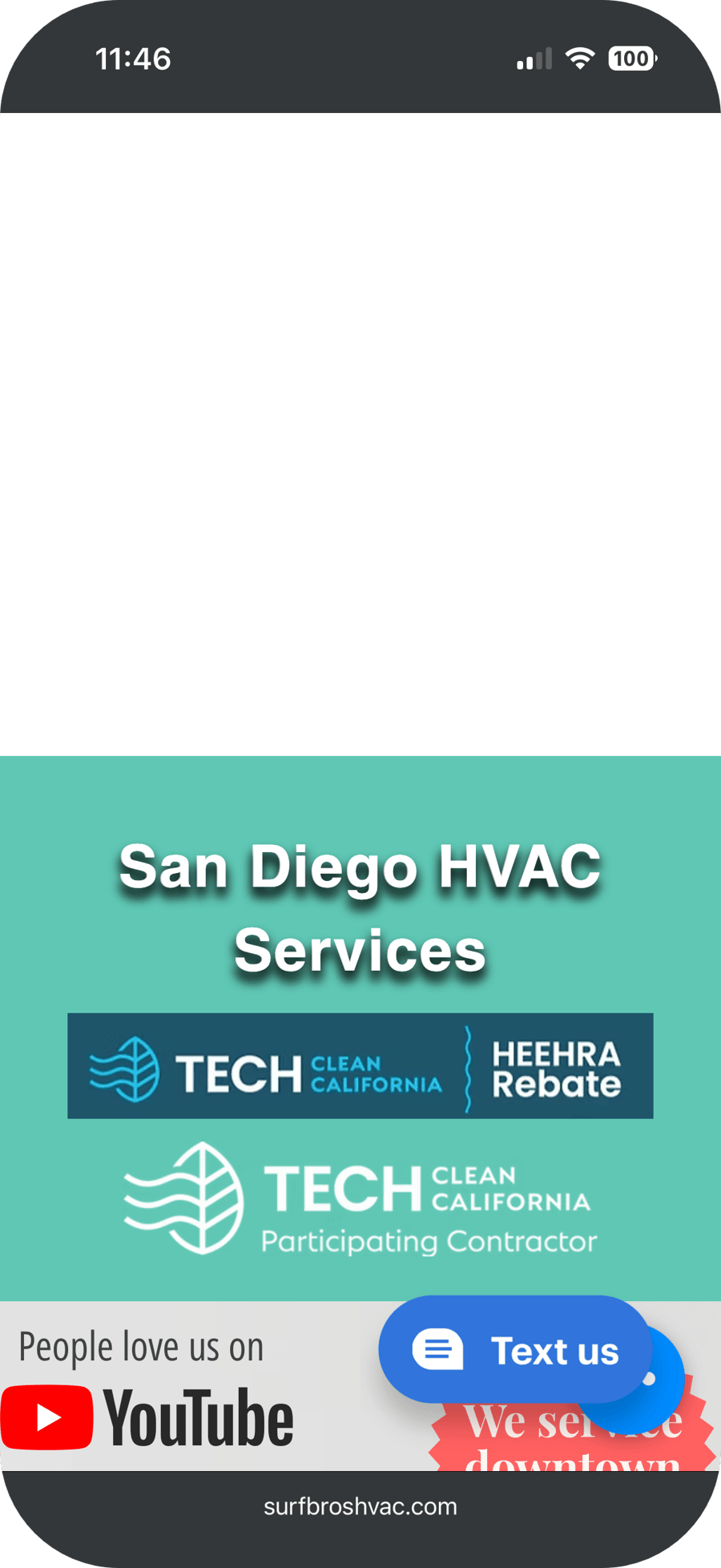
On desktop, navigation elements remain more stable, however, similar structural inconsistencies across interactive elements still create minor friction in user experience. While the site remains functional across devices, improving navigation persistence and reducing early interface obstruction on mobile may enhance usability and support smoother progression toward key conversion pathways.
7. Competitor Observations
This section compares the website against selected local competitors to identify observable differences in content, site structure, navigation, and on-page implementation. The analysis focuses on competitive patterns that may influence search visibility, user experience, and overall website effectiveness.
7.1 Benchmark Overview
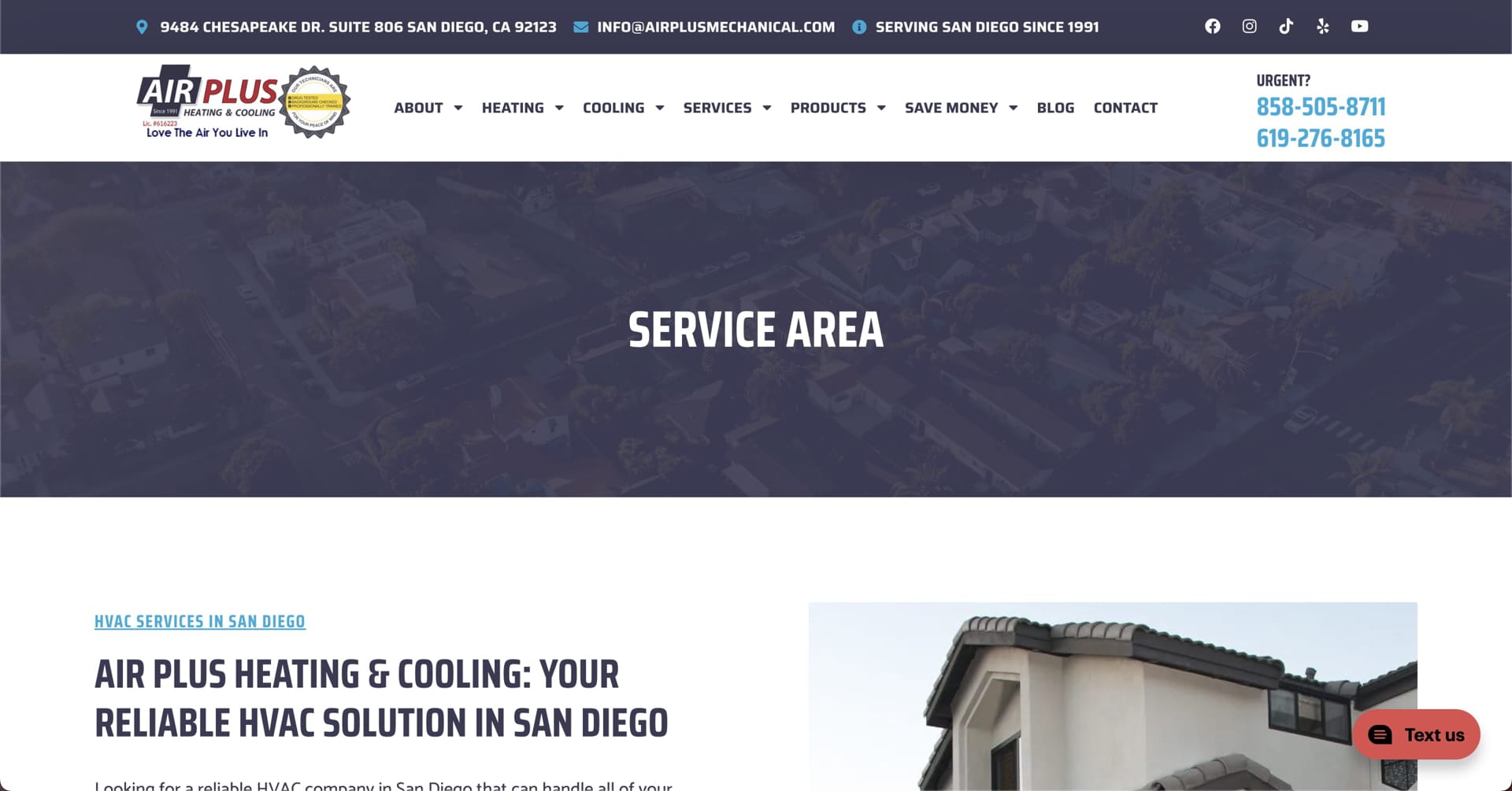
Competitors were identified through local searches for core HVAC services, including "mini split installation San Diego," "heat pump installation San Diego," "HVAC San Diego," and "air conditioning repair San Diego." Air Plus Heating & Cooling was selected as a benchmark based on its dedicated service pages for major HVAC categories and structured primary navigation. Anderson Plumbing, Heating & Air was selected because it consistently ranked on the first page of search results across multiple target queries, providing a useful benchmark for local search visibility and service content implementation.
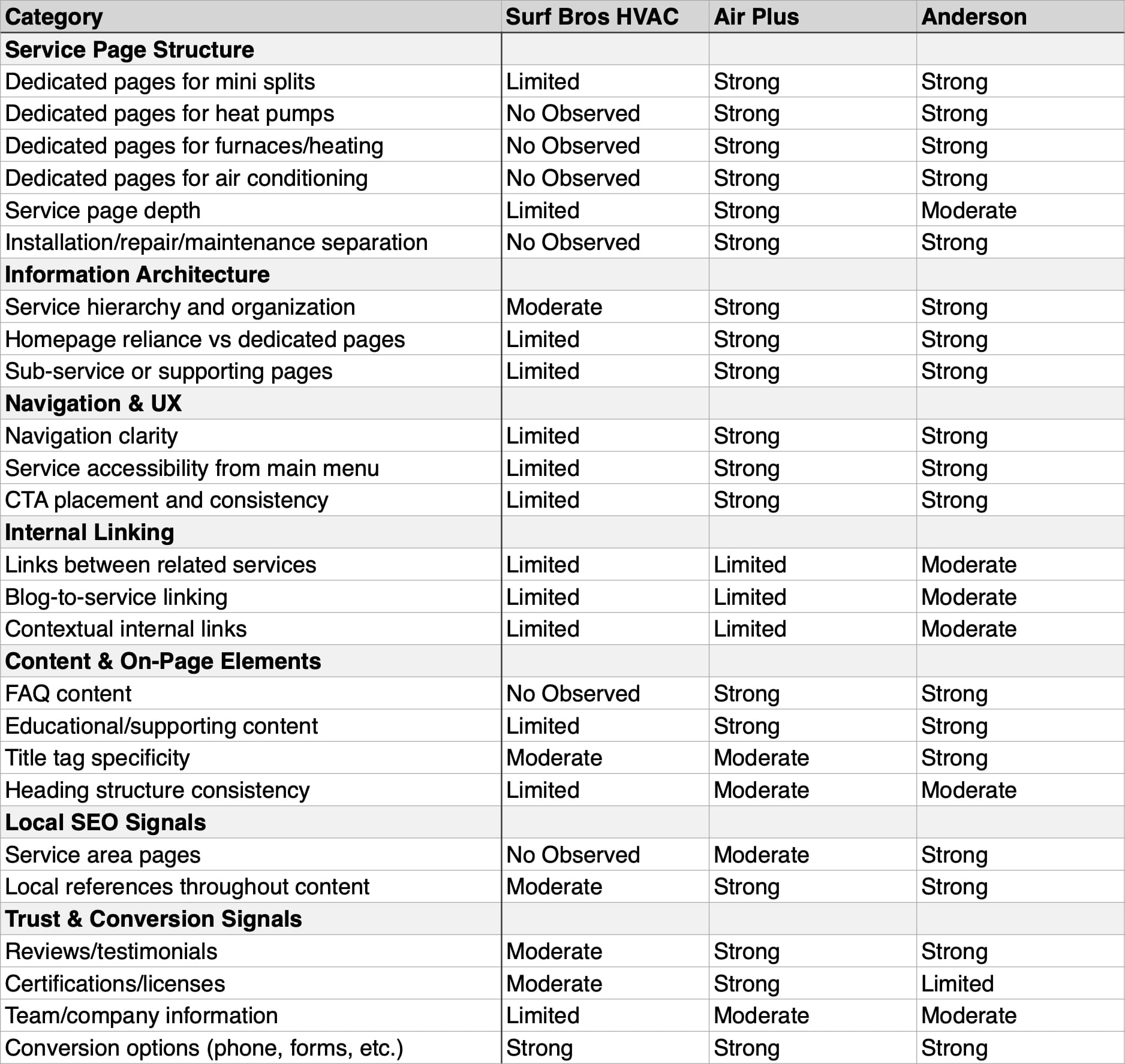

The comparison is based exclusively on observable website characteristics, including content, site structure, navigation, internal linking, and on-page elements. Qualitative ratings (Strong, Moderate, Limited, and Not Observed) reflect the relative implementation of these features across the reviewed websites.
7.2 Key Observations
Service Content and Site Structure
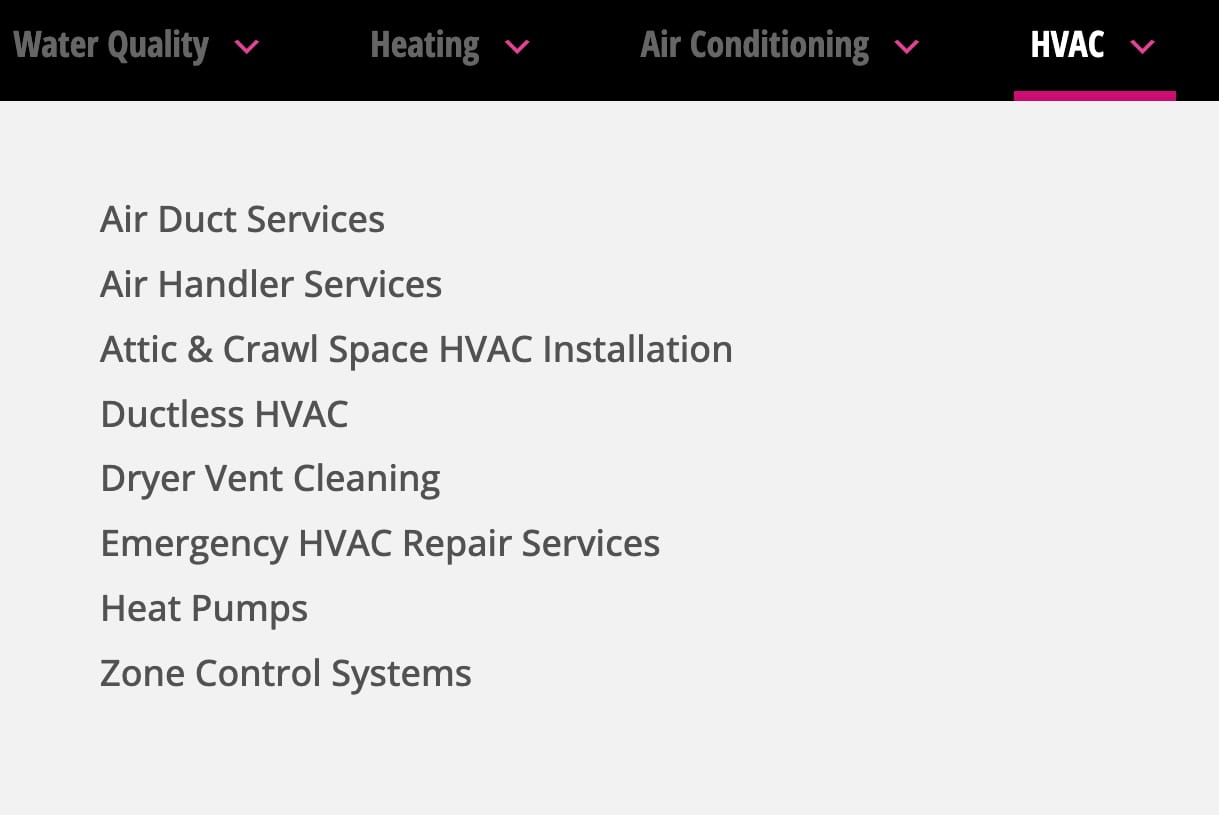
Both competitors demonstrate greater service specialization than Surf Bros. Air Plus and Anderson maintain dedicated pages for major HVAC services, including heat pumps, air conditioning, heating, installation, repair, and maintenance. By comparison, Surf Bros primarily emphasizes mini split services, with no dedicated landing pages observed for heat pump, furnace, or air conditioning services.
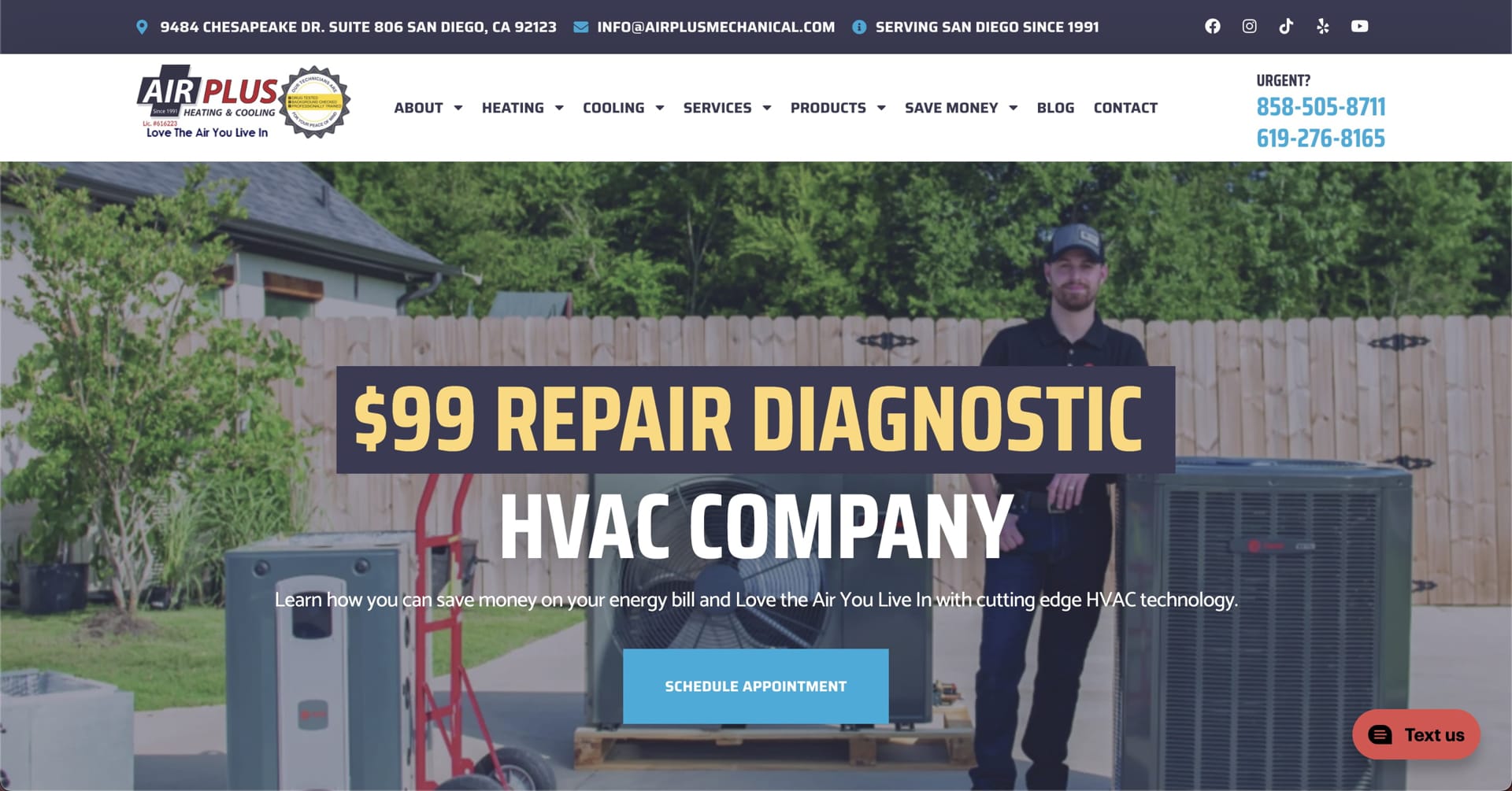
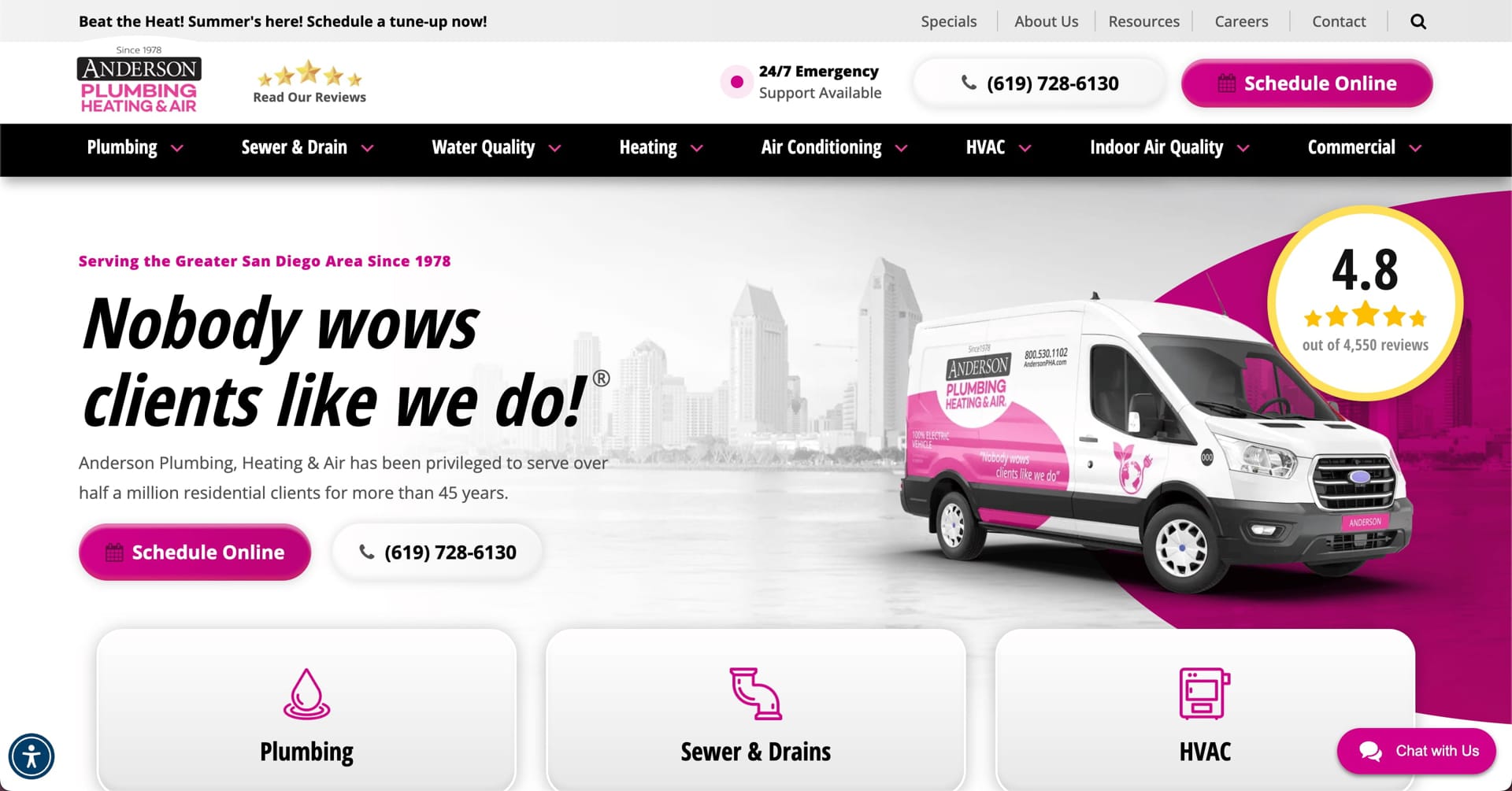
The competitors also provide deeper service content and clearer site hierarchies. Dedicated service pages may create more focused user journeys while expanding opportunities to target specific search intent. Surf Bros relies more heavily on its homepage and a dedicated mini split page, which may reduce overall content depth and site coverage.
Navigation and User Experience
Air Plus and Anderson provide more direct access to services through their primary navigation. Service categories are clearly organized and consistently linked, which may make key content easier to discover. By comparison, several navigation elements on the Surf Bros website direct users to the same destination page or homepage sections, which may reduce navigational clarity.
Despite these differences, all three websites provide multiple conversion pathways, including phone calls, contact forms, and booking options.
Content and Educational Resources
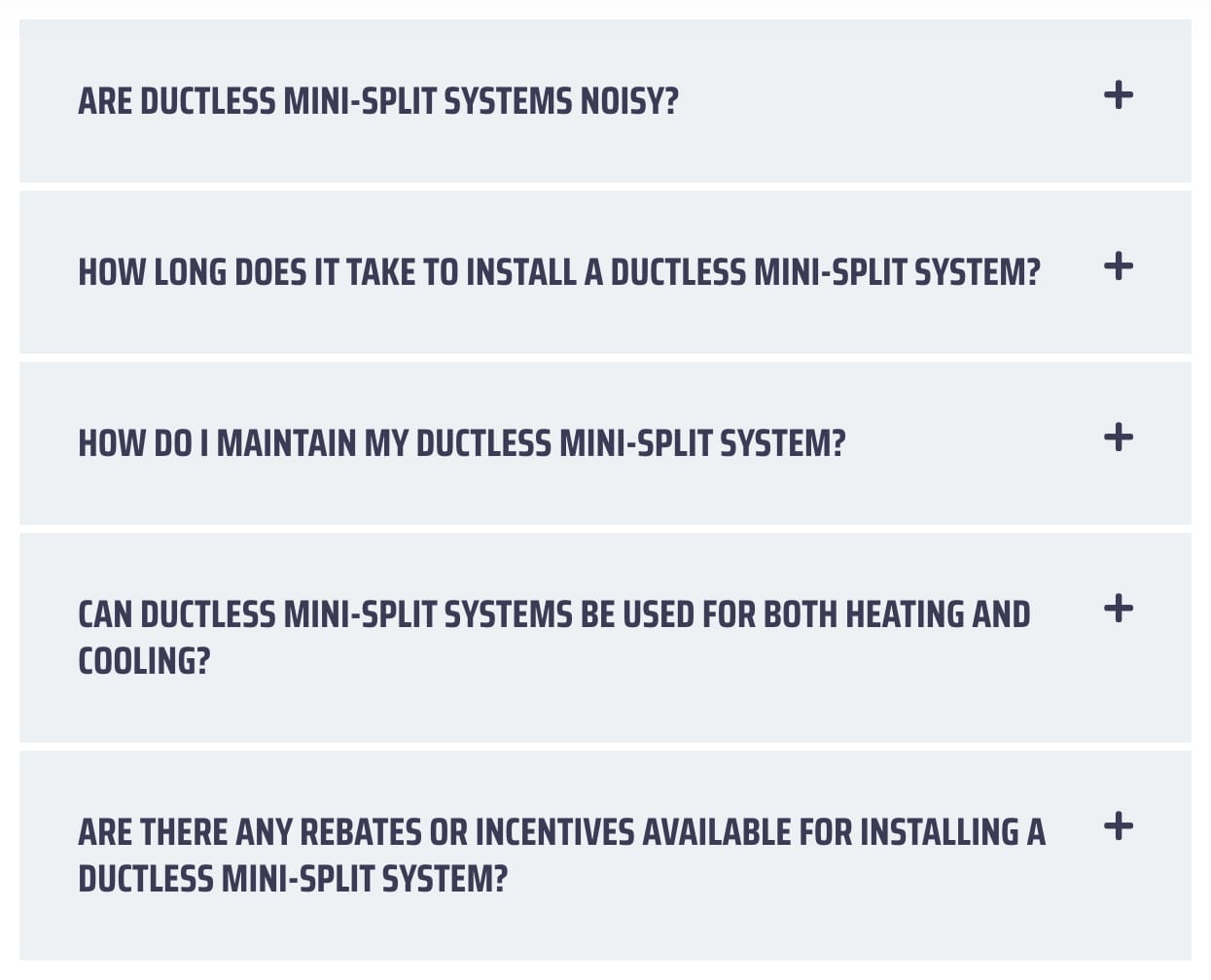
Both competitors demonstrate more developed educational content than Surf Bros. Air Plus's blog shows recent activity, with its most recent post published in June 2026 and a prior post in April 2026. Anderson's blog also shows recent activity, with three posts published in July 2026 and three additional posts in May 2026, though its blog is less prominently featured within the navigation.
FAQ content and supporting educational resources are also more prevalent across competitor websites, which may expand topical coverage and address a broader range of informational search intent.
Local SEO and Internal Linking
Anderson demonstrates stronger local SEO implementation through dedicated service area pages and consistent geographic references throughout its content. Air Plus also incorporates localized content, although to a lesser extent.
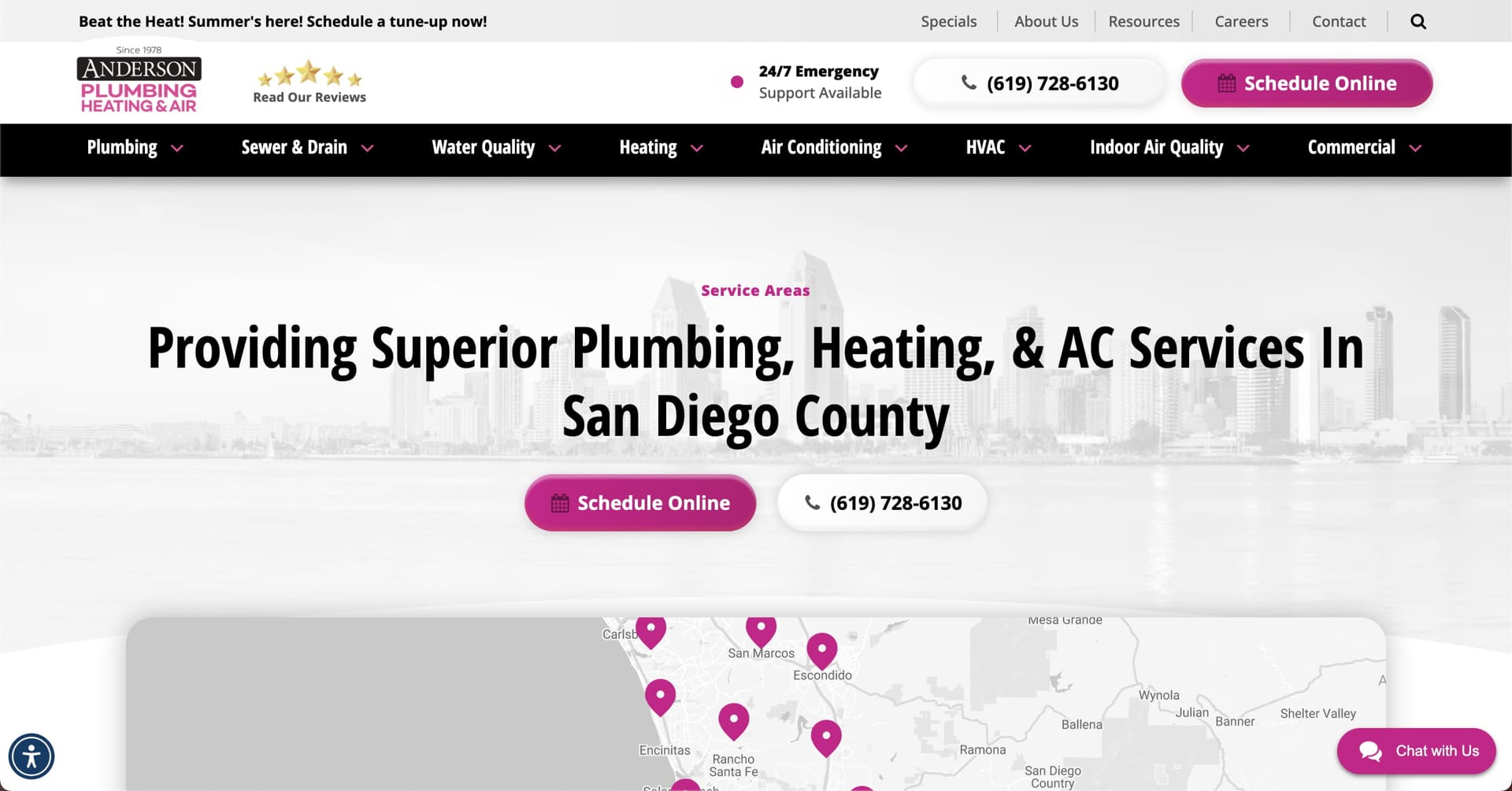
Internal linking opportunities appear limited across all three websites. However, Anderson demonstrates stronger contextual linking between related pages, while both Surf Bros and Air Plus make relatively limited use of blog-to-service links and related content connections.
7.3 Summary
The competitor analysis suggests that the most significant differences are not in trust signals or conversion opportunities, which are generally comparable across all three websites. Instead, competitors demonstrate stronger service segmentation, broader content coverage, clearer architecture, and more comprehensive educational resources. Together, these elements may create additional entry points for organic search while providing more structured navigation for both users and search engines.
8. Prioritized Recommendations
This section prioritizes the audit findings based on their potential impact, implementation effort, and expected contribution to search visibility, user experience, and conversion performance. The recommendations provide a practical framework for guiding future SEO improvements.
8.1 Prioritization Framework
Recommendations were prioritized by evaluating both their expected impact and implementation effort. This framework distinguishes immediate opportunities from longer-term initiatives and provides a structured basis for the recommendations presented below.
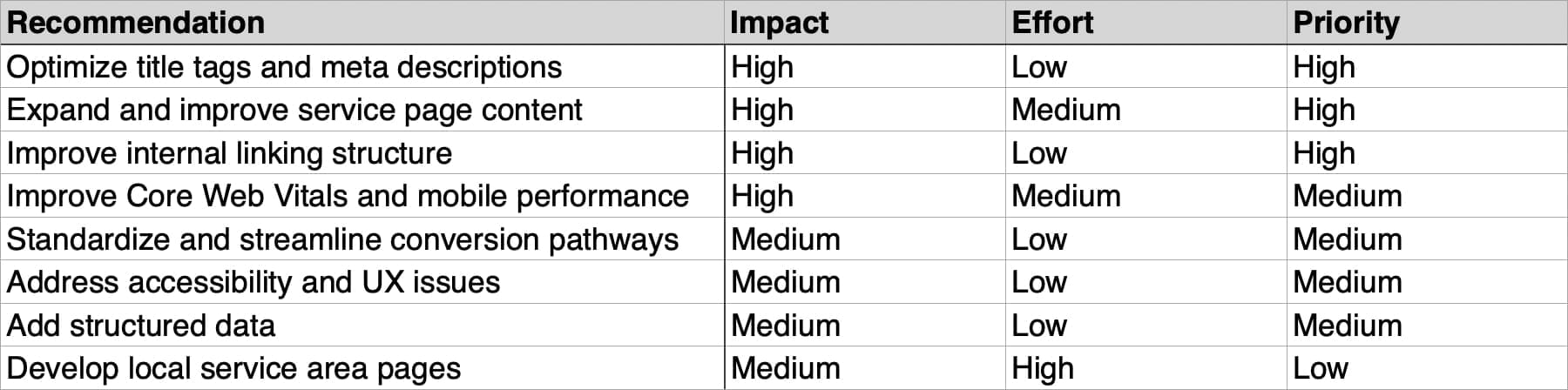
8.2 High-Priority Recommendations
Optimize Metadata
Refine title tags and meta descriptions to improve consistency, better reflect page content, and align with local search intent. Priority should be given to the Mini Splits page and other high-visibility landing pages.
Expand Service Page Content
Enhance the Mini Splits page with additional service details, FAQs, and supporting content to strengthen topical relevance, address user search intent, and create opportunities for long-tail keyword targeting.
Improve Internal Linking Structure
Introduce contextual internal links between the Mini Splits page, blog content, and related resources to improve content discovery, strengthen topical relationships, and distribute internal authority more effectively.
Develop FAQ and Educational Content
Expand informational content by incorporating FAQs and educational resources that address common customer questions. Existing video content may also be integrated to improve engagement and support additional internal linking opportunities.
8.3 Medium-Priority Recommendations
Improve Performance and Page Experience
Optimize page speed and mobile performance to reduce loading delays, improve usability, and support long-term search visibility.
Standardize Conversion Pathways
Simplify calls-to-action and booking workflows to create a more consistent user journey from informational pages to conversion actions.
Address Accessibility and Trust Signals
Resolve accessibility issues while strengthening the presentation of company information, certifications, and other trust elements to improve usability and credibility.
Expand Structured Data Implementation
Implement additional schema markup where appropriate to improve content interpretation and support enhanced search visibility.
8.4 Long-Term Recommendations
Develop Local Service Area Content
Create dedicated service area pages targeting individual communities to strengthen local relevance and expand opportunities for location-specific search visibility.
Expand Measurement and Reporting
Strengthen measurement and reporting capabilities to better evaluate website performance, user behavior, and the impact of future SEO improvements.
9. Measurement & Tracking
This section outlines a proposed measurement framework for monitoring SEO performance, user behavior, and conversion activity. By combining behavioral analytics, search visibility data, and reporting dashboards, this framework would support ongoing evaluation of organic performance over time.
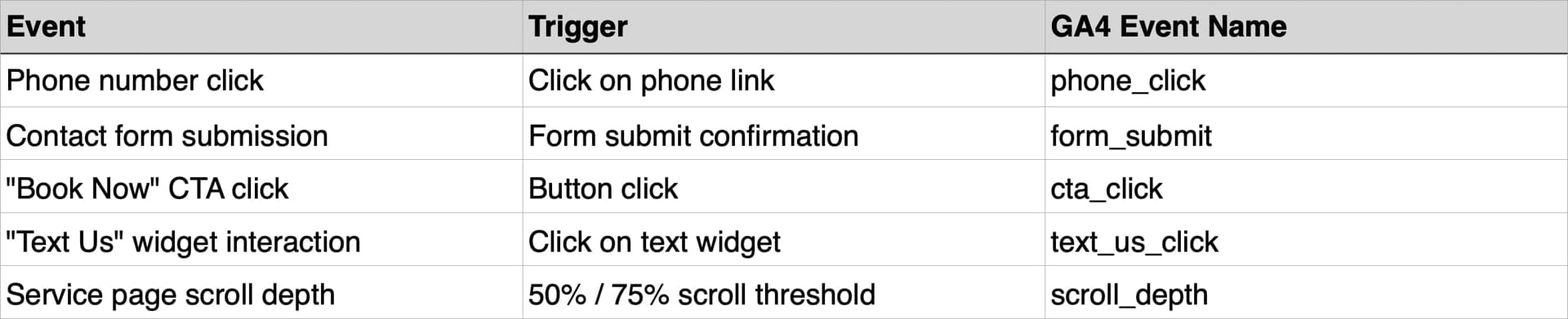
Google Analytics 4 (GA4), supported by Google Tag Manager (GTM), would provide the behavioral measurement layer by tracking Surf Bros HVAC's primary conversion interactions. This event structure would enable analysis of organic traffic, landing page engagement, user behavior, and conversion activity to help identify which pages and channels contribute most to business outcomes.
Google Search Console (GSC) would also contribute to this measurement layer by providing query-level and coverage data that complements behavioral insights captured in GA4. Together, these data sources would support evaluation of how users discover the site through organic search, how landing pages perform in search results, and whether indexing constraints may be influencing overall organic reach over time.
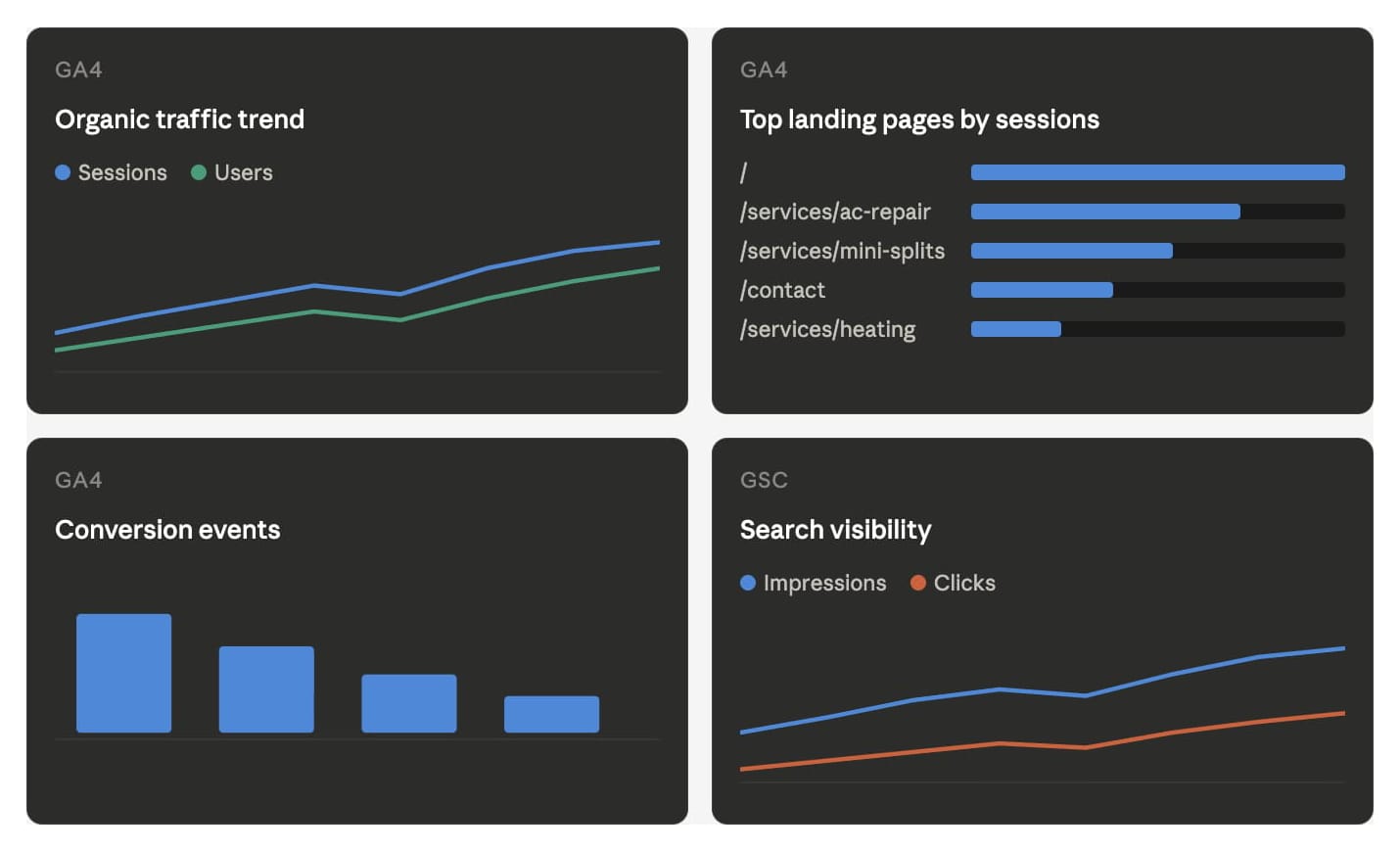
A connected reporting dashboard (e.g., Google Data Studio) would bring together on-site behavioral metrics from GA4 and search visibility data from GSC into a unified view of organic performance. This cross-platform view would support ongoing performance evaluation from search discovery to on-site conversion activity.
10. 90-Day Roadmap
This roadmap organizes the report's recommendations into a phased implementation plan based on priority, effort, and expected impact. The sequence emphasizes establishing a strong technical foundation before optimizing existing assets and pursuing longer-term growth.
Phase 1: Foundation(Days 1–30)
The first phase focuses on technical stability, usability, and measurement to support future optimization efforts.
Technical & Accessibility
- Resolve broken and redirected URLs.
- Address accessibility issues, including color contrast and empty links.
- Improve mobile navigation and reduce usability friction.
- Review technical configurations to maintain crawlability and indexability.
Measurement & Tracking
- Implement and validate analytics, search performance, and conversion tracking.
- Establish baseline performance benchmarks.
- Confirm measurement systems support ongoing reporting of organic visibility, user behavior, and conversions.
Phase 2: Optimization(Days 31–60)
The second phase focuses on strengthening on-page SEO and improving content discoverability.
On-Page Optimization
- Refine page titles and meta descriptions.
- Improve heading structure and content organization.
- Expand Mini Splits page content where appropriate.
- Strengthen local relevance and trust signals.
Internal Linking
- Add contextual links between the Mini Splits page and related blog content.
- Connect blog content with the Mini Splits page where relevant.
- Improve navigation and internal authority distribution.
- Review calls-to-action and internal linking opportunities.
Phase 3: Growth(Days 61–90)
The final phase focuses on evaluating performance and identifying opportunities for continued optimization.
Performance Evaluation
- Compare organic, engagement, and conversion metrics against baseline benchmarks.
- Assess the impact of implemented improvements.
- Identify high-performing pages and remaining optimization opportunities.
- Monitor user behavior and conversion trends.
Growth Opportunities
- Begin development of local service area content — this is a longer-term initiative that would likely extend beyond the 90-day window given its scope.
- Expand internal linking and content coverage.
- Prioritize future improvements using performance data.
- Establish an ongoing optimization and reporting process.
11. Closing Statement
This audit examined Surf Bros HVAC's website across technical SEO, on-page optimization, site structure, internal linking, user experience, and competitive positioning. The findings point to a site with a solid foundational presence, strong local trust signals, functional crawlability, and clean canonical implementation, but limited by inconsistent on-page optimization, minimal contextual internal linking, and a content footprint narrower than local competitors. Addressing these gaps through the phased approach outlined in this report may provide a practical path toward stronger search visibility, improved usability, and more effective conversion performance over time.