AI Search Visibility
Analysis
1. Executive Summary
This case study analyzes LuxurySoCalRealty's visibility in AI search results, using a manual multi-engine test followed by a 7-day automated capture to identify where the brand is being cited, where it isn't, and why.
Website Overview
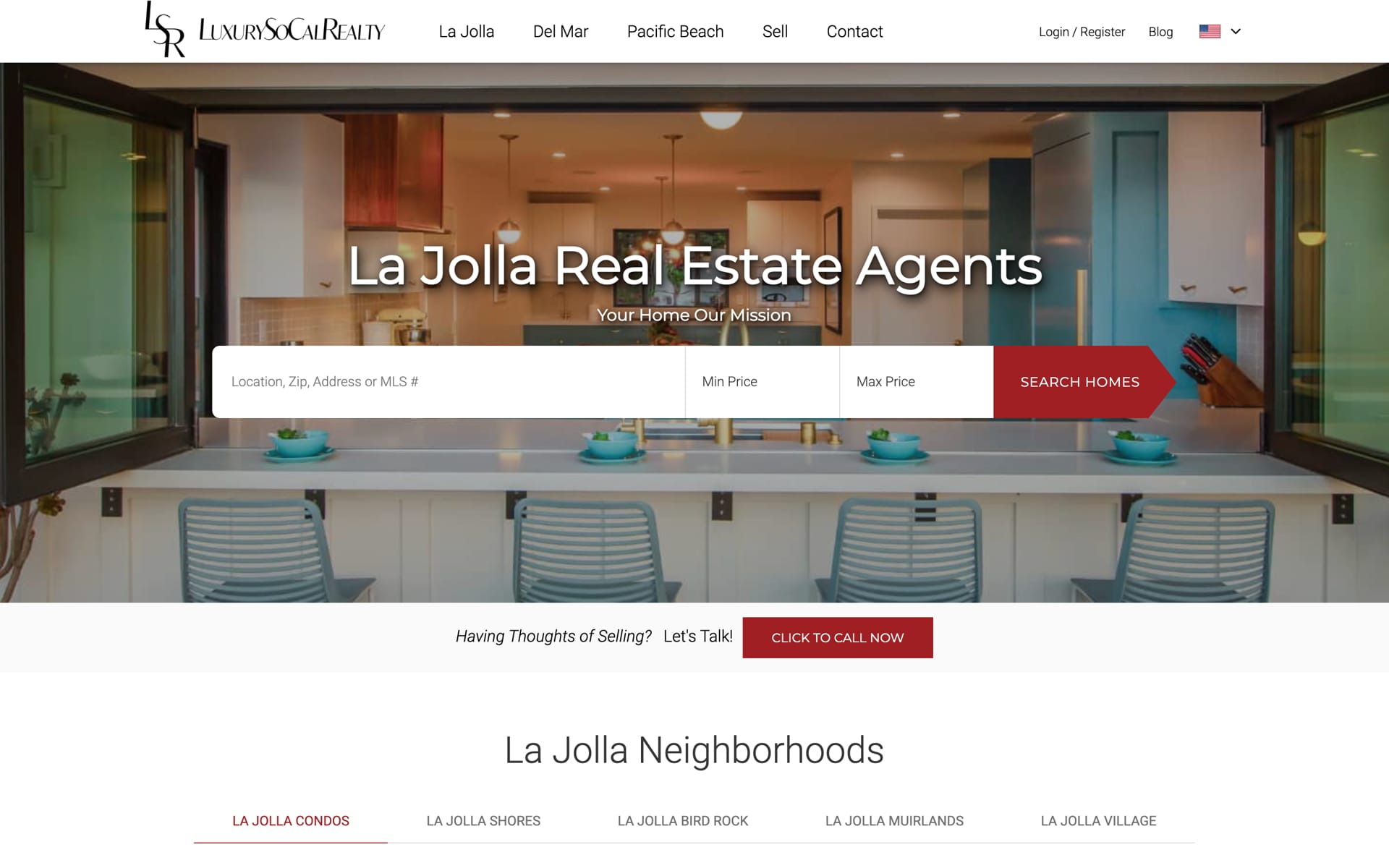
LuxurySoCalRealty is a Compass-affiliated real estate team based in La Jolla and serves the greater San Diego high-end market. The site includes a blog and several standalone guide pages, such as a monthly-refreshed market statistics article and neighborhood-specific buyer's guides for areas like Coronado and La Jolla.
LuxurySoCalRealty was chosen for this case study because its AI visibility is measurable but not dominant, a "room to improve" case rather than a business with no presence at all or one outright winning. This made it a useful diagnostic subject: enough existing citation activity to analyze patterns and enough of a gap to make the recommendations meaningful.
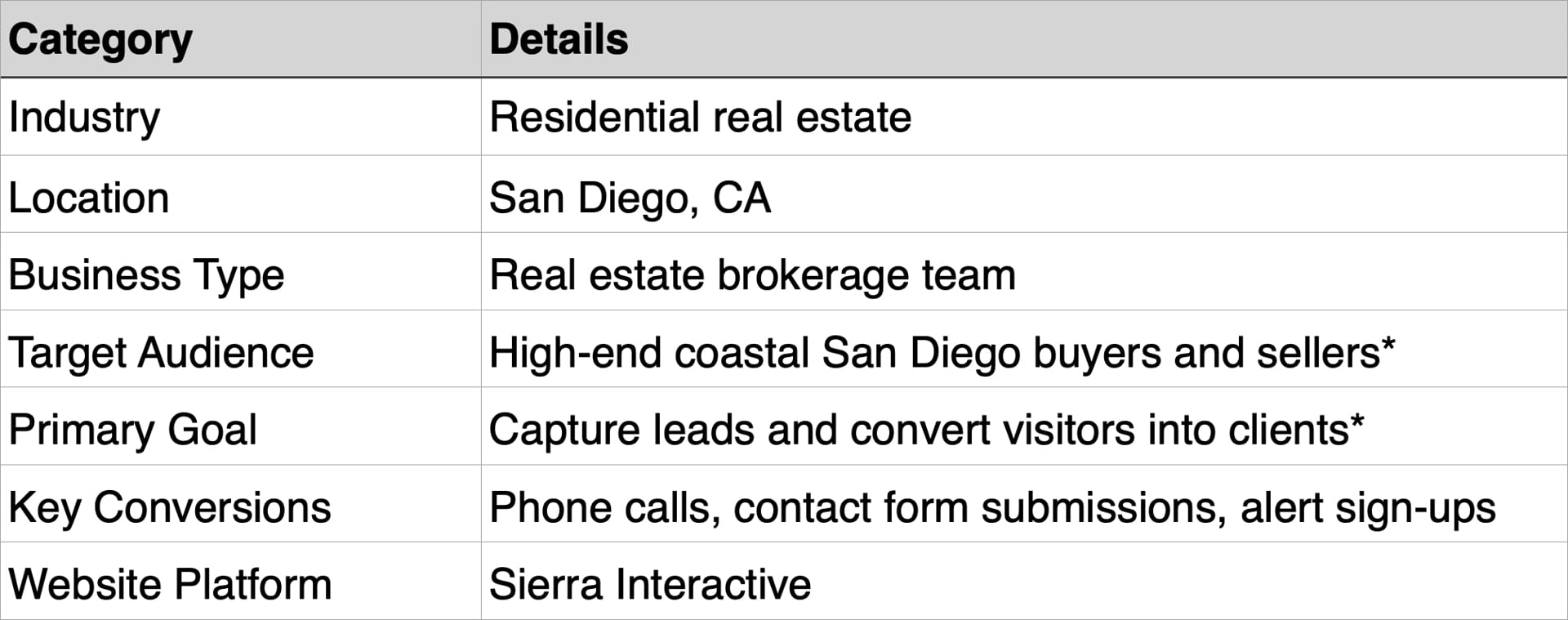
* Inferred: No access to LuxurySoCalRealty's Google Analytics or Search Console, no business interview.
Key Findings
Research surfaced four key findings that shape how this case study reads LuxurySoCalRealty's AI search visibility.
A Metric Can Hide a Narrow Reality
OtterlyAI ranks LuxurySoCalRealty a "Leader," #2 of 8 brands by mentions. But at the individual prompt/engine level, it held an outright #1 position in only 2 of 80 slots, both from a single narrow query type.
Perplexity Blind Spot
Zero LuxurySoCalRealty citations appeared on Perplexity across the full 7-day, 20-prompt capture. This held consistently across the entire window, not a single volatile day.
An Unresolved Technical Contradiction
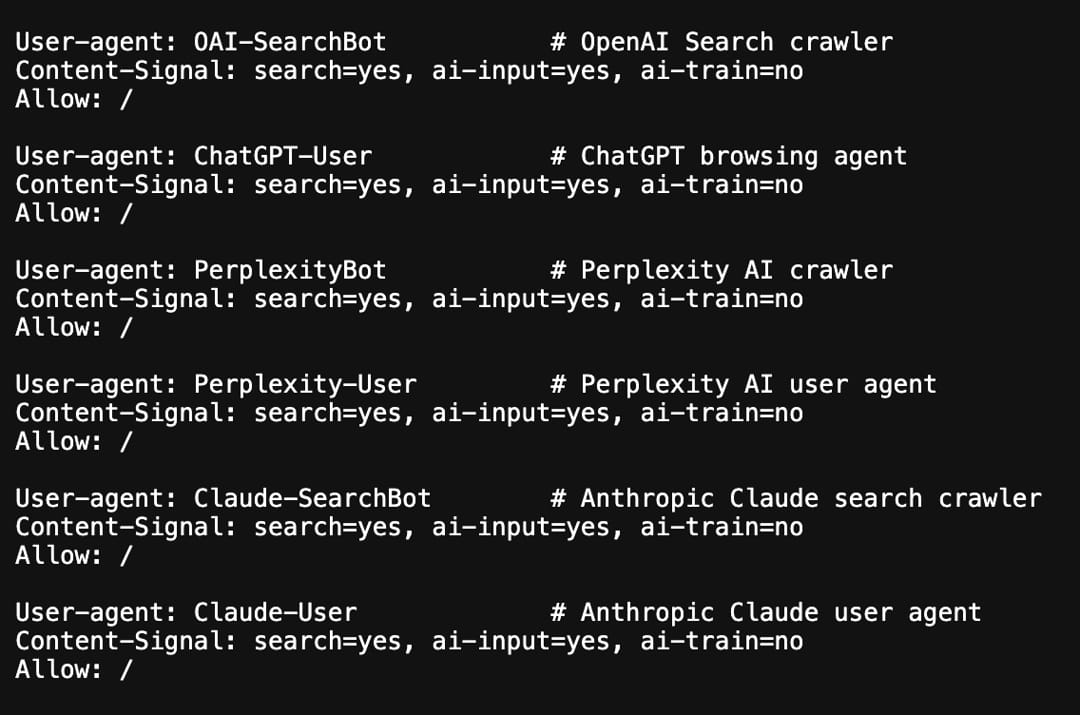
An automated robots.txt check showed every tested AI crawler allowed. A separate live server-access check showed every one of those same bots blocked, confirmed across two audit runs three days apart.
A Heading Issue, More Isolated Than Expected
The audited article carries two H1 tags instead of one. A crawl of four additional site pages found this wasn't site-wide, only one other page showed the same issue.
Scope and Methodology
This analysis moved from a manual six-query test across four AI engines to a 7-day automated OtterlyAI capture across 20 prompts on the same engines. Claude was tested manually but excluded from the core analysis, since it has no OtterlyAI counterpart to verify against on the tier used here.
The original 15 OtterlyAI prompts mirrored the manual test's informational queries. Early capture data revealed a gap: the prompt set included no agent-recommendation queries, despite that query type mattering more commercially to a real estate business. Five bottom-of-funnel prompts were added on day four and tracked for the remaining 2 to 4 days of the window, versus the full 7 for the original set. Findings from this smaller set are flagged throughout.
An "outright win" means holding the #1 citation position on every tracked day for a given prompt/engine slot, not simply being cited or ranking #1 once. This stricter standard reflects this project's own findings on day-to-day citation volatility. Findings reflect the August 2026 data collection period rather than a live account status.
The following sections expand on these findings in detail.
2. Manual Citation Testing
This section covers a six-query manual test run across four AI engines before the automated OtterlyAI capture, establishing a baseline and surfacing early patterns worth testing at scale.
Query Checks
Six queries covering median home price, market conditions, neighborhood livability, mortgage rates, home improvement ROI, and a head-to-head neighborhood comparison were run across Google AI Overview, ChatGPT, Perplexity, and Microsoft Copilot. This is a point-in-time test, not a stable benchmark. AI search results can shift on a repeat run, and the sample (24 query/engine pairs) is small enough that findings below are best read as observed patterns, not proven rules.
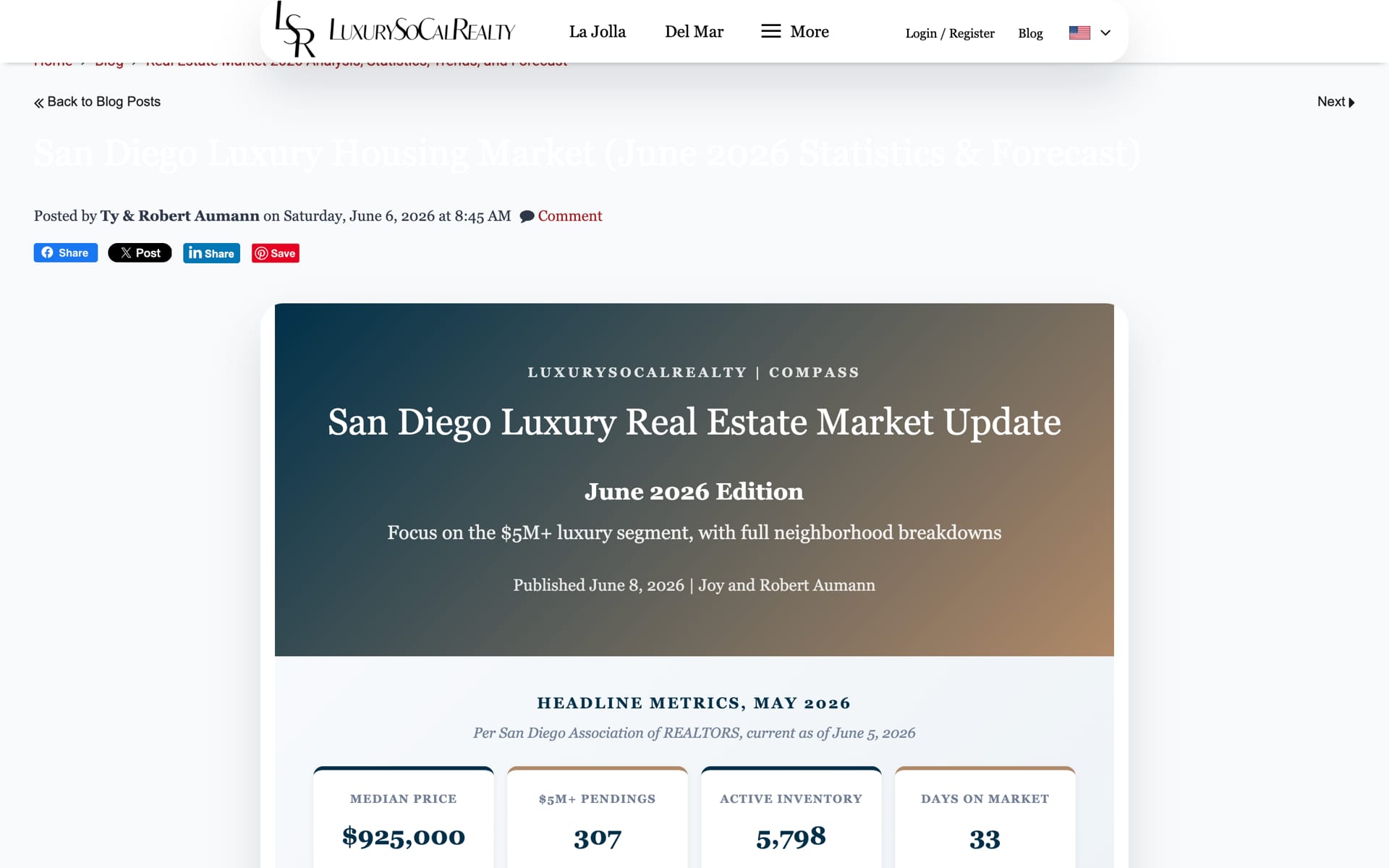
LuxurySoCalRealty was cited in 2 of the 24 slots, both traceable to a single article on the site's monthly-updated market statistics page.
Engine Overlap
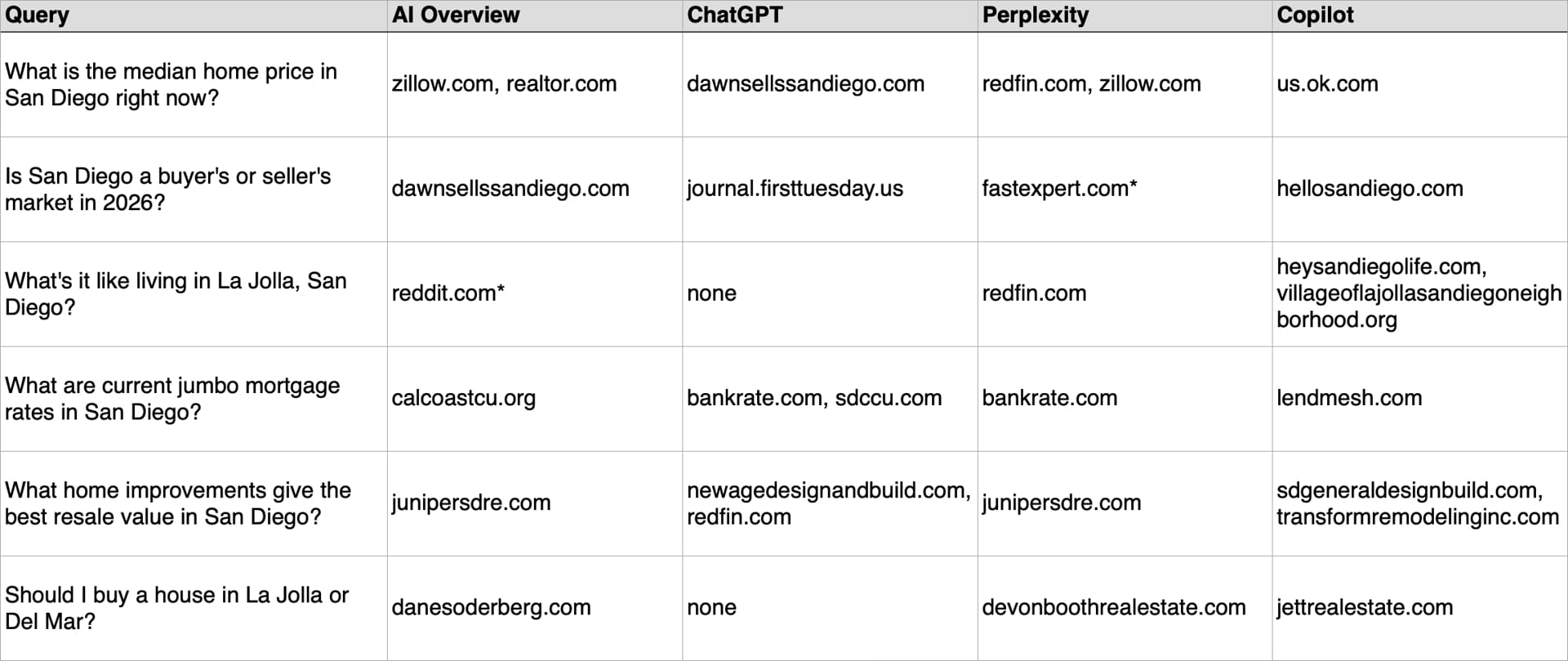
* LuxurySoCalRealty cited (secondary/expansion, not the primary chip).
The clearest pattern across the six queries: different engines draw from largely non-overlapping sources for identical questions. The comparison query ("La Jolla or Del Mar?") is the sharpest example. Three engines returned results, and each favored a different domain, with zero overlap between them. This same disagreement showed up twice more in the dataset, on the median home price query and the market conditions query, where Copilot's top source didn't appear on any other engine at all.
What Won and Why
Niche Data Beats Generic Advice
LuxurySoCalRealty's two citations both traced to a data cut nobody else in the sample published, a rolling 12-month breakdown of $5M+ high-end sales. It won despite being several weeks old at test time, suggesting specificity mattered more than freshness here.
Recency as a Tiebreaker, Engine-Dependent
In more crowded queries, a competitor's monthly-cadence content won on two engines but was completely absent on a third, so recency helped, but not uniformly across engines.
Local Correction Beats National Advice
The strongest, most consistent pattern in the manual test: a competitor's home-improvement article that explicitly called out where national renovation advice doesn't apply locally won across three of the four engines, more than any other domain in the dataset.
Comparison Pages Win Their Category
Every engine that returned a result for the head-to-head query cited a dedicated "versus" page. One caveat worth noting: self-promotional comparison content risks the AI crediting a competitor named within the page instead of the page itself.
A Freshness Clue
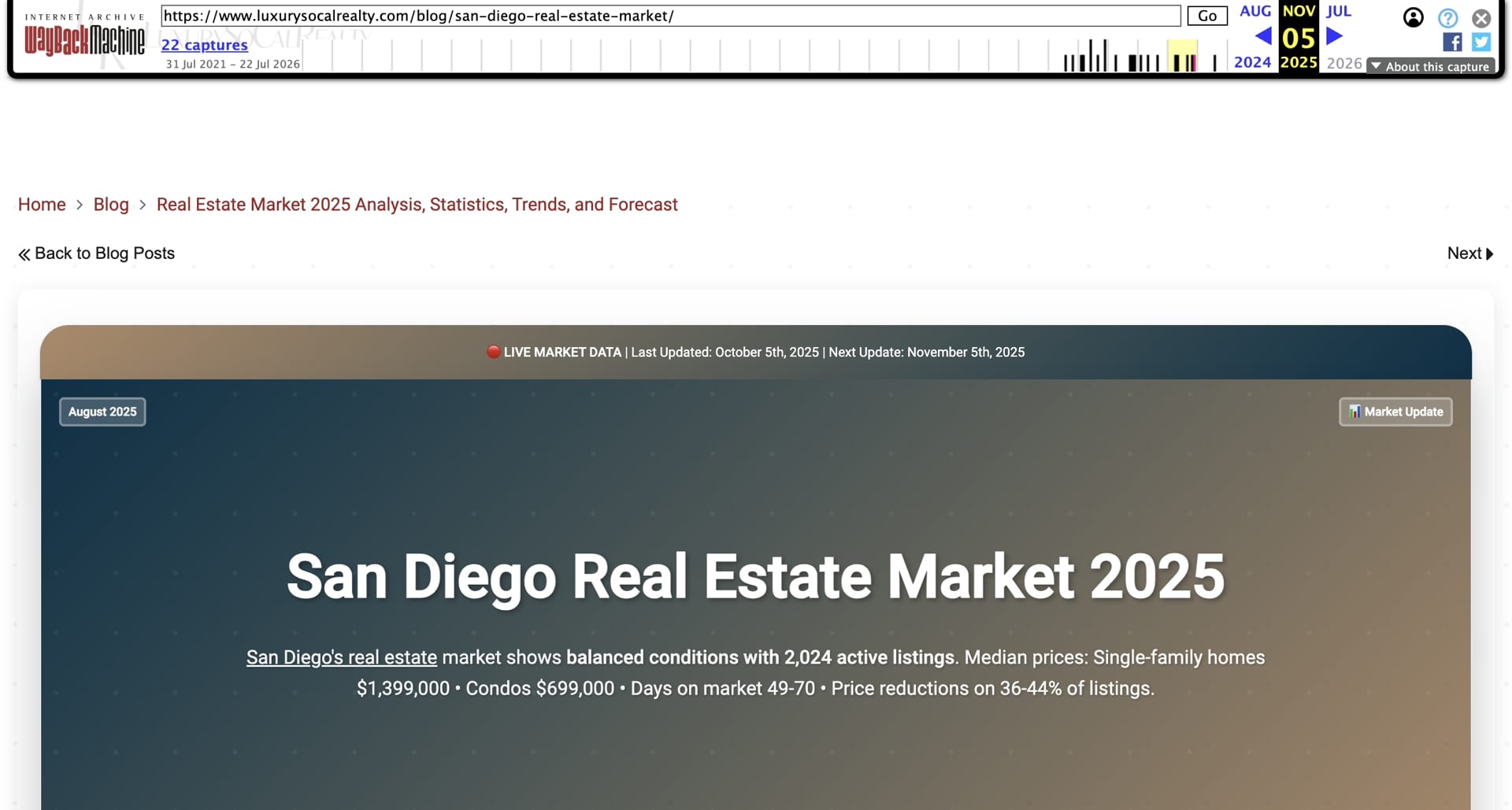
A Wayback Machine check found that LuxurySoCalRealty's winning article has occupied the same URL since 2021, with content refreshed in place on a declared monthly cadence rather than republished under a new URL. This places the article on the same freshness model as the competitor content that won citations elsewhere in this test on the basis of recency. However, freshness was not the deciding factor in LuxurySoCalRealty's own two citations, it was the niche dataset.
3. Data Capture Findings
This section covers the 7-day automated OtterlyAI capture, confirming which manual-test patterns held at scale and surfacing a reframed picture of what LuxurySoCalRealty's AI visibility actually looks like.
The 7-Day Capture
OtterlyAI tracked 20 prompts across the same four engines from August 3 to August 9, 2026. LuxurySoCalRealty was cited 116 times total. Of those, 44 came from 5 bottom-of-funnel (BOFU) agent-recommendation prompts added mid-capture and tracked for only 2 to 4 days. The remaining 26 came from the original six prompts that mirror the manual test.
Leader Tier vs. Outright Wins
OtterlyAI's Brand Report classifies LuxurySoCalRealty a "Leader," #2 of 8 tracked brands by mentions. But mention volume isn't the same as winning. Using a stricter standard, holding the #1 position on every tracked day, LuxurySoCalRealty won outright in only 2 of 80 possible prompt/engine slots. Both wins occurred on Copilot, and both fell within the narrow BOFU set. Zero outright wins occurred across the 75 informational slots.
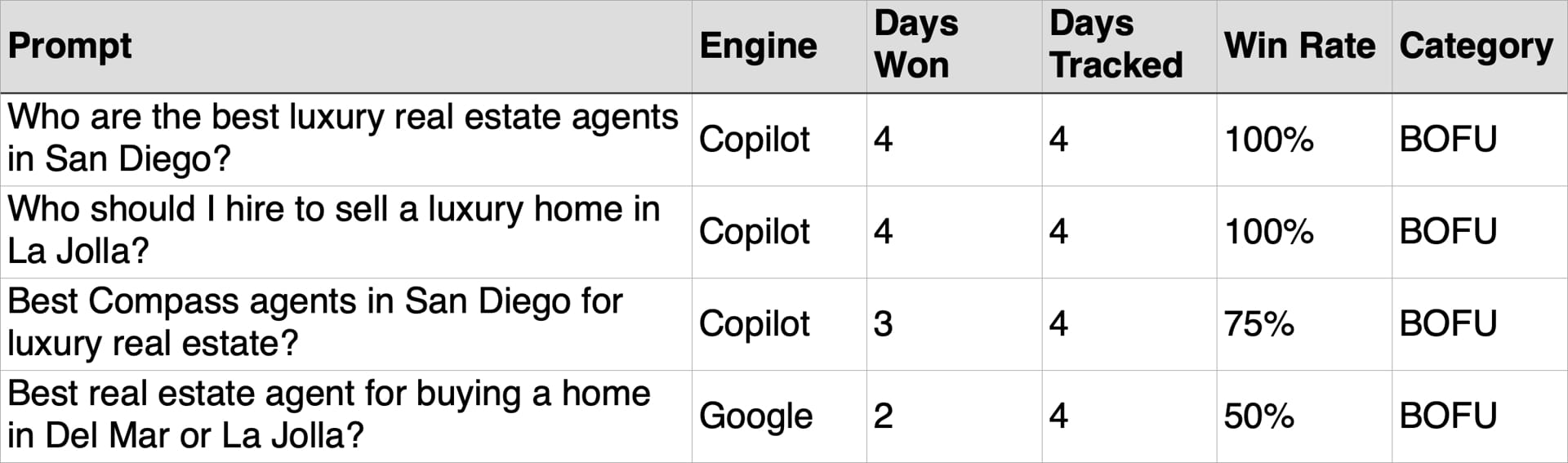
Both outright wins came from Copilot. LuxurySoCalRealty held position 1 on all 4 tracked days (Aug 6–9) for "Who should I hire to sell a luxury home in La Jolla?", consistently citing the site's homepage, and held position 1 on all 4 tracked days for "Who are the best luxury real estate agents in San Diego?", citing the homepage on 3 of the 4 days and a dedicated blog post on the fourth.
Two additional slots looked like wins under an earlier count but didn't hold up under a consistent recalculation. One reflects a day where LuxurySoCalRealty was named in the response but not linked as a citation. The other reflects two days of genuine non-coverage.
Perplexity Blind Spot
LuxurySoCalRealty had no citations on Perplexity anywhere in the 7-day, 20-prompt window, out of 116 total citations spanning Google AI Overview, ChatGPT, and Copilot. Against the manual test's single earlier Perplexity citation, this reads as a structural gap on this engine rather than volatility.
The Corporate Parent
For the brokerage-level query "Best Compass agents in San Diego?", compass.com, LuxurySoCalRealty's own parent brokerage, won outright on Perplexity. On ChatGPT, compass.com had heavy citation volume but never reached the #1 position. This suggests that for brokerage-level phrasing, a corporate parent can outcompete its own affiliated agents, a mechanism distinct from the patterns found in the manual test.
Citation Landscape
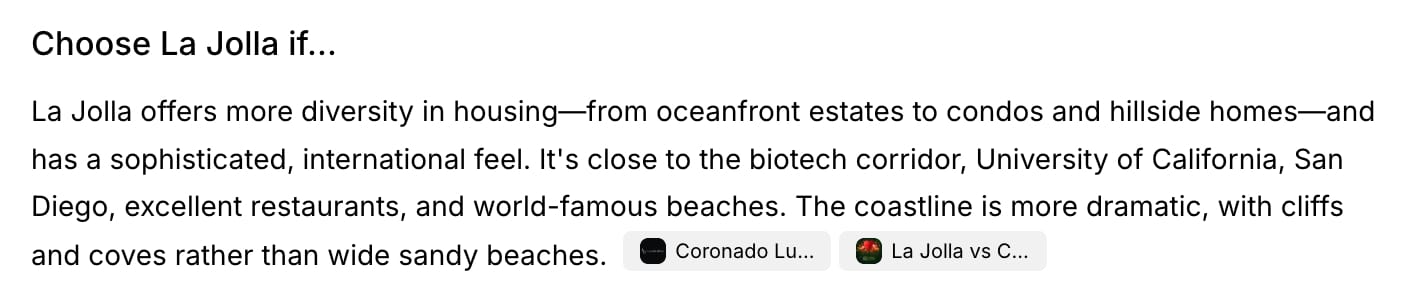
A ChatGPT citation of LuxurySoCalRealty's Coronado buyer's guide, held for one of six tracked days, illustrates engine idiosyncrasy in practice rather than an outright win.
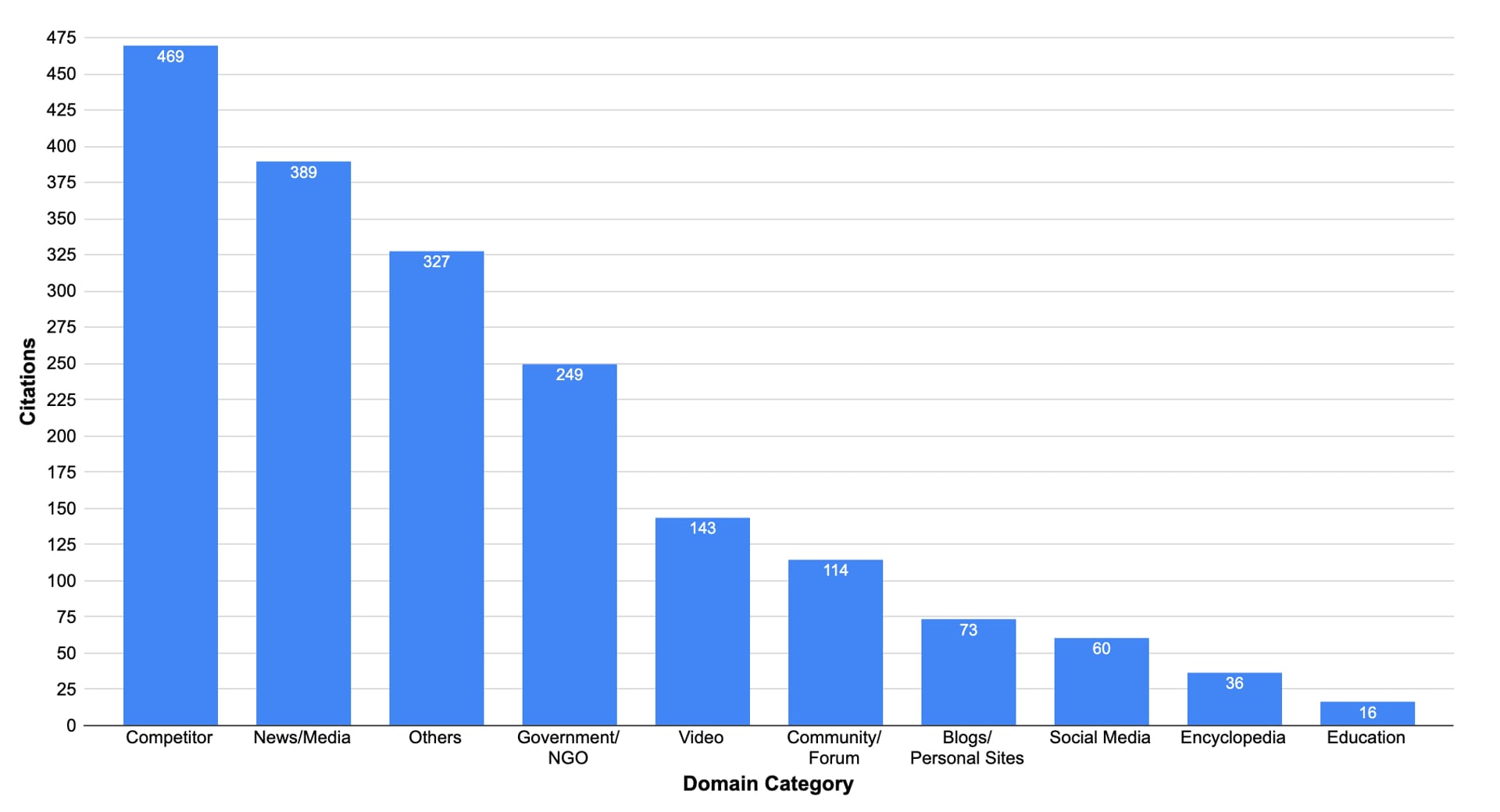
Brand-type domains (all tracked brands, not LuxurySoCalRealty specifically) account for 63% of total citations (excluded from the chart above to keep the remaining categories readable at scale). Among the charted categories, competitor domains lead with 469 citations (9%), followed by news/media (389, 8%), other/uncategorized domains (327, 6%), and government/NGO sources (249, 5%).
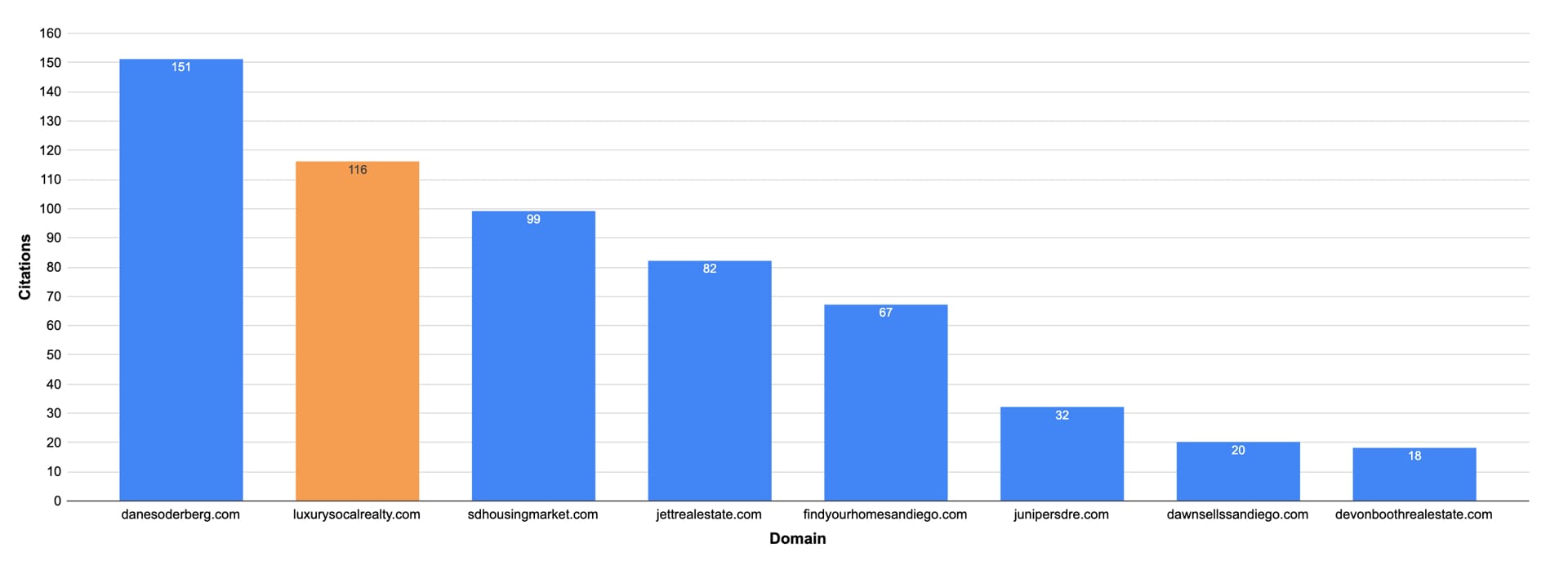
By raw citation volume, LuxurySoCalRealty ranks #2 of its 7 tracked competitors, the same underlying number behind OtterlyAI's "Leader" tier classification. This chart shouldn't be read as contradicting the earlier finding that LuxurySoCalRealty's wins are narrowly concentrated in BOFU prompts. It's the same data from a different angle: a high total citation count that doesn't distinguish where those citations came from.
4. Technical GEO Audit
This section covers a technical audit of one of LuxurySoCalRealty's articles, checking whether AI crawlers can access and parse the page correctly.
Content Analysis Audit
The audited article scored 100% on Metadata and 100% on Technical, both strong marks. Structure came in lower at 73%, dragged down by Heading Hierarchy specifically. Content scored 66%, the weakest category, reflecting limited rich content elements and content variety.
Crawlability
Two separate checks produced conflicting results. A robots.txt check showed every tested AI crawler allowed. A live server-access check showed every one of those same bots blocked. Both results held across two audit runs three days apart. The tool's own documentation notes this may reflect bot-impersonation protection rather than a real policy against verified crawlers, but this couldn't be confirmed without server-side access, so it's presented here as a genuine, unresolved finding.
Heading Structure
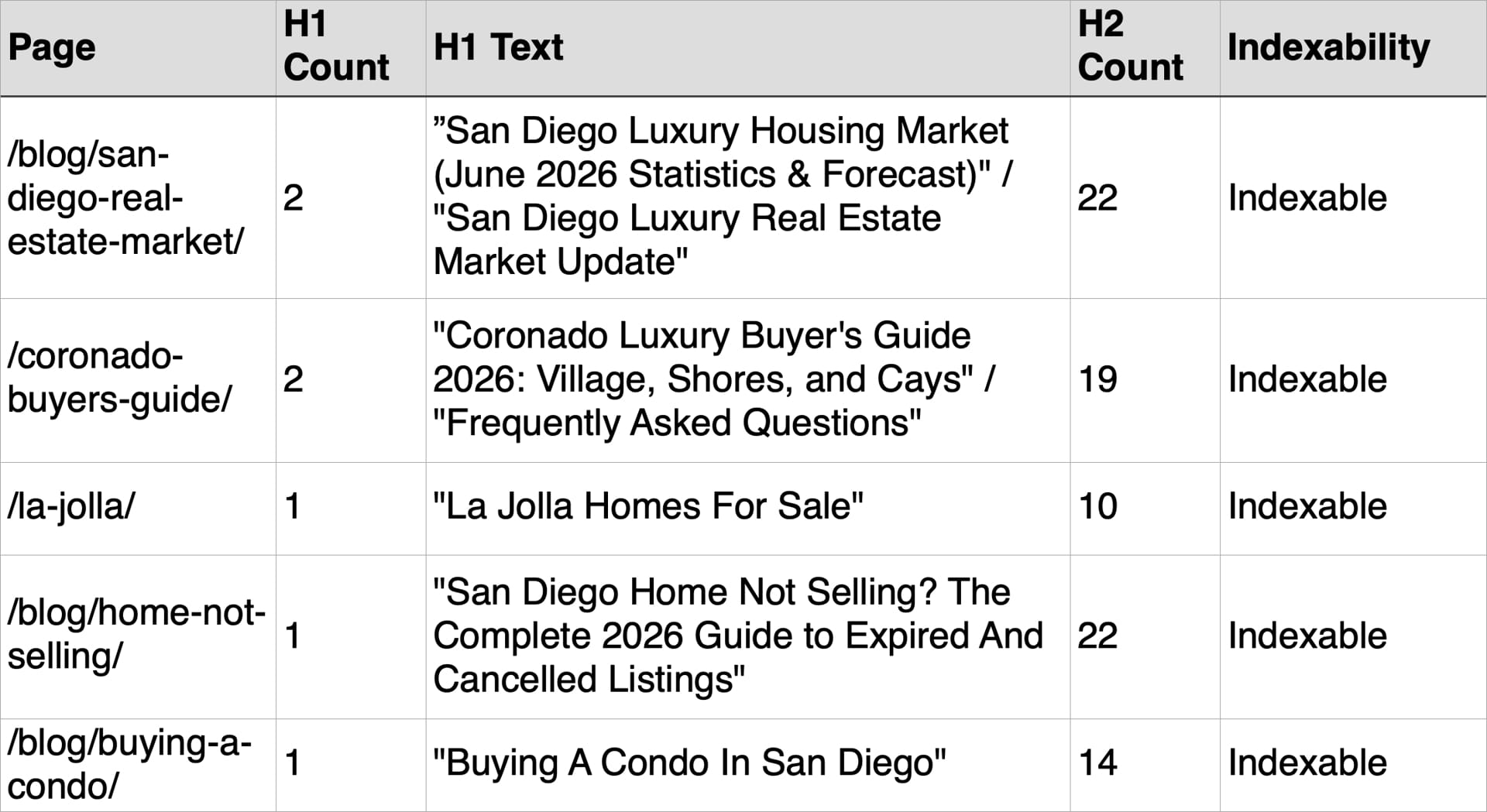
These four additional pages came from OtterlyAI's Recommendations export, which flagged them as ranking on Google but ignored by AI search, later found to only be true for two of the four. Still, they made a useful set for checking whether the audited article's heading issue was isolated or sitewide. The audited article carries two H1 tags where one is standard practice. A crawl of the four additional pages found this wasn't a site-wide issue: only one other page showed the same problem, while the remaining three each had a single, clean H1. Heading structure below the H1 level was clean across all five pages checked.
5. Content Gap Analysis
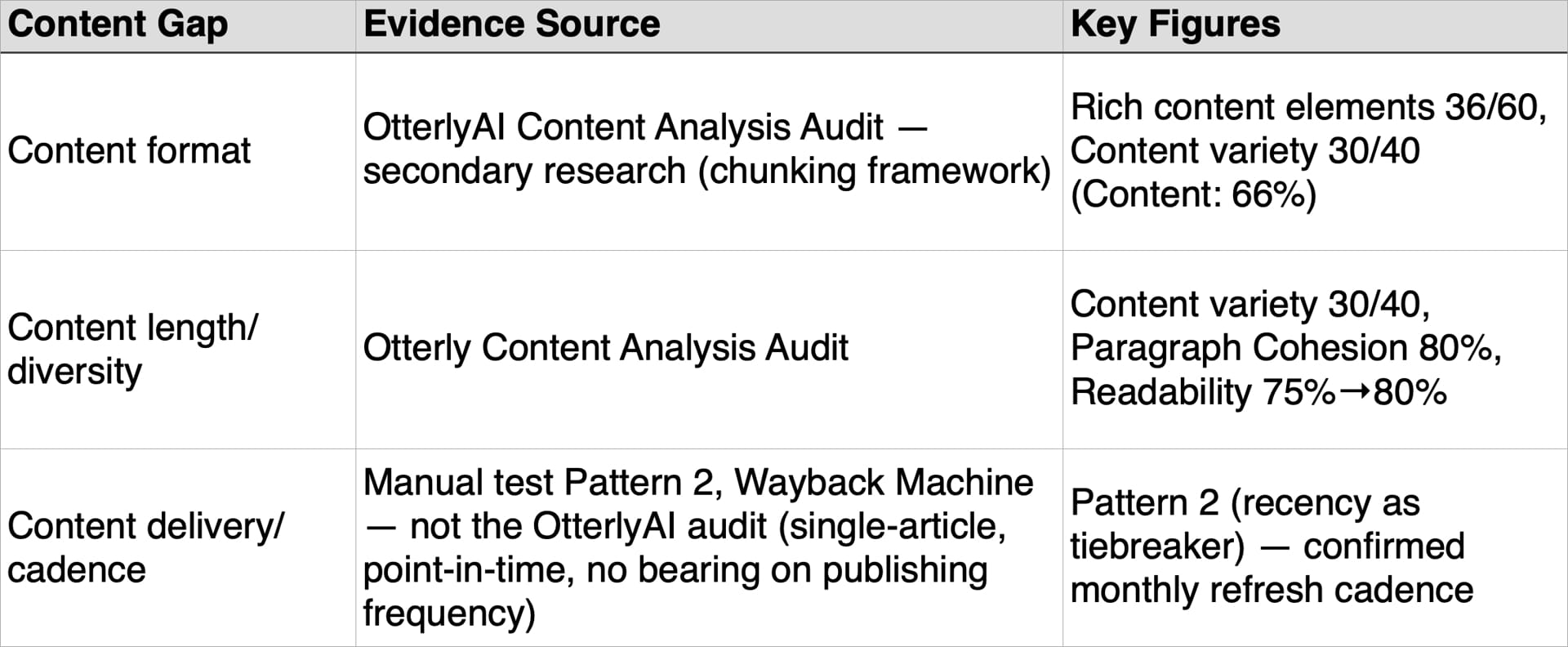
This section covers three content gaps behind LuxurySoCalRealty's citation performance, each mapped to the specific evidence that supports it.
What's Missing
Content Format
The audited article scores low on rich content elements and content variety, a sign of long, uniform paragraphs rather than distinct, extractable pieces. AI engines tend to favor specific, self-contained answers, a subheading, a direct response, supporting detail underneath, the same structure that won LuxurySoCalRealty its two manual-test citations (Section 2), just not applied consistently elsewhere in the article.
Content Length and Diversity
The same audit's content variety and readability sub-scores suggest the article would benefit from shorter, more varied sections rather than one continuous long-form piece.
Content Delivery and Cadence
This gap isn't drawn from the audit, since a single-article, point-in-time check has no bearing on publishing frequency. It's drawn from the manual test instead: recency helped competitors win on some engines, and LuxurySoCalRealty's own article already follows a monthly-refresh cadence (Section 2), so the mechanism exists but isn't being paired with new, win-worthy content on that same schedule.
The Broader Pattern
The patterns identified through manual and OtterlyAI-confirmed testing in this case study line up with what's being said more broadly about AI search visibility right now. AI citation behavior appears to be driven more by third-party consensus and unique, proprietary data than by on-site optimization alone. That alignment between this project's own findings and the wider conversation is part of why the three gaps above are treated as diagnostic starting points, not generic best-practice advice.
6. Closing Statement
AI citation visibility can't be understood at the brand level alone. It's won or lost at the individual query and engine level. LuxurySoCalRealty's "Leader" tier ranking looks strong until it's broken down to 2 outright wins out of 80 possible slots, both occurring within a single narrow query type. A brand-level summary metric can obscure a picture that's actually uneven underneath.
This project's audit found that LuxurySoCalRealty had solid fundamentals, scoring 100% on both Metadata and Technical. Yet the site won outright in only 2 of 80 slots, with zero wins across the 75 non-BOFU slots. Strong technical SEO did not guarantee AI visibility on its own. GEO is not a replacement for SEO. It builds on the same foundation: technical crawlability, structured content, and earned third-party mentions. Without that foundation, GEO efforts have little to build on.
The next opportunity is not to chase more citation wins indiscriminately, but to explore where greater topical depth and clearer entity signals can expand visibility. Building a topic cluster around the site's strongest content would provide a logical starting point, while more consistent brand and entity descriptions across pages could be evaluated as a separate variable. Neither was established as a causal factor in this project, so both remain hypotheses for future investigation.
This analysis establishes a baseline. The next phase is testing what, if anything, moves citation visibility beyond it.